
A borneo honeymoon follows a natural arc that no other destination in Asia can replicate: rainforest first, then river, then island. The two of you begin beneath a canopy so dense it filters the equatorial sun into green shadow, spend mornings watching orangutans swing through the trees at arm’s reach, drift along a jungle river where proboscis monkeys and pygmy elephants come to the water’s edge at dusk, and finish on a coral island where the reef begins at the shoreline. Borneo is not a beach honeymoon with a wildlife excursion. It is a wildlife honeymoon with a beach ending.
The island — the third largest in the world, shared between Malaysia, Indonesia and Brunei — holds one of the oldest rainforests on earth, estimated at one hundred and thirty million years. The Malaysian state of Sabah, on the northeast coast, is where the infrastructure for a luxury honeymoon exists without compromising the wilderness that makes Borneo worth the journey. Sarawak, on the west, offers longhouse culture and the caves of Mulu — but for a honeymoon, Sabah’s combination of wildlife, lodges and island access is the stronger framework.
We design Borneo honeymoons as ten-night journeys through Sabah, moving from Kota Kinabalu and the mountain to the orangutans of Sepilok, the river safari of the Kinabatangan, the deep rainforest of the Danum Valley, and a coral island finale. The result is a honeymoon that changes habitat every two nights — and changes the two of you with it.
Why Borneo for Your Honeymoon
The Last Great Rainforest
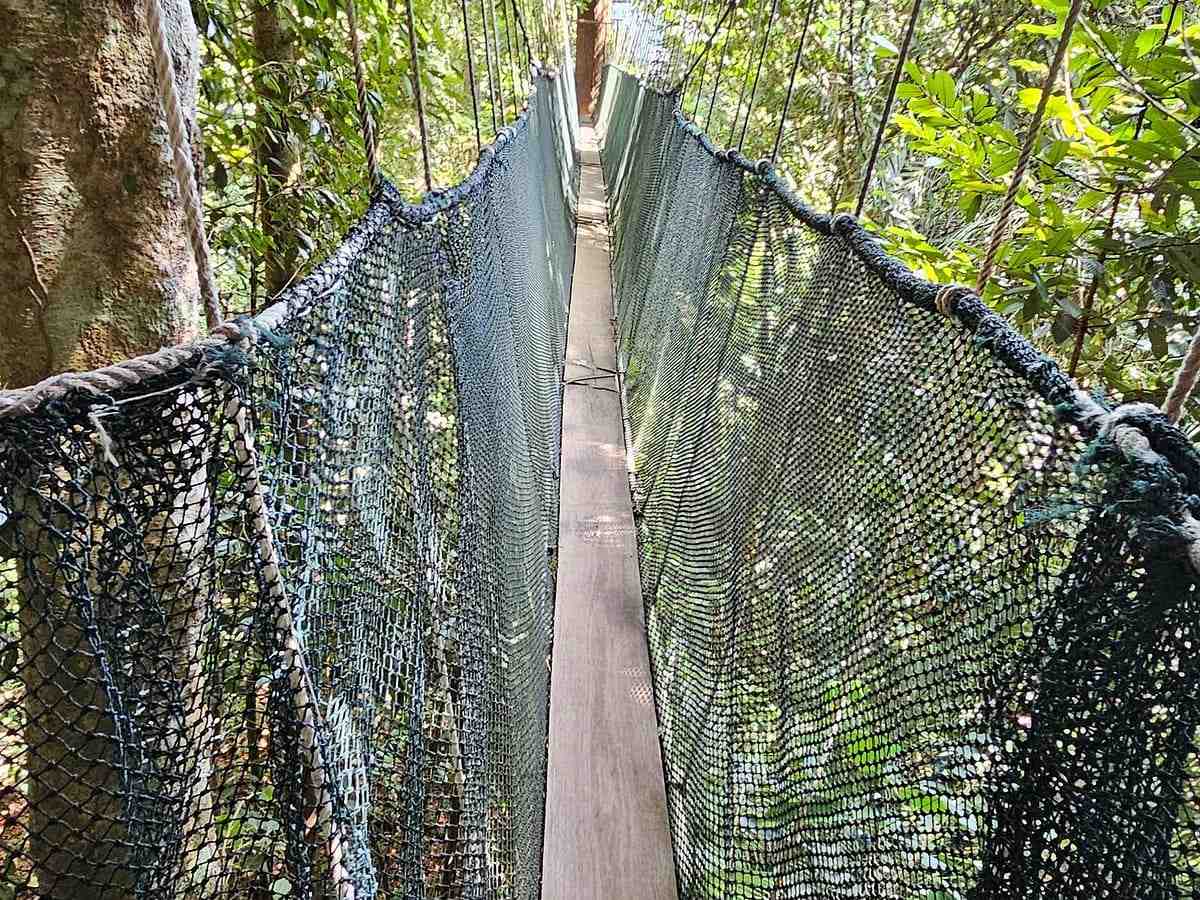
Borneo’s rainforest is not a park. It is a living system — layered, loud, and ancient in a way that the two of you will feel before understanding. The dipterocarp trees rise sixty metres to a canopy that blocks most of the sky. Below, the understorey is a tangle of ferns, orchids, pitcher plants, and fungi that glow in the dark. The sounds are constant: cicadas, frogs, hornbills, gibbons calling across the valley at dawn. The Danum Valley Conservation Area, in the interior of Sabah, is one hundred and thirty-eight thousand acres of primary rainforest that has never been logged. Walk the canopy walkway at dawn and the two of you are level with the hornbills, watching the mist rise from the forest floor forty metres below.
This is not background scenery. The rainforest is the honeymoon. Every walk reveals something the two of you did not expect: a flying lizard launching between trees, a rhinoceros beetle the size of a fist, a slow loris watching from a branch with eyes that take up half its face.
Wildlife Without Distance
Borneo’s wildlife is not observed from a vehicle at a distance. It is encountered on foot, at eye level, often closer than comfortable. The Sepilok Orangutan Rehabilitation Centre is where orphaned orangutans are rehabilitated and released into the surrounding forest — and where the two of you watch semi-wild orangutans swing down to the feeding platforms, study the two of you with unmistakable intelligence, and return to the canopy. The encounter is quiet, unhurried, and profound in a way that no zoo can replicate.
Along the Kinabatangan River, the wildlife comes to the two of you. Proboscis monkeys — endemic to Borneo, found nowhere else — sit in the riverside trees at dusk, their improbable noses silhouetted against the fading sky. Pygmy elephants, the smallest subspecies in Asia, come to the river to drink. Crocodiles bask on the banks. Hornbills cross the river in pairs. The Kinabatangan is not a zoo. It is a corridor of jungle between palm oil plantations, and the density of wildlife along its banks is a function of that geography — everything converges on the river.
Rainforest to Island — The Natural Arc
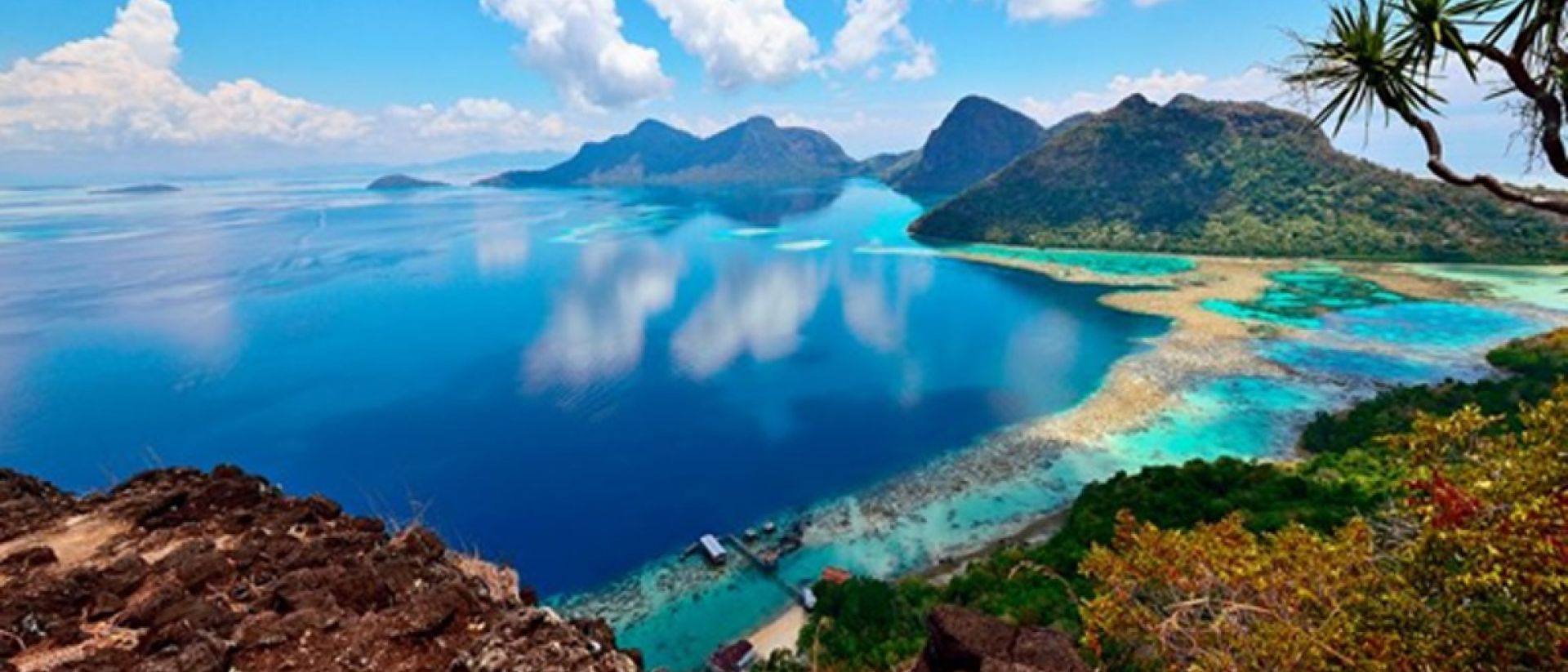
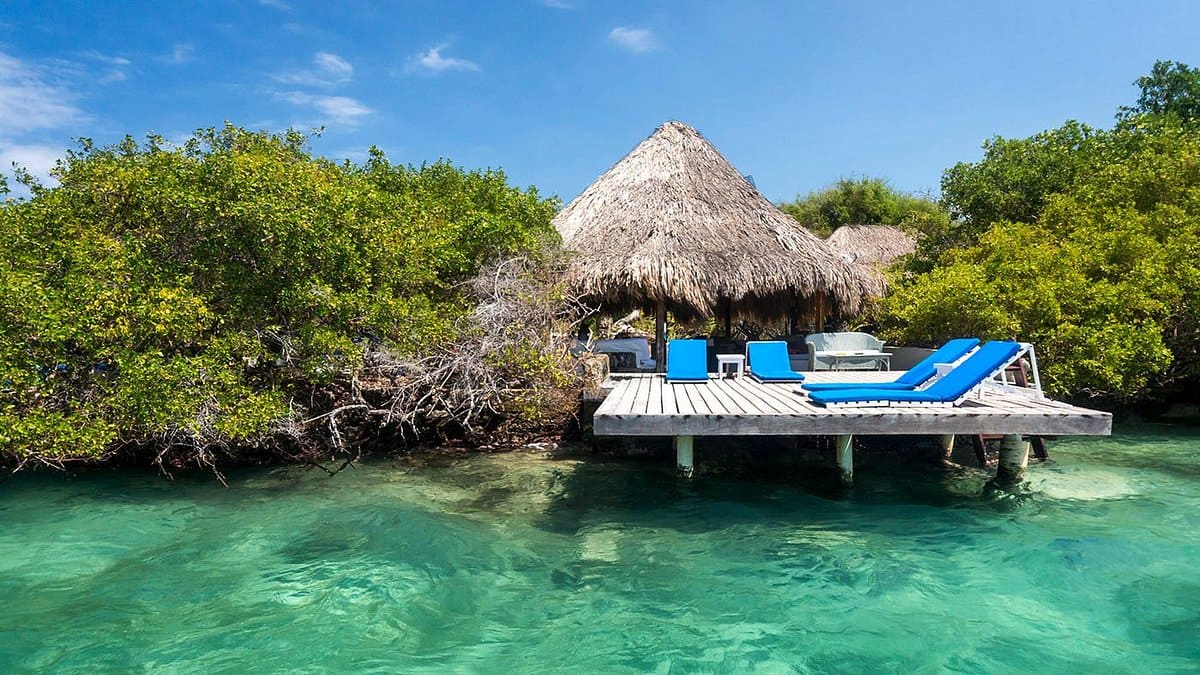
The honeymoon structure that works in Borneo is not thematic — it is geographic. The two of you move from the interior to the coast, from canopy to coral, from the humidity of the jungle to the trade winds of the Sulu Sea. The final two nights on a coral island are not an afterthought. They are the exhale — the point where the two of you process what the rainforest gave, with nothing to do except swim, snorkel, and watch the reef from the deck of a stilted bungalow.
Lankayan Island, a forty-five-minute boat ride from Sandakan, is a single-resort island with twenty bungalows on a coral reef. Gaya Island Resort, in the Tunku Abdul Rahman Marine Park off Kota Kinabalu, is larger and more polished — a hillside resort with a spa, a marine ecology centre, and a private beach that the two of you will share with monitor lizards and proboscis monkeys that wander from the forest. Bunga Raya Island, on the same marine park, is the more intimate option: twenty-four villas built into the jungle hillside, each with a private deck and a view of the South China Sea through the trees.
The Journey: 10 Nights Across Sabah
Ten nights covers the full arc at a pace that lets the two of you adjust to the rainforest rhythm. Seven nights is possible by cutting Danum Valley, but the deep rainforest is the section that stays with the two of you longest — and the section that makes Borneo more than a wildlife checklist.
Nights 1-2: Kota Kinabalu and Mount Kinabalu
Kota Kinabalu — KK to everyone who has been — is Sabah’s capital and the entry point. The city sits on the coast with Mount Kinabalu rising four thousand and ninety-five metres behind it, the highest peak between the Himalayas and New Guinea. The mountain is a UNESCO World Heritage site for its extraordinary biodiversity — over six thousand plant species on a single mountain. The two of you do not need to summit. A day hike to the lower trails of Kinabalu National Park passes through montane forest, cloud forest, and a botanical garden with the largest collection of orchids and pitcher plants in Borneo.
Eat at the Filipino Market on the waterfront — grilled seafood chosen from the stalls and cooked to order. Walk the Sunday market at Gaya Street. And watch the sunset from Signal Hill, where Mount Kinabalu turns pink above the city and the islands of the marine park glow in the last light.
Nights 3-4: Sepilok and the Orangutans
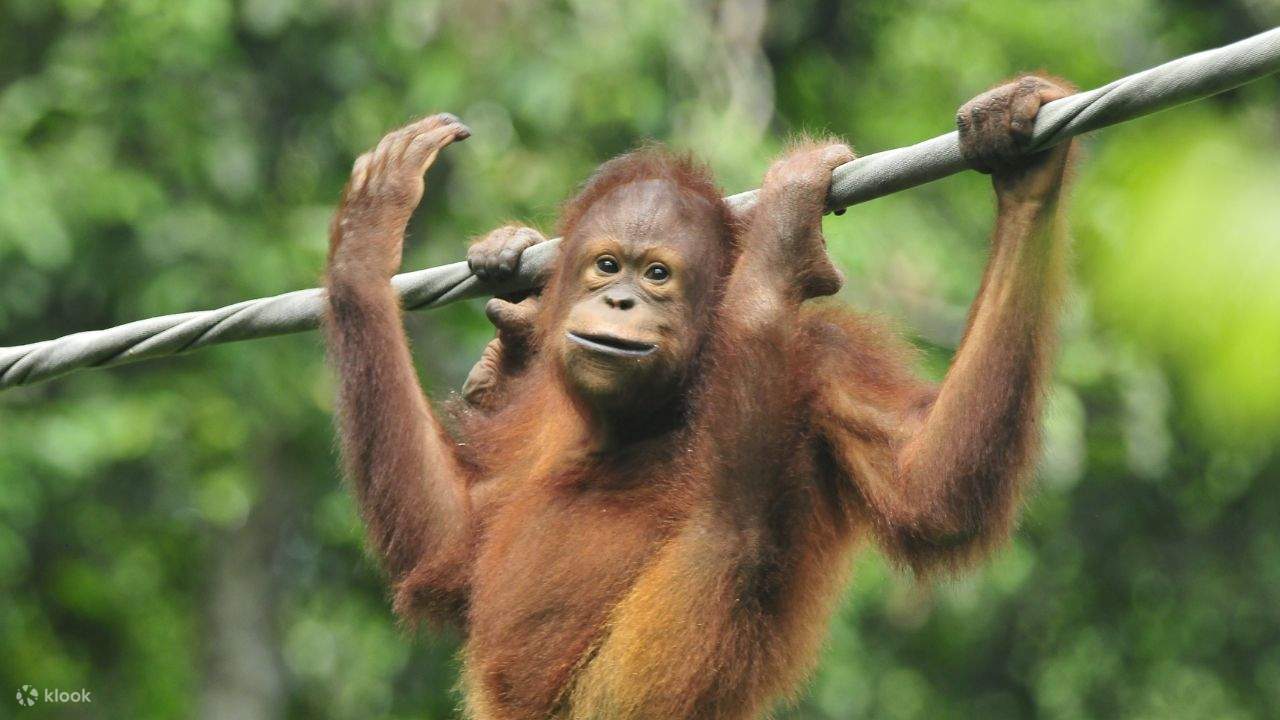
Fly from Kota Kinabalu to Sandakan, on the east coast. Sepilok is twenty-five minutes from the airport, and the first morning visit to the Sepilok Orangutan Rehabilitation Centre is the moment the honeymoon shifts register. The orangutans arrive on their own schedule — swinging down from the forest to the feeding platform, sometimes carrying infants, sometimes stopping to study the visitors with an expression that is uncomfortably close to human assessment. The encounter lasts minutes, not hours. But those minutes recalibrate what the two of you expect from a wildlife experience.
The Bornean Sun Bear Conservation Centre, adjacent to Sepilok, houses the world’s smallest bear in a forest enclosure. The Rainforest Discovery Centre, a ten-minute walk away, has a canopy walkway that puts the two of you at the level of the treebirds — trogons, broadbills, and the rhinoceros hornbill whose casque is larger than its beak.
Nights 5-6: Kinabatangan River Safari
The Kinabatangan River is Sabah’s longest — five hundred and sixty kilometres from the interior to the Sulu Sea — and the lower reaches near the village of Sukau are where the wildlife concentrations peak. Sukau Rainforest Lodge, built on stilts above the floodplain, is the accommodation that anchors this section: twenty rooms, a boardwalk through the mangrove, and guided river cruises at dawn and dusk when the animals are most active.
The river cruises are the heart of the Kinabatangan experience. The boat moves slowly, engine low, and the guide spots what the two of you would miss: a sleeping python in a tree, an orangutan nest in the canopy, the flash of a kingfisher diving into the current. The proboscis monkeys are the signature — troops of twenty to thirty sitting in the riverside trees, their pot bellies and long noses giving them the appearance of elderly gentlemen who have settled into a comfortable afternoon.
Nights 7-8: Danum Valley — The Deep Rainforest
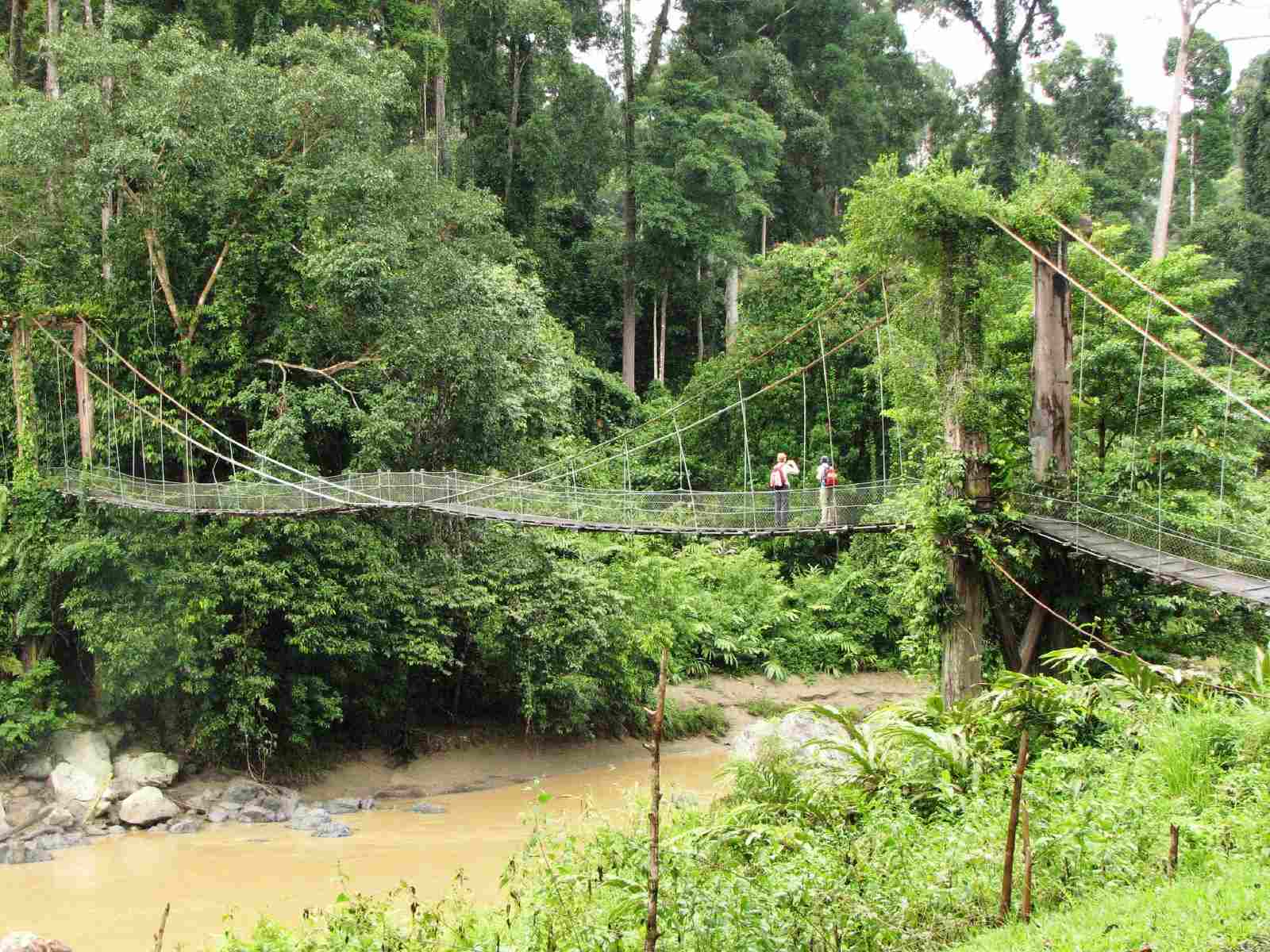
The Danum Valley is where Borneo becomes serious. A two-hour drive from the nearest town on a logging road that cuts through palm oil plantations before the primary forest closes in and the road narrows to a single track. The Borneo Rainforest Lodge, the only accommodation inside the conservation area, sits on the bank of the Danum River — thirty rooms connected by elevated boardwalks, with a canopy walkway, a natural swimming pool in the river, and a night drive programme that reveals a completely different forest after dark.
The night drives are extraordinary. The two of you sit on an open-top vehicle while the guide sweeps a spotlight through the understorey, picking up eye-shine: civets, flying squirrels, slow lorises, and — if the night is generous — the Sunda clouded leopard, Borneo’s apex predator and one of the rarest cats on earth. The daytime walks are quieter but no less rewarding: gibbons calling at dawn, sun bears scratching at fallen logs for termites, and the sheer physical presence of trees that are older than most civilisations.
Nights 9-10: The Island Finale
Fly from the interior back to the coast and take the boat to the island. Lankayan for solitude — a coral island with a house reef that begins at the beach, sea turtles nesting on the sand between June and September, and no other resort on the island. Gaya Island for polish — a larger resort with a spa, guided nature walks through the jungle that covers the island’s interior, and snorkelling over coral gardens that are among the best in Sabah. Either way, the final two nights are the counterweight: stillness after movement, salt water after river water, open sky after canopy.
For the two of you who want to explore both island options, see our luxury Indonesia honeymoon for the broader archipelago context, or our off-the-beaten-path honeymoon destinations for more wildlife-led journeys.
Best Time to Visit Borneo
March to October is the dry season in Sabah — less rain, calmer seas for island transfers, and the best conditions for wildlife viewing along the Kinabatangan. April to May and September are the sweet spots: fewer visitors, good weather, and green sea turtles nesting on Lankayan. November to February brings the northeast monsoon — heavier rain, rougher seas, and some island resorts close entirely. We most often recommend late March to May or September for Borneo honeymoons: the driest months with the fewest visitors.
How We Plan a Borneo Honeymoon
Borneo’s logistics require local knowledge — domestic flights, boat transfers, lodge availability, and the timing of wildlife seasons all vary. We begin with a conversation about what the two of you prioritise: whether the honeymoon leans more toward wildlife (extending Danum Valley, adding the pygmy elephant corridor) or toward island (extending Lankayan, adding a dive programme). From there, we build a day-by-day route with internal flights, lodge bookings, and guided experiences arranged through our Sabah partners.
We arrange the domestic flights from Kota Kinabalu to Sandakan, the river transfers to Sukau, and the boat to the island. Every lodge is selected for its position in the landscape: Sukau for the river, Danum for the primary forest, and the island resort for the reef.
Frequently Asked Questions
How many days do you need in Borneo for a honeymoon?
Ten nights covers the full arc: Kota Kinabalu, Sepilok, Kinabatangan River, Danum Valley and an island finale. Seven nights is possible by dropping Danum Valley, but the deep rainforest section is what makes Borneo exceptional.
Is Borneo good for a honeymoon?
Exceptionally — for the two of you who want a wildlife-led honeymoon with rainforest lodges, river safari, and a coral island ending. Borneo offers an intimacy with nature that African safari cannot replicate: encounters on foot, at eye level, in ancient forest.
What wildlife will we see in Borneo?
Orangutans at Sepilok, proboscis monkeys and pygmy elephants along the Kinabatangan River, hornbills throughout Sabah, and — in Danum Valley — gibbons, sun bears, civets, and the possibility of the Sunda clouded leopard on a night drive.
Best time to visit Borneo?
March to October for the driest weather and calmest seas. April to May and September are ideal — fewer visitors, good conditions, and sea turtle nesting season on Lankayan Island.
Sabah vs Sarawak for a honeymoon?
Sabah for wildlife density, island access and rainforest lodges — the stronger framework for a honeymoon. Sarawak for longhouse culture and the caves of Mulu. For most honeymoons, Sabah is the recommendation; Sarawak is the extension for the two of you who have more time.
Borneo does not advertise itself. It does not need to. The rainforest, the orangutans, and the reef speak in a register that no marketing campaign can match — and the two of you leave with a honeymoon that is not a place but a sequence of encounters, each one closer and quieter than the last. For the two of you who want a honeymoon that earns its memories through proximity rather than distance, this is where we would begin.
Begin Your Borneo Honeymoon
Tell us whether you lean toward wildlife or island, and how many nights you have. We’ll design the journey from Kota Kinabalu to the reef.