
A northern lights honeymoon is a bet — and that is precisely what makes it extraordinary. No operator, no forecast, no amount of planning can guarantee that the Aurora Borealis will appear on the night the two of you are standing in the dark, watching the sky. What we can guarantee is that the destinations where the aurora is most likely to appear — Iceland, Norway and Greenland — are places where the landscape, the light, and the winter stillness create a honeymoon that is remarkable whether the curtain opens or not.
What Makes a Northern Lights Honeymoon Special
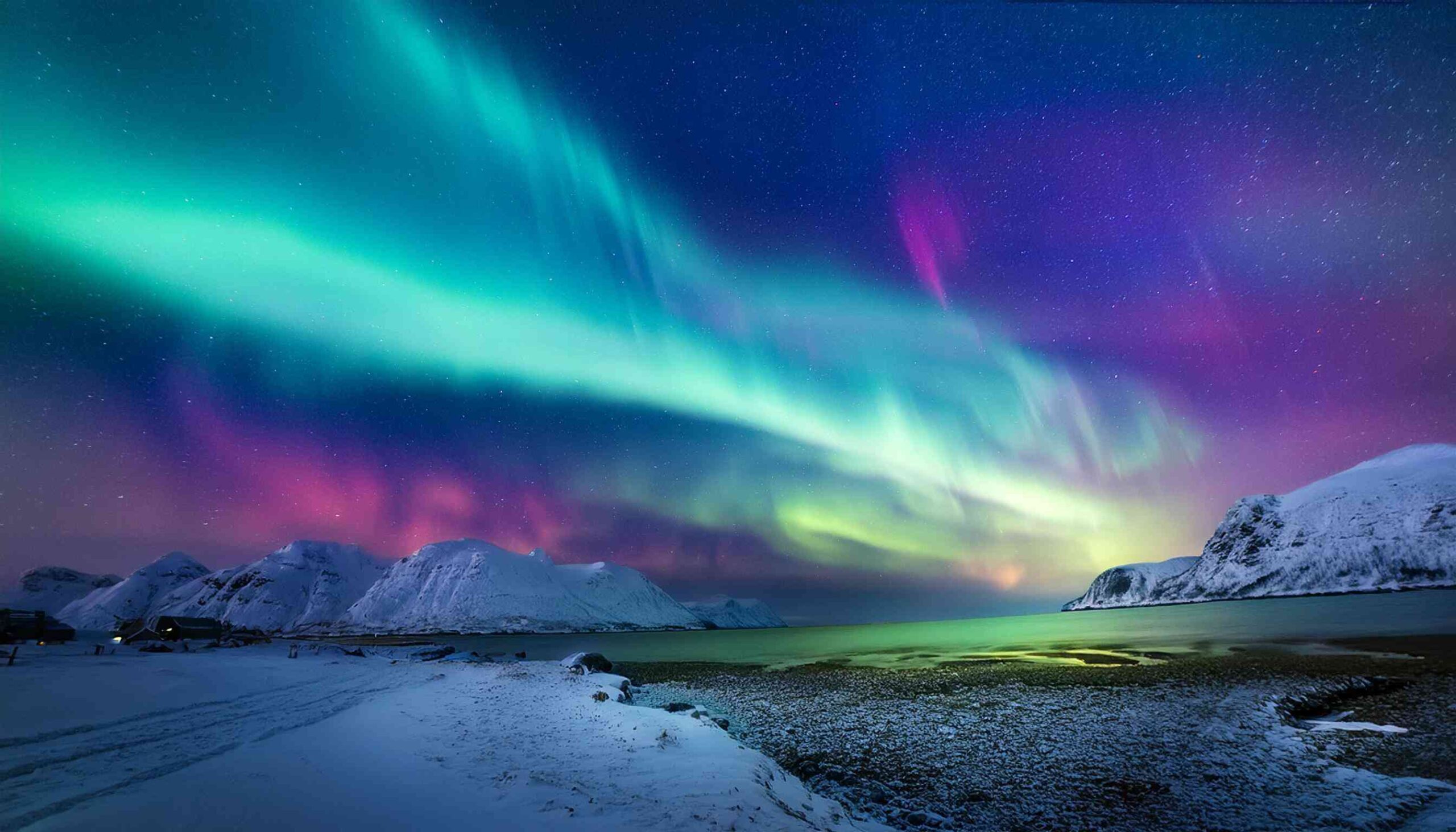
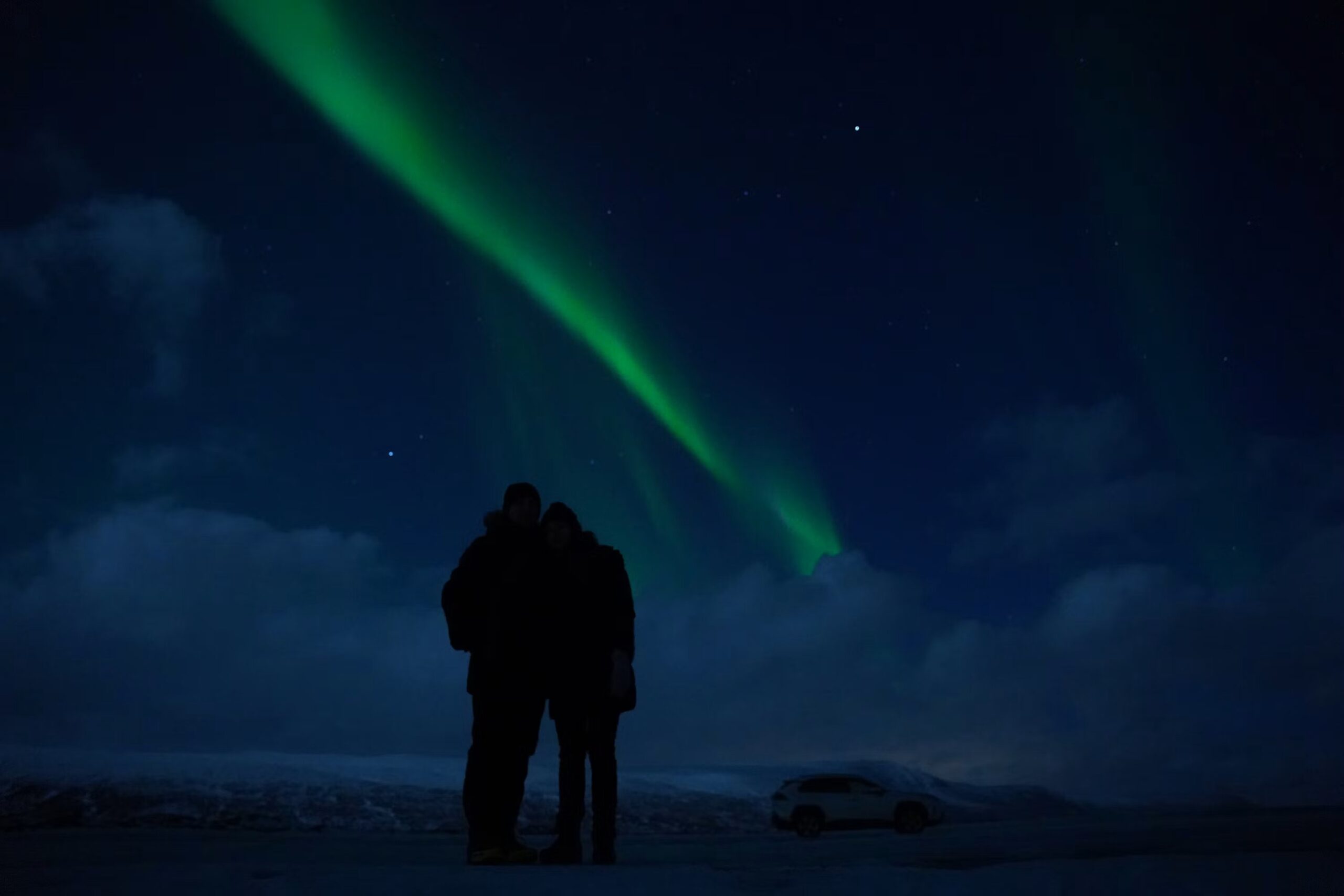
The Northern Lights are not a destination. They are a phenomenon — charged particles from the sun colliding with gases in the Earth’s upper atmosphere, releasing light in curtains of green, violet, pink, and occasionally deep red. The display is silent, unpredictable, and impossible to replicate. Watching the aurora with someone is unlike sharing any other travel experience: there is no narration, no guide explaining what the two of you are seeing, no schedule. There is only the sky, the cold, and the two of you standing in it together.
The aurora season runs from September through March, with peak activity between December and February when the nights are longest and the skies are darkest. But timing is only half the equation. The other half is the eleven-year solar cycle — the sun’s magnetic activity rises and falls over roughly a decade, and the current cycle is approaching its maximum. The years 2025 and 2026 sit near the peak of Solar Cycle 25, which means aurora activity is stronger, more frequent, and visible at lower latitudes than it will be again until the mid-2030s. For the two of you considering a winter honeymoon, the timing is as good as it gets.
What separates a northern lights honeymoon from a northern lights trip is what happens during the day. The aurora appears after dark — usually between nine in the evening and two in the morning. The daylight hours belong to the destination itself: glacier walks, hot springs, fjord cruises, whale watching, dog sledding, Inuit culture, volcanic landscapes. A well-designed aurora honeymoon gives the two of you a complete winter experience with the northern lights as the evening possibility, not the sole purpose. That distinction matters. The two of you who build the entire honeymoon around seeing the aurora will feel cheated on a cloudy night. The two of you who build it around the destination will feel grateful for the night the sky turned green.
Three Destinations for a Northern Lights Honeymoon
Iceland — The Accessible Aurora
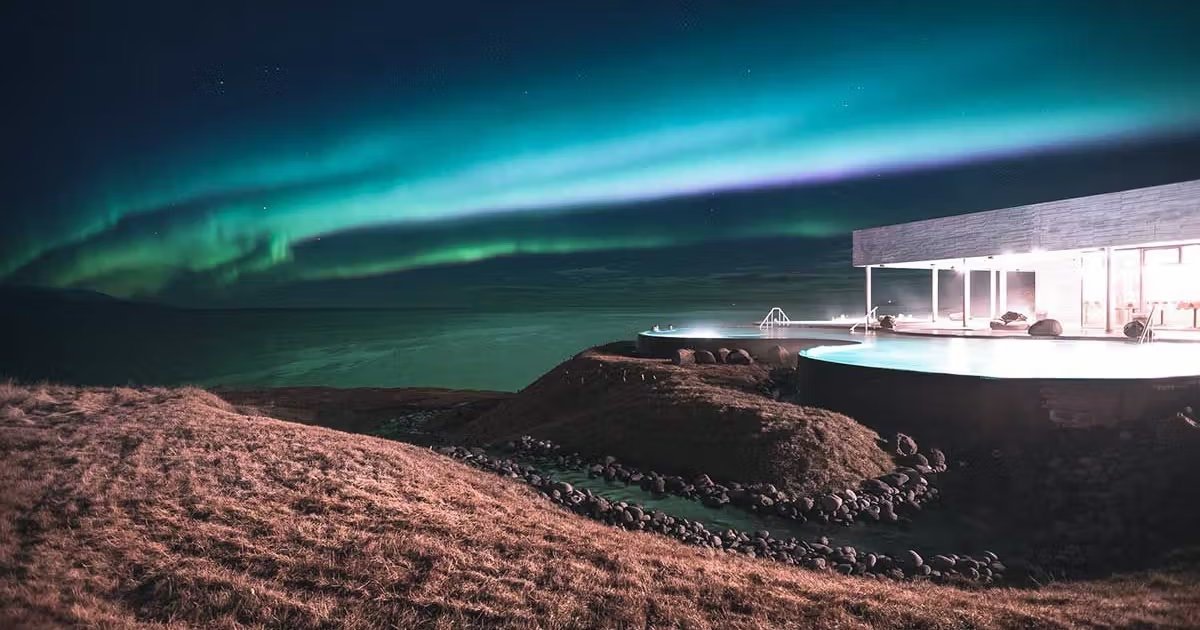
Iceland is where most northern lights honeymoons begin — and for good reason. Reykjavík is a four-to-five-hour flight from the eastern United States, three hours from London, and connected to most major European hubs. No other aurora destination is this accessible. The country is compact enough that the two of you can drive from the capital to prime viewing territory — the Snæfellsnes peninsula, the Hotel Husafell region, or the south coast near Vik — in under three hours.
Iceland’s advantage is variety. The Golden Circle, the volcanic interior, the glacier lagoons, the geothermal pools — these fill the daylight hours with a landscape that feels extraterrestrial even without the aurora. The two of you soak in a natural hot spring while snow falls around the edges, and if the sky clears after midnight, the lights appear directly above the steam. The combination of geothermal warmth and celestial display is uniquely Icelandic.
The trade-off is popularity. Iceland receives more aurora-seeking visitors than any other destination in the Northern Hemisphere, and the areas closest to Reykjavík carry light pollution that diminishes the display. The solution is simple: stay outside the capital. Hotel Husafell, in the Borgarfjördur valley, sits in a corridor of minimal light pollution with heated outdoor pools oriented toward the northern sky. The Deplar Farm in Tröllaskagi offers total isolation in a converted sheep farm surrounded by mountains.
Iceland works best for the two of you who want the aurora as part of a broader winter honeymoon — not as the only reason for the trip. Read the full Iceland honeymoon guide.
Norway — The Dramatic Aurora
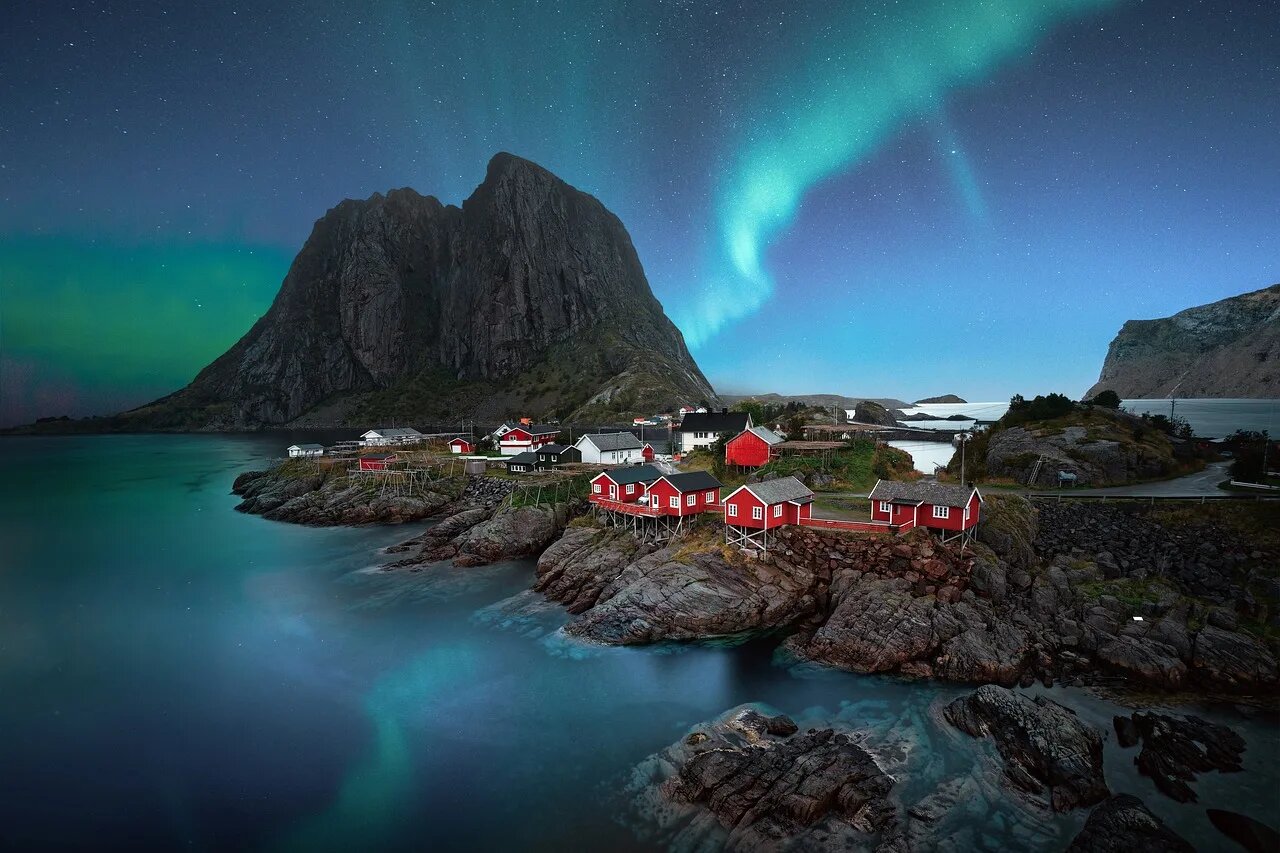
Norway is the destination for the two of you who want the highest probability of seeing the aurora and the most dramatic backdrop when it appears. Tromsø, three hundred kilometres north of the Arctic Circle, is the aurora capital of Europe — a small city with a university that studies the phenomenon, a network of specialist guides who chase the lights nightly, and a statistical advantage that comes from its coastal position: the Gulf Stream keeps the skies clearer here than at equivalent latitudes inland.
Beyond Tromsø, the Lofoten Islands offer the most photogenic aurora setting on earth: green curtains reflected in the still water of fjords, with the jagged peaks of the Lofoten Wall rising behind the fishing villages. Kirkenes, near the Russian and Finnish borders, adds a frontier quality — fewer visitors, darker skies, and the Sorrisniva Igloo Hotel, rebuilt entirely from ice and snow each winter, where the two of you sleep in a room carved from frozen river water beneath aurora-active skies.
Norway’s advantage over Iceland is focus. Tromsø exists as an aurora hub — the guides, the infrastructure, the viewing points are all oriented toward maximising the two of you’s chances of seeing the lights. The chase excursions drive inland or along the coast depending on cloud cover, using real-time data from the NOAA aurora forecast to position the two of you where the sky is clearest.
The trade-off is that Norway’s aurora region offers fewer daytime activities than Iceland. Tromsø has whale watching (November through January), dog sledding, and Sami reindeer encounters — but the landscape variety is narrower. Norway works best for the two of you who prioritise the aurora itself and want the best odds of a strong display. Read the full Norway fjords honeymoon guide.
Greenland — The Wilderness Aurora
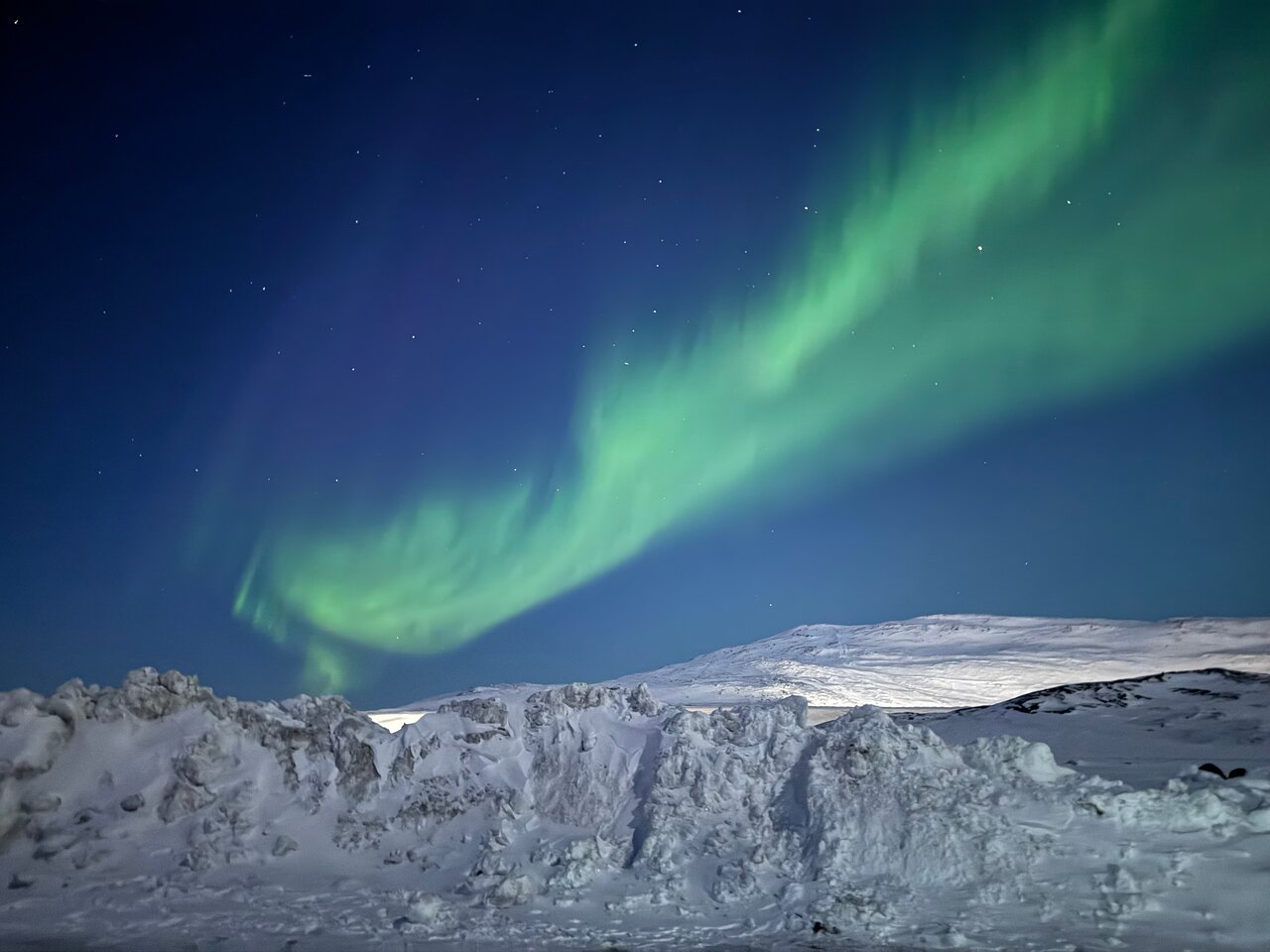
Greenland is the northern lights honeymoon for the two of you who want the aurora in its purest form — no light pollution, no crowds, no infrastructure between the two of you and the sky. Ilulissat, on the west coast, sits at the mouth of the Ilulissat Icefjord, a UNESCO World Heritage site where the Sermeq Kujalleq glacier calves icebergs the size of city blocks into the Disko Bay. The aurora above the icebergs is not a photograph. It is a scale experience — the lights stretching from horizon to horizon above ice formations that dwarf everything human.
Greenland adds a cultural dimension that Iceland and Norway do not. The Inuit communities of the west coast have lived with the aurora for millennia, and the local understanding of the lights — woven into mythology, art, and seasonal rhythm — gives the phenomenon a context that scientific explanation alone cannot provide. In Inuit tradition the aurora has carried stories of spirits, ancestors, and the movements of the animal world across the sky for generations. The two of you are not tourists watching a light show. The two of you are visitors in a landscape where the aurora is part of the weather, as familiar and unremarkable to locals as rain is to Londoners. That perspective changes the experience — the two of you stop trying to photograph the lights and start watching them the way the people who live beneath them always have.
The trade-off is access. Greenland has no direct flights from most major cities — the two of you route through Copenhagen or Reykjavík, and internal flights depend on small aircraft and weather windows. The accommodation options are limited: Ilulissat has the Hotel Arctic and a handful of lodges, but nothing approaching the luxury infrastructure of Iceland or Norway. Greenland demands flexibility, tolerance for weather delays, and an appetite for remoteness. It rewards those qualities with an aurora experience that no other destination can match. Read the full Greenland honeymoon guide.
How to Choose Your Northern Lights Destination
The right destination depends on what the two of you want the honeymoon to be — not just where the two of you want the aurora to happen.
If the two of you want variety beyond the aurora, choose Iceland. The volcanic landscapes, glacier lagoons, geothermal pools, and coastal drives fill every daylight hour. The aurora is the evening bonus, not the centrepiece. Iceland also works for the two of you who are less comfortable with extreme cold — the Gulf Stream keeps coastal temperatures milder than the latitude suggests, and the geothermal infrastructure means the two of you are never far from warmth.
If the two of you want the best probability of seeing a strong display, choose Norway. Tromsø’s combination of latitude, coastal weather patterns, and specialist guide networks gives the two of you the statistical edge. The Lofoten Islands add a visual dimension — aurora reflected in fjord water — that photographs like nowhere else. And Sorrisniva’s ice hotel is the signature accommodation experience that most aurora honeymooners describe as the single most memorable night of their trip.
If the two of you want total wilderness and cultural depth, choose Greenland. The icebergs, the Inuit heritage, the absolute darkness of a west-coast winter night — Greenland delivers an aurora experience that feels genuinely wild. The trade-off is comfort and access: this is the destination for the two of you who measure a honeymoon by its intensity, not its polish.
If the two of you cannot decide, combine two. Iceland and Norway connect easily — a short flight from Reykjavík to Tromsø — and together they give the two of you geothermal variety in the first half and dedicated aurora chasing in the second. We have designed honeymoons that open with four nights in Iceland and close with three in northern Norway, covering both registers.
How We Plan a Northern Lights Honeymoon
Every northern lights honeymoon starts with the same conversation: the two of you telling us when the honeymoon falls and how important seeing the aurora is relative to everything else. If the dates are fixed — say, late January — we choose the destination with the best statistical window for that period. If the dates are flexible, we work backwards from the aurora forecast and the Icelandic Met Office aurora predictions to identify the optimal week.
We then build the itinerary around the two principles that make a northern lights honeymoon work: flexibility and patience. The two of you need at least three consecutive nights in a dark-sky location to have a reasonable chance of seeing the aurora — weather systems move through, and the night the two of you arrive may be overcast while the following night is clear. We never schedule single-night stays in aurora territory. We also avoid filling the evenings — no fixed dinner reservations after eight, no commitments that prevent the two of you from driving thirty minutes to a clearing when the forecast turns green.
The accommodation is as important as the location. We select lodges and hotels with aurora wake-up services — staff who monitor the sky and call the two of you’s room when the lights appear. At Hotel Husafell in Iceland, the outdoor geothermal pools face north with unobstructed horizons. At Sorrisniva in Norway, the glass-roofed cabins let the two of you watch the sky from bed. These are not gimmicks. They are practical design decisions that increase the two of you’s chances of seeing the aurora without spending every night standing in the cold.
Frequently Asked Questions
Where is the best place to see northern lights on honeymoon?
Tromsø, Norway offers the highest probability due to its latitude, coastal weather patterns, and specialist guide networks. Iceland offers the most variety beyond the aurora. Greenland offers the most dramatic and unspoiled viewing conditions.
What is the best month for a northern lights honeymoon?
December through February for maximum darkness and aurora activity. September and March offer shorter viewing windows but milder temperatures and some daylight for activities. The current solar cycle peaks in 2025-2026, making these years particularly favourable.
Can you guarantee seeing the northern lights?
No. The aurora depends on solar activity and cloud cover, both of which are unpredictable. What a well-planned honeymoon can guarantee is three or more nights in optimal viewing territory, specialist guides who chase clear skies, and a destination that is extraordinary even without the lights.
What are glass igloo northern lights experiences?
Glass-roofed cabins and ice hotels that let the two of you watch the aurora from bed. The Sorrisniva Igloo Hotel near Kirkenes, Norway is rebuilt from ice each winter. Iceland offers glass cabin options at properties like Hotel Husafell. These experiences book months in advance during peak season.
Iceland vs Norway for northern lights?
Iceland is more accessible, has more daytime activities, and milder coastal temperatures. Norway — specifically Tromsø and Lofoten — offers higher aurora probability, more dramatic fjord backdrops, and dedicated chase excursions. The two of you who prioritise variety choose Iceland. The two of you who prioritise the aurora itself choose Norway.
Plan Your Northern Lights Honeymoon With Us
Tell us when the two of you are travelling and whether the aurora is the centrepiece or the bonus. We will match the destination, the dates, and the dark-sky accommodation to give the two of you the best possible chance.