
The water around Bazaruto Archipelago shifts between aquamarine and deep sapphire depending on the hour. At dawn, the sand is warm enough to walk barefoot before breakfast, and the only sound is the hull of a hand-carved dhow cutting through the shallows. Mozambique is, quietly, one of the last coastlines in Africa where private islands still outnumber resorts.
A Mozambique honeymoon is not a replacement for the Maldives or the Seychelles — it is their counterpoint: rougher edges, deeper culture, the scent of cashew-wood smoke carrying across the dunes at dusk. For the two of you who have already seen the obvious postcards, Mozambique offers something the Indian Ocean‘s more polished destinations cannot — the feeling that you arrived before anyone else.
We design Mozambique honeymoons across three distinct coastlines, from the Bazaruto sandbars to the coral wilderness of the Quirimbas, with the option to pair beach with bush for an experience the rest of the Indian Ocean simply doesn’t offer.
Why Mozambique for Your Honeymoon
Privacy Without the Price of Isolation
The Indian Ocean has no shortage of private-island honeymoons. What Mozambique offers is different: genuine seclusion on islands that feel unclaimed, not manicured. The Bazaruto and Quirimbas Archipelago together hold fewer hotel rooms than a single Maldivian atoll. You can walk a beach for an hour and meet no one — not because the resort arranged it, but because the island is simply empty.
Properties like Kisawa Sanctuary on Benguerra Island and Azura Benguerra are built into the landscape rather than on top of it, using local coral stone and reclaimed dhow timber. The seclusion here is structural, not theatrical.
The Dhow Sailing Tradition
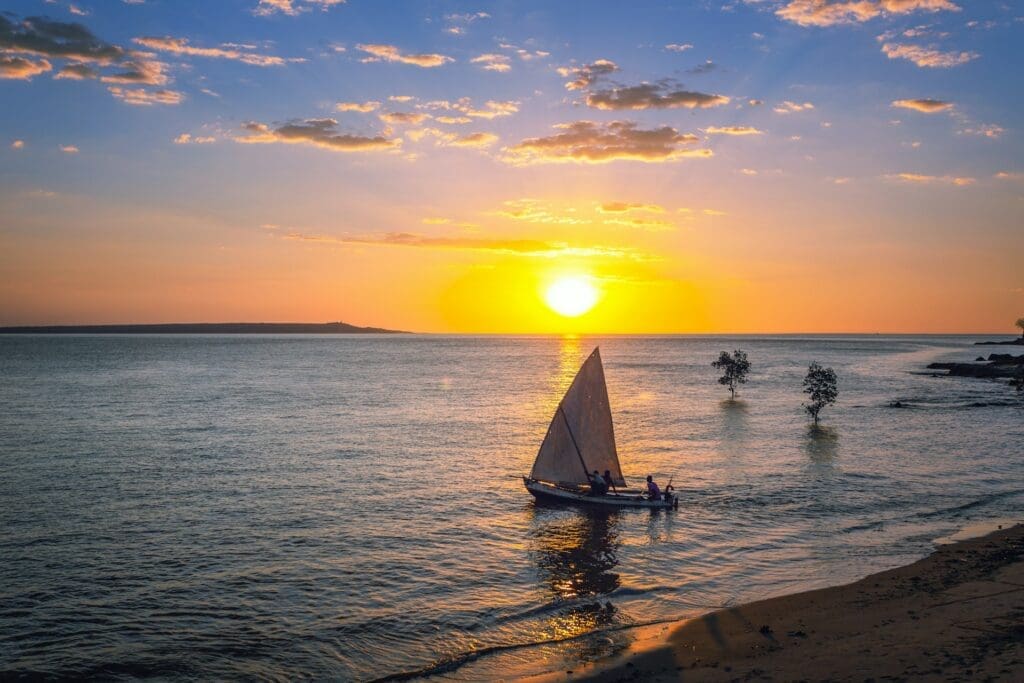
Before the resorts, before the diving operators, Mozambique’s coast belonged to the dhow sailing routes that connected East Africa to Arabia and India for centuries. The hand-sewn wooden boats are still built on the beaches of Vilanculos and the Quirimbas, and a sunset dhow cruise here is not a hotel amenity — it is a living fragment of maritime heritage that predates every lodge on the archipelago.
Several properties arrange private dhow excursions to uninhabited sandbanks, where the crew sets a table on the sand and grills the morning’s catch over driftwood. It is the kind of dinner that no restaurant — however beautifully designed — can replicate.
Beach and Bush: Where the Indian Ocean Meets the African Interior
Mozambique sits beside two of southern Africa’s most significant wildlife reserves. Gorongosa National Park, once devastated by civil war and now one of the continent’s great conservation recovery stories, lies within domestic flying distance of the coast. South Africa’s Kruger National Park is just across the border.
This means a Mozambique honeymoon can move from morning game drives to afternoon snorkelling in the same week — a combination that no other Indian Ocean destination can offer. For the two of you who want both the bush and the beach, Mozambique is the only place that delivers them without a long-haul flight between the two. Explore how safari and beach honeymoons pair together across Africa.
The Journey: A Suggested Mozambique Itinerary
A ten-night Mozambique honeymoon moves naturally from south to north, following the coastline and shifting in rhythm as the landscape changes. Below is a framework — every journey we design is adjusted to your pace, your interests and the season.
Bazaruto Archipelago — Three Nights
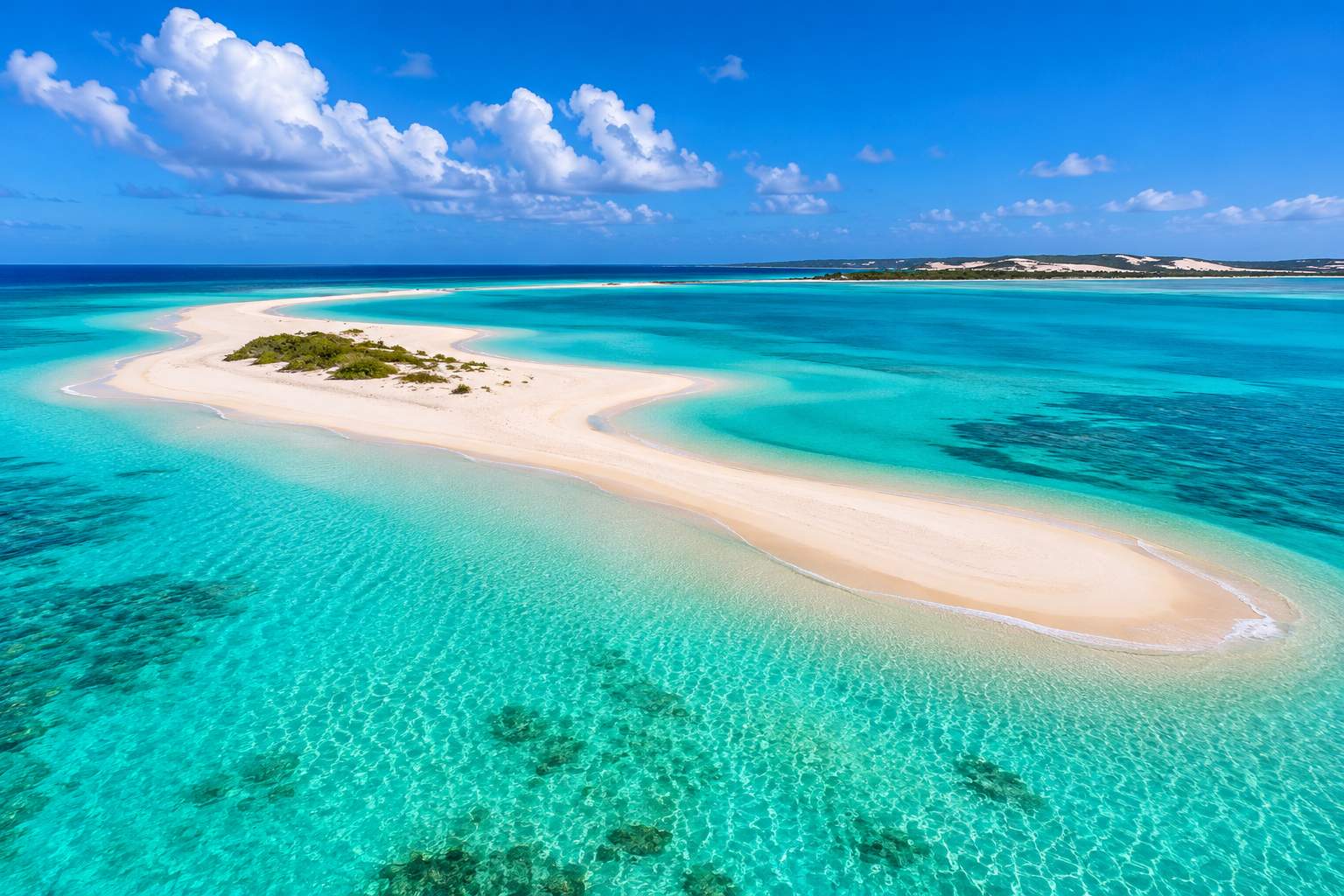
Your first chapter begins on the Bazaruto sandbars. Fly from Maputo or Johannesburg to Vilanculos, then transfer by helicopter or speedboat to the archipelago. The days here are unhurried: snorkelling over coral gardens that drop into deep channels, walking the long sandbars at low tide, and watching dugongs surface in the calm waters between islands.
Anantara Bazaruto occupies the largest island with direct beach access and a diving centre. Azura Benguerra and Kisawa Sanctuary sit on neighbouring Benguerra Island, each with a distinct character — the former warm and welcoming, the latter deliberately raw and private. The Bazaruto islands hold UNESCO tentative World Heritage status, and the marine reserve protects one of the Indian Ocean’s most intact reef systems.
Vilanculos — Two Nights
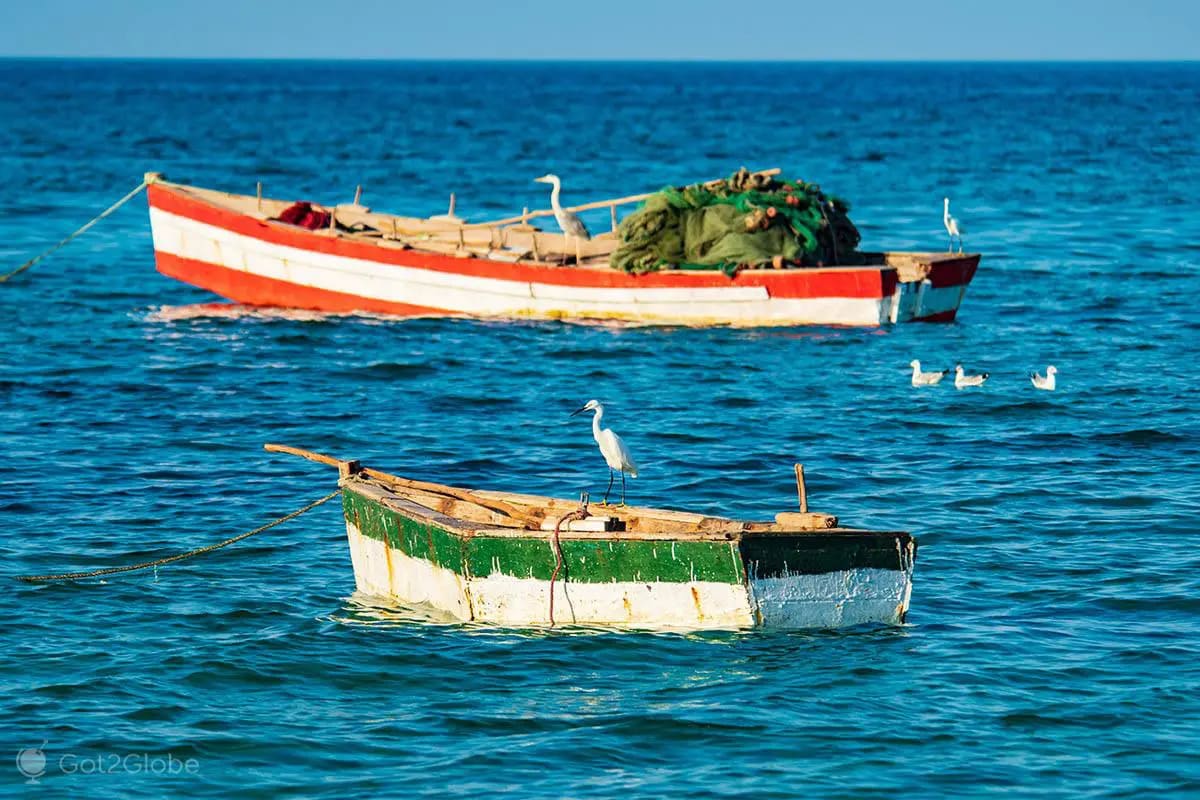
Return to the mainland and the coastal town of Vilanculos. The pace shifts: this is where Mozambique’s daily life meets the Indian Ocean. The market is a sprawl of dried fish, cashew nuts and capulana fabric. The beachfront is lined with dhow-building workshops where artisans shape hulls by hand, just as they have for generations.
Stay at a boutique property on the outskirts of town, where the view across the channel to Bazaruto is uninterrupted and the evenings are long, candlelit and quiet. Eat fresh-grilled prawns at a beachside restaurant with sand floors and no menu — the chef cooks what the fishermen brought in that morning. Vilanculos is the gateway to the archipelago, but it deserves two nights of its own for the texture and rhythm it adds to the journey.
The Quirimbas — Three Nights
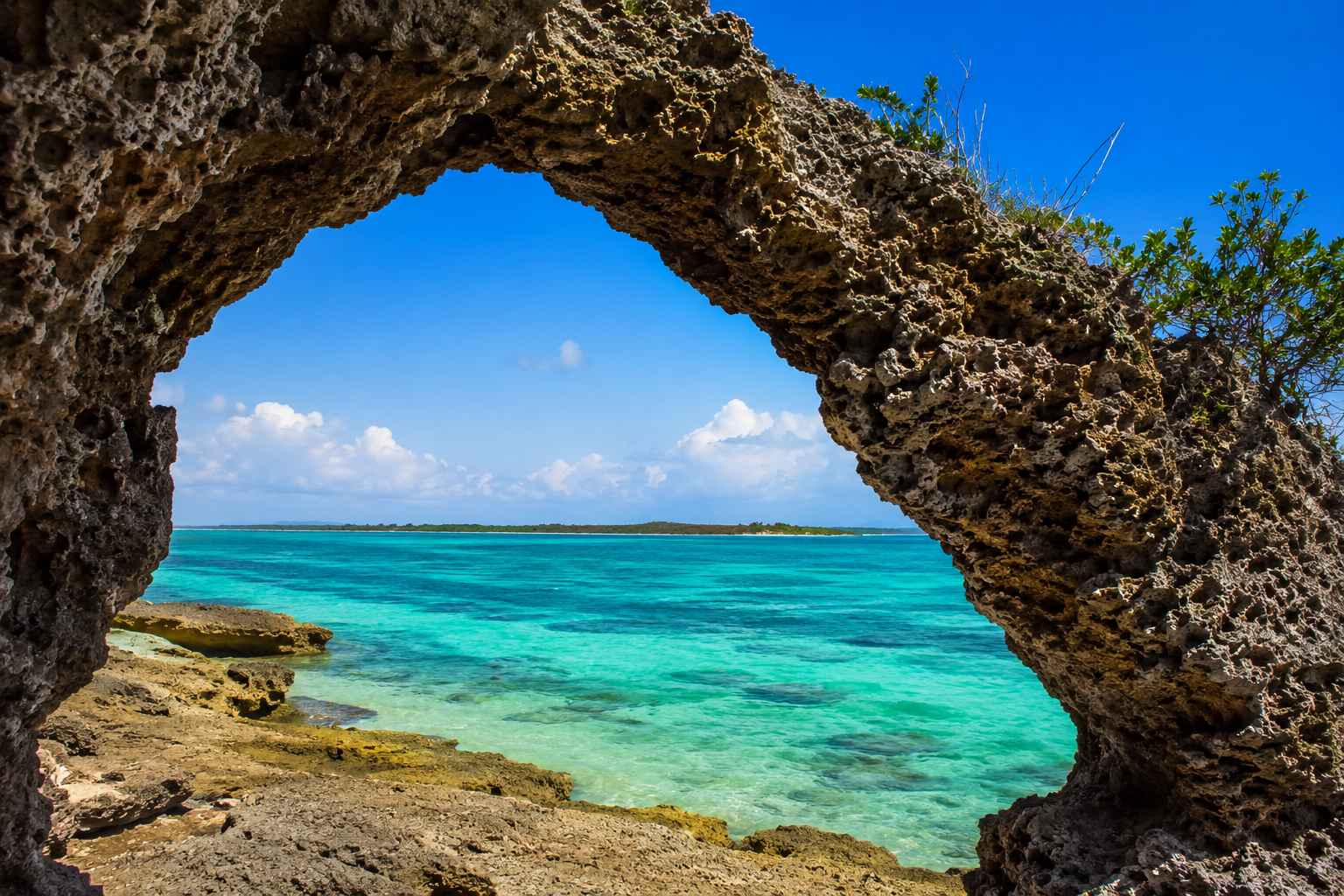
Fly north to the Quirimbas Archipelago, where the mood turns quieter still. The Quirimbas are wilder than Bazaruto — fewer properties, deeper reefs, and a cultural layer the southern islands lack. Ibo Island, the old colonial trading post, is a living archive of coral-stone forts and silversmith workshops where artisans still shape jewellery from melted coins.
A handful of private island lodges sit on tiny coral islands nearby, each with no more than a dozen rooms. The diving here ranks among the best in East Africa — pristine walls, manta rays and, between July and October, migrating humpback whales passing through the deep channels.
Maputo — Two Final Nights
End in the capital. Maputo is Africa’s most underrated coastal city: art-deco architecture from the colonial era, a fish market that rivals Lisbon’s, jazz bars in the Baixa district, and seafood restaurants where the peri-peri prawns have earned their reputation honestly. The city moves at its own tempo — unhurried but electric, with a creative energy that surfaces in galleries, street murals and the music that spills from open doorways after dark. After a week of island silence, Maputo’s warmth is the right coda.
Stay at a design hotel in the Polana district and spend a morning exploring the iron house attributed to Gustave Eiffel, the central market, and the coastal promenade along the Marginal.
Best Time to Visit Mozambique
Mozambique’s dry season runs from May through November, and this is the window we recommend for most honeymoons. Skies are clear, humidity drops, and water visibility peaks for diving and snorkelling. June to August brings the coolest temperatures — ideal for pairing beach time with a bush extension to Gorongosa or Kruger.
October and November offer a specific draw: whale sharks arrive off the Bazaruto coast, and the water warms enough for comfortable open-ocean swimming. The shoulder months of May and early December are quieter still, with fewer guests at the island lodges and a sense of the season turning.
The wet season — December through April — brings cyclone risk, higher humidity and occasional road closures in the north. Most island lodges remain open year-round, but the experience is different: dramatic afternoon storms, lush green interior landscapes, and significantly lower rates. If the two of you are drawn to drama over polish, the wet season has its own beauty.
Regions and Experiences to Anchor Your Stay
The Bazaruto Archipelago
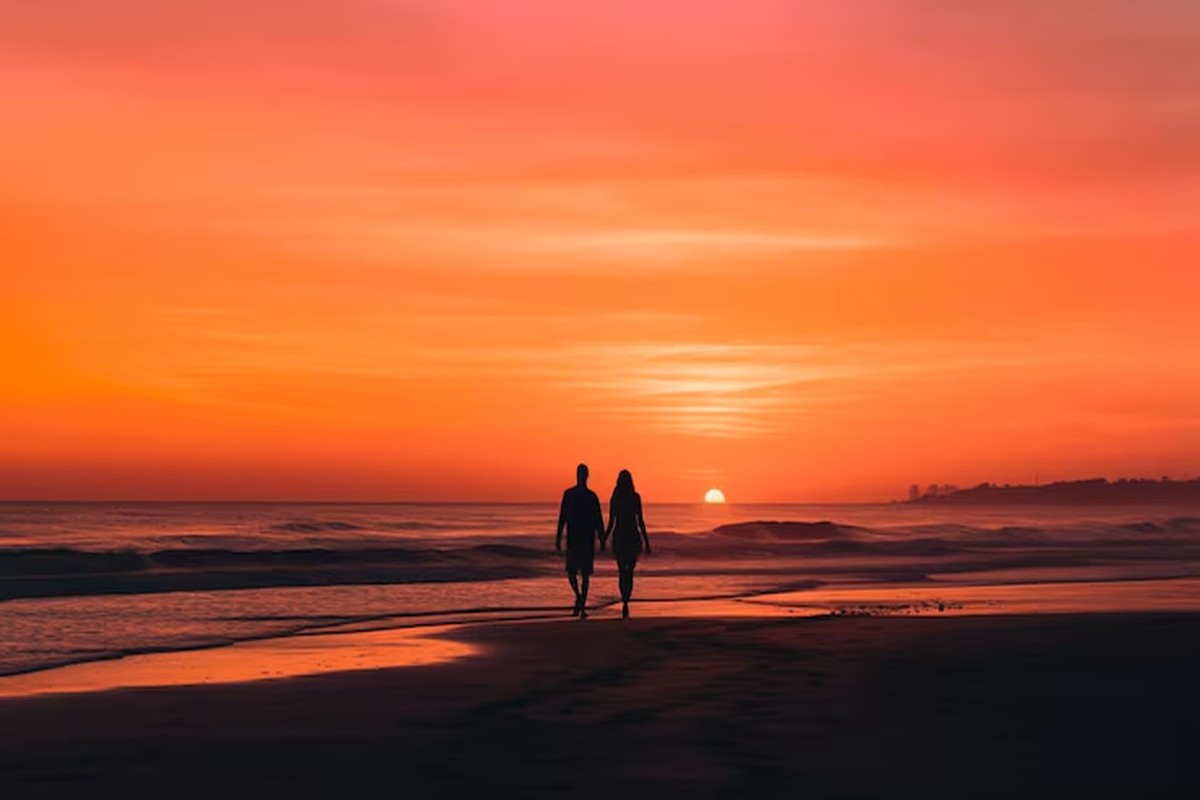
Five islands strung along a thirty-kilometre sandbar, protected as a marine national park since 1971. Bazaruto is the anchor: the largest island, with the widest beaches and the most established lodges. Benguerra, next door, is smaller and wilder — Kisawa Sanctuary was built here precisely because the island resists easy development. The archipelago’s marine reserve shelters dugongs, sea turtles, dolphins and some of the most diverse coral in the western Indian Ocean. This is where most Mozambique honeymoon destinations begin, and for good reason.
The Quirimbas Archipelago
Thirty-two islands off the northern coast, of which only a handful have any accommodation at all. The Quirimbas are for the two of you who want genuine remoteness — not the curated kind. Ibo Island’s heritage is unique in East Africa: Portuguese colonial ruins, Swahili-influenced architecture and a silversmith tradition that predates European contact. The diving here is among the finest in the western Indian Ocean — vertical walls dropping into deep blue, manta ray cleaning stations, and between June and November, humpback whales passing through the channels on their annual migration north.
Pairing Mozambique with a Safari
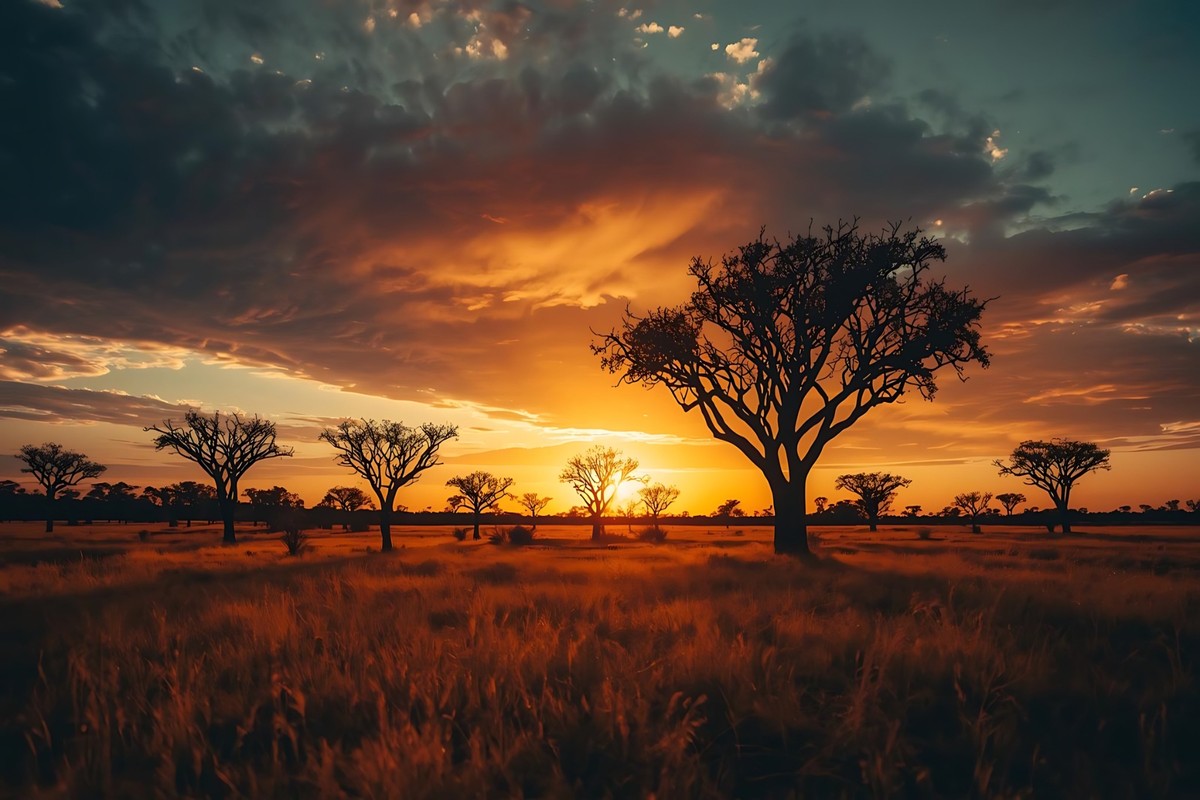
The beach-and-bush combination is Mozambique’s structural advantage over every other Indian Ocean honeymoon destination. Gorongosa National Park, accessible from Vilanculos by charter flight, has been rebuilt from near-total destruction into one of Africa’s most remarkable conservation projects — lions, elephants, and a community-driven model that distinguishes it from every other reserve on the continent. Kruger National Park in South Africa is a short flight from Maputo, allowing you to open or close the honeymoon with a luxury safari before crossing into the coast. Discover more off-the-beaten-path honeymoon destinations that combine wildlife and ocean in a single journey.
How We Plan a Mozambique Honeymoon
Mozambique rewards specificity. The right island, the right season, the right balance of beach and bush — these details shape whether the trip feels curated or simply booked. We begin with a conversation about how the two of you want the honeymoon to feel: whether you lean toward raw wilderness or gentle luxury, whether you want to dive every day or drift through the days without a schedule, whether the bush extension excites you or whether ten nights of coastline is exactly right.
From there, we build the routing, select the properties, arrange the internal flights and boat transfers, and deliver a day-by-day plan with a practical travel checklist. We’ll advise on which season suits your priorities, which island matches your pace, and whether the bush extension adds the right contrast or stretches the trip beyond its natural rhythm.
Our on-the-ground partners in Mozambique handle the logistics you won’t see — the helicopter timings, the dhow crew, the sandbank dinner that appears at exactly the right hour. You travel with the confidence that every transfer, every handoff, every quiet detail has been arranged by people who know the coastline personally.
Frequently Asked Questions
Is Mozambique safe for a honeymoon?
The southern coast and island archipelagos — Bazaruto, Quirimbas, Vilanculos and Maputo — are safe and well-established for international travellers. We work exclusively with trusted local operators and properties with strong safety records. As with any destination, we provide a detailed briefing on health, transport and local customs before departure.
How many nights do you need for a Mozambique honeymoon?
Seven to twelve nights is the range we recommend. A focused island stay on Bazaruto or the Quirimbas works well in seven nights. A multi-zone itinerary — island, mainland and bush extension — benefits from ten to twelve. We adjust the routing to match your available time and priorities.
What is the best island in Mozambique for a honeymoon?
It depends on what the two of you are looking for. Bazaruto offers the widest beaches and the most accessible luxury lodges. The Quirimbas offer deeper remoteness, richer cultural heritage and world-class diving. We help you match the island to your style — read our full comparison in the best honeymoon destinations in Mozambique.
Can you combine a Mozambique honeymoon with a safari?
Yes — and this is one of Mozambique’s strongest advantages as a honeymoon destination. Gorongosa National Park is accessible from Vilanculos by charter flight. Kruger National Park in South Africa is a short flight from Maputo. Both options allow you to pair the Indian Ocean coast with an African bush experience without a long-haul connection between the two.
What is the best time to visit Mozambique for a honeymoon?
May through November — the dry season — is the window we recommend most often. June to August brings the coolest and clearest conditions. October and November draw whale sharks to the Bazaruto coast. The wet season, December to April, is dramatic and green but carries cyclone risk along the northern coastline.
Mozambique is not the easiest honeymoon to plan, and that is part of its value. The logistics are specific, the distances real, and the reward is a coastline that still belongs to the ocean rather than to tourism. For the two of you who have seen the postcards and want something with salt air, dhow timber and the quiet conviction that the best places are the ones not yet crowded — Mozambique is where we would begin.
Begin Your Mozambique Honeymoon
Tell us when you’d like to travel and how you want the trip to feel. We’ll design the rest — from island to bush, from dhow to dinner on the sand.