
An iceland honeymoon asks the two of you a question before it begins: summer or winter? Midnight sun over a volcanic coastline, or the aurora borealis rippling above a snow-covered valley? The answer shapes every detail — the light, the landscape, the mood — and the fact that Iceland offers two entirely different honeymoons depending on when you arrive is what makes it one of the most compelling destinations in Europe.
Reykjavik is the gateway, but Iceland’s character lives on the road beyond it. The Ring Road — Route 1, a thousand-kilometre circuit around the island — is the framework for a honeymoon that changes every hour: glaciers to geysers, black sand beaches to whale-filled fjords, geothermal hot springs to volcanic craters. And then there are the Westfjords, the wild northwest peninsula that most visitors skip — where the roads narrow, the cliffs steepen, and the silence deepens into something extraordinary.
We design Iceland honeymoons as seven to ten-night driving journeys, with boutique hotels and private lodges anchoring each section. The result is an Iceland honeymoon that goes beyond the Golden Circle and the Blue Lagoon — deeper, quieter, and more adventurous than the version most agencies offer.
Why Iceland for Your Honeymoon
Nature That Changes Every Hour
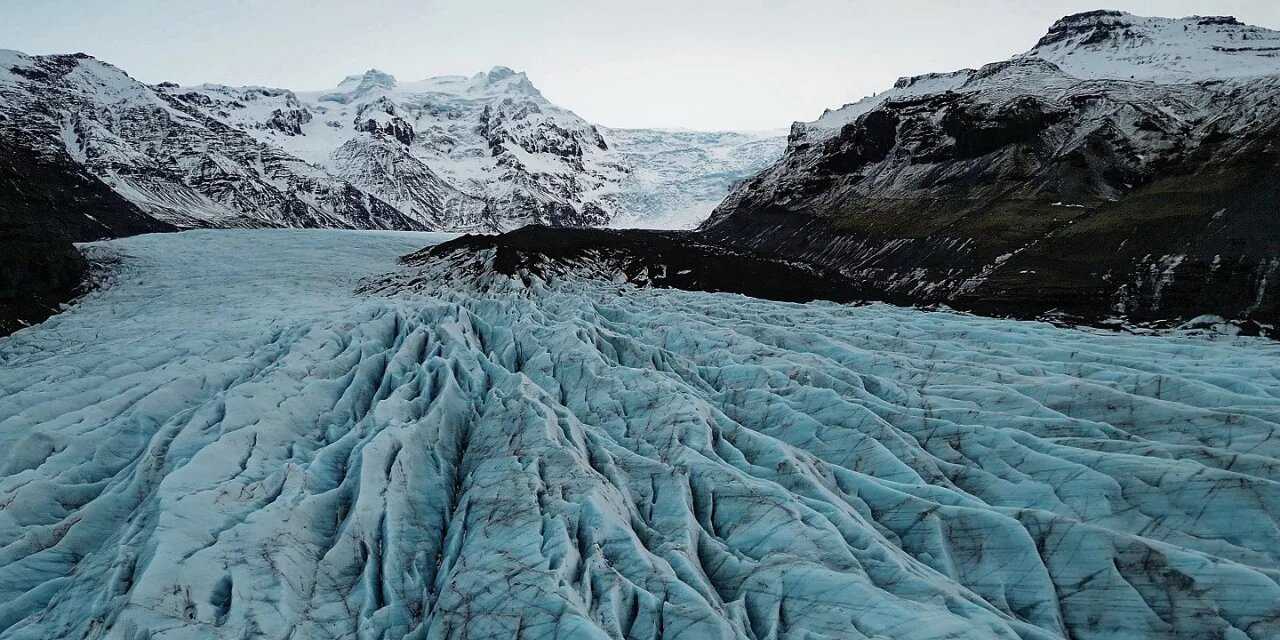
Iceland’s geology is young, active, and visible in a way that few places on earth can match. Drive the South Coast and within a single morning the two of you pass waterfalls that drop from moss-covered cliffs, a glacier tongue that reaches almost to the road, and a beach of black volcanic sand where the Atlantic surf pounds basalt sea stacks. The landscape is not background. It is the conversation.
Vatnajokull, Europe’s largest glacier, covers eight per cent of the island. Jokulsarlon, the glacial lagoon at its base, is where thousand-year-old icebergs calve into milky water and wash onto the black Diamond Beach — a sight so surreal that the first time the two of you see it, you will stand in silence for longer than you expect.
Summer Light vs. Winter Aurora — Choosing Your Iceland
This is the most important decision in planning an Iceland honeymoon, and most guides underplay it. The two seasons offer fundamentally different trips:
Summer (June to August): twenty to twenty-four hours of daylight. The midnight sun means the two of you can hike at ten in the evening, drive to a hot spring at midnight, and photograph the landscape in golden light that lasts for hours. Roads are open, including the highland interiors and the Westfjords. Puffin colonies are active. Whale watching peaks. The mood is expansive, warm (by Icelandic standards — 12 to 15 degrees), and endlessly energetic.
Winter (October to March): four to six hours of daylight, but the aurora borealis dances above the snow. The landscape turns monochrome — black rock, white ice, green light — and the hot springs steam in the cold air. Ice cave exploration inside Vatnajokull is only possible in winter. The mood is intimate, dramatic, and deeply quiet. Driving conditions require more care, and some roads close entirely.
For a honeymoon, we recommend summer for couples who want to cover the Ring Road and maximise the landscape. Winter for couples who are content with the south coast and want the aurora, the ice caves, and the sensation of having Iceland largely to themselves.
Beyond the Golden Circle
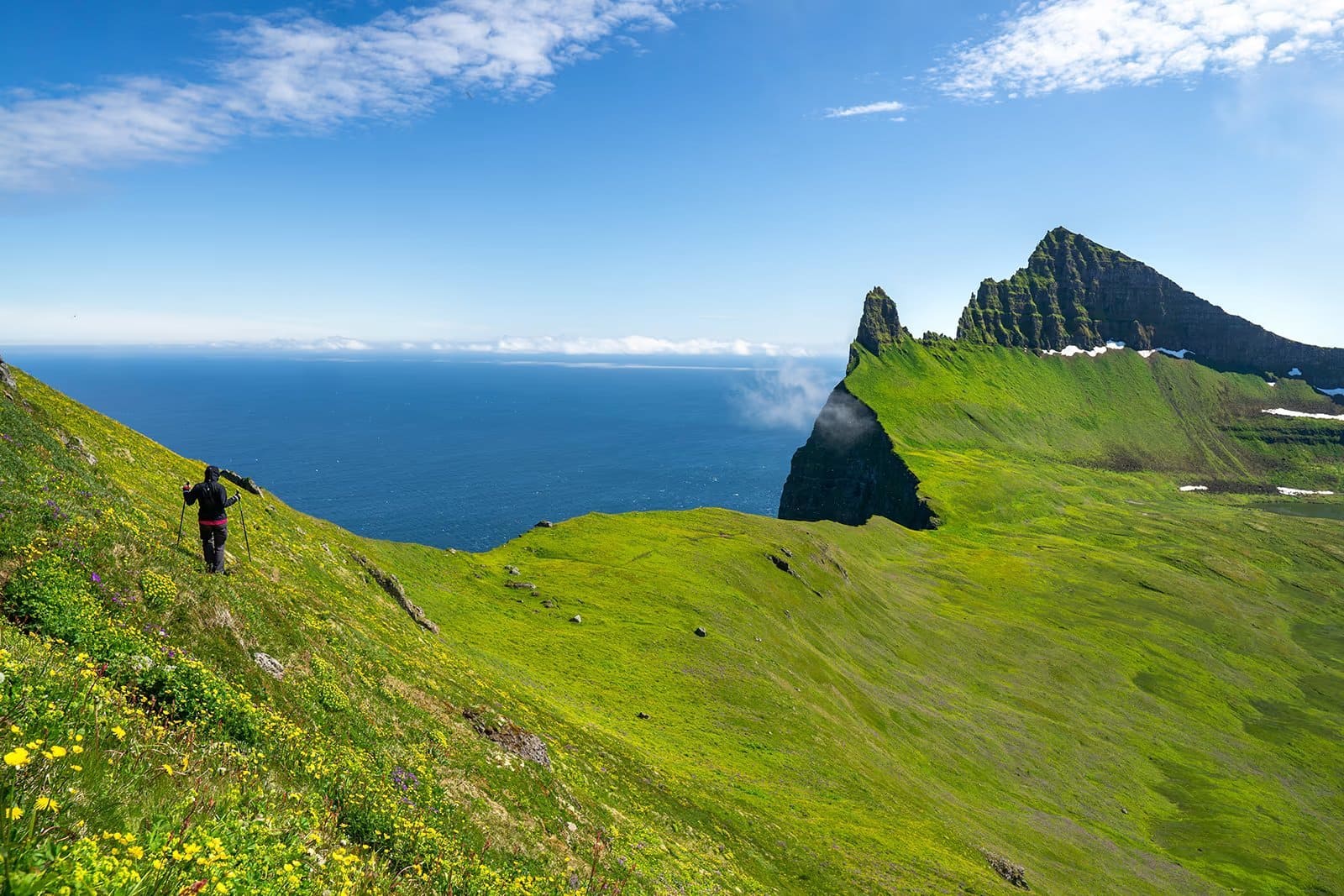
The Golden Circle — Thingvellir, Geysir, Gullfoss — is a fine day trip from Reykjavik, but it is not a honeymoon. Iceland reveals itself on the Ring Road and beyond: the Snaefellsnes peninsula with its glacier-topped volcano and the fishing village of Arnarstapi, the east fjords where the road hugs the waterline for hours without another car, and the Westfjords where the two of you will drive for an hour without seeing another person. The Iceland that matters for a honeymoon is the Iceland beyond the tour bus routes.
The Journey: Ring Road in 7-10 Nights
Seven nights covers the Ring Road at a comfortable pace. Ten nights adds the Westfjords and Snaefellsnes — the extension that transforms a strong honeymoon into an exceptional one.
Days 1-2: Reykjavik and the Golden Circle
Arrive in Reykjavik. Walk the harbour, eat at Grillid or Dill (Iceland’s only Michelin-starred restaurant), and acclimatise to the latitude. Day two: the Golden Circle in a private vehicle — Thingvellir National Park, where the North American and Eurasian tectonic plates meet at a visible rift; Geysir, where the Strokkur geyser erupts every eight minutes; and Gullfoss, the two-tiered waterfall that disappears into a canyon. End the day at Hotel Husafell, a design-led property in the Borgarfjordur Valley with geothermal hot pots and views of the Langjokull glacier.
Days 3-4: South Coast — Waterfalls, Black Sand, Glaciers
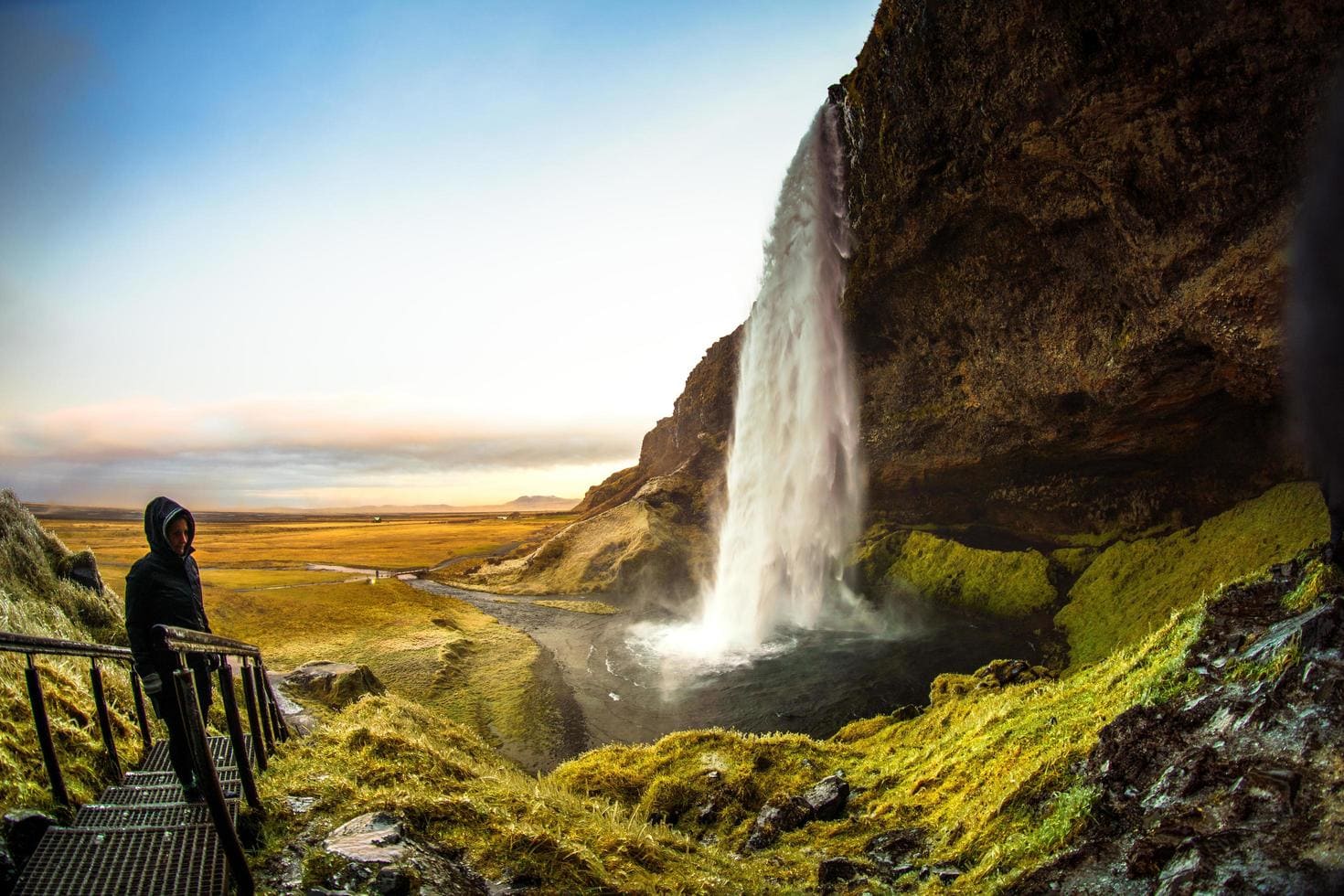
Drive the south coast for the most concentrated stretch of natural drama in Iceland. Seljalandsfoss — the waterfall you walk behind. Skogafoss — the sixty-metre curtain of water with a staircase to the top. Reynisfjara — the black sand beach with the basalt columns and the lethal sneaker waves that the two of you should admire from a respectful distance. Continue to Hotel Ranga, a countryside lodge with an observatory for northern lights viewing (in winter) and a position that puts Vatnajokull within a morning’s drive.
Day four: Jokulsarlon glacial lagoon and Diamond Beach. The lagoon is best experienced by zodiac, weaving between the icebergs. The beach — where ice chunks wash onto black sand — is best at dawn, when the light catches the ice and the tourists have not yet arrived.
Days 5-6: East Fjords and Vatnajokull
The east fjords are Iceland’s quietest section — narrow inlets between steep mountains, fishing villages with brightly painted houses, and roads that wind along the waterline with no traffic. This is the part of the Ring Road that most visitors rush through, and it is the part that rewards slowing down. Stay at a guesthouse or boutique hotel in Djupivogur or Seydisfjordur, and spend an afternoon watching the light change on the fjord from the terrace. Seydisfjordur, reached by a mountain pass that drops dramatically into the village, is where the weekly ferry from Denmark arrives — a town of wooden houses, a blue church, and a quiet harbour that feels closer to Scandinavia than to the volcanic south.
Vatnajokull offers glacier hiking — a guided walk on the ice with crampons and an experienced guide, across a surface of ridges, crevasses, and meltwater channels that shift with every season. In winter, the ice caves beneath the glacier open: cathedral-like chambers of blue ice that exist for a few months each year before collapsing and reforming. The colour inside — a deep, electric blue created by centuries of compressed snow — is something no photograph fully conveys. The glacier experiences anchor the physical heart of the honeymoon.
Days 7-8: North — Akureyri, Myvatn, Whale Watching
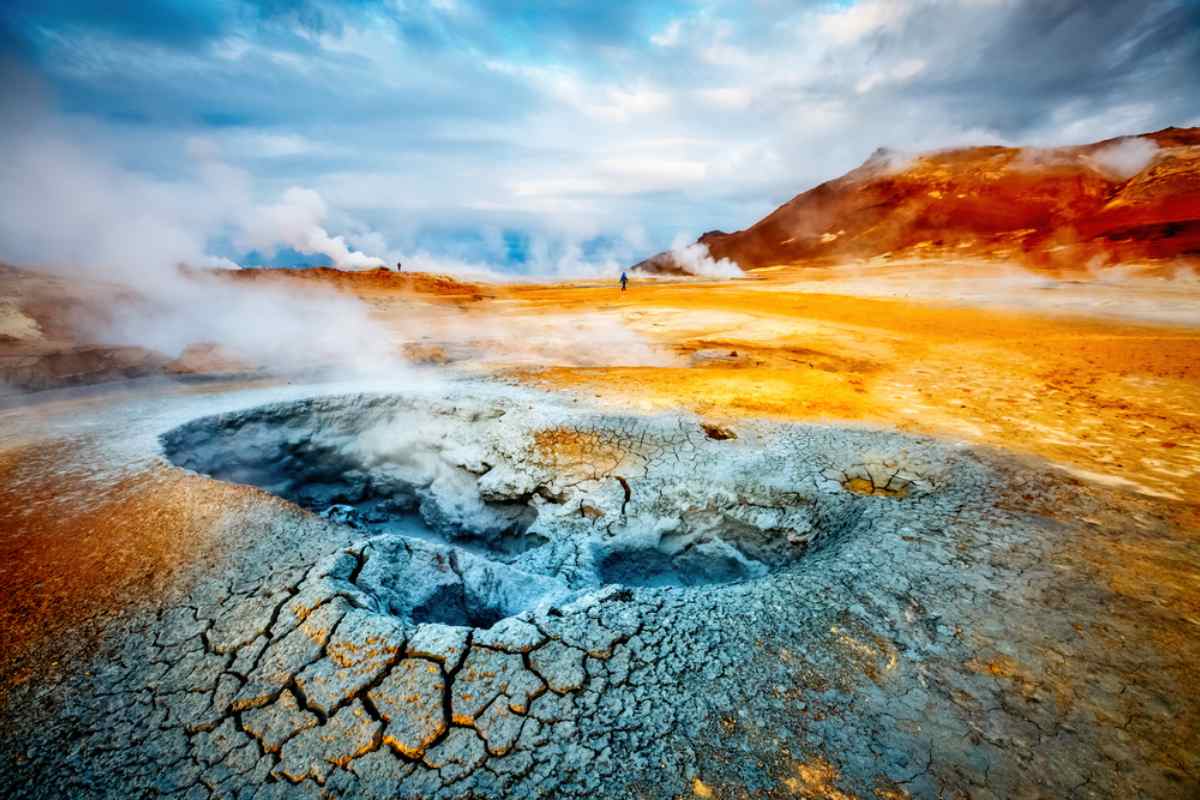
The north is Iceland’s warmest, driest region — centred on Akureyri, the second city, and the Myvatn geothermal area. The Myvatn Nature Baths are the northern alternative to the Blue Lagoon — fewer visitors, turquoise water, and the same mineral-rich geothermal warmth. Husavik, an hour from Myvatn, is Iceland’s whale-watching capital: humpback whales, minke whales, and — between June and August — the possibility of blue whales in Skjalfandi Bay.
Godafoss — the waterfall of the gods — sits on the Ring Road between Akureyri and Myvatn, and in winter it partially freezes into a sculpture of ice and falling water. Akureyri itself is worth an evening: a harbour town of seventeen thousand people with unexpectedly good restaurants, a botanical garden that blooms in the long summer light, and a warmth — both literal and social — that the wind-blasted south coast rarely offers. The north adds a dimension the south coast cannot: wider horizons, gentler light, and a sense of space that deepens as you move further from Reykjavik.
Days 9-10: Westfjords — The Extension Most Skip
The Westfjords are where Iceland becomes truly remote. The roads are gravel, the cliffs are the tallest in Europe, and the population density drops to nearly zero. Deplar Farm, an Eleven Experience property in the Fljot Valley, is the accommodation that justifies the extension: a converted sheep farm with a geothermal infinity pool, heli-skiing in winter, and a level of isolation that makes the south coast feel urban.
Dynjandi, the Westfjords’ signature waterfall, cascades in a wide veil down a mountain face with no fence, no car park, and no crowd. The Latrabjarg bird cliffs — Europe’s largest — host millions of seabirds including puffins that nest within arm’s reach. Two nights in the Westfjords is enough to feel the frontier. For the two of you who want the Iceland that most visitors never see, this is it.
Best Time to Visit Iceland
June to August for the midnight sun, open roads, puffins and whale watching. October to March for the northern lights, ice caves and winter drama. April-May and September are shoulder months: lower prices, some aurora activity, and autumn colours in September that few visitors anticipate. We most often recommend late June to early August for Ring Road honeymoons, and late November to February for south coast winter honeymoons.
Hot Springs Beyond Blue Lagoon
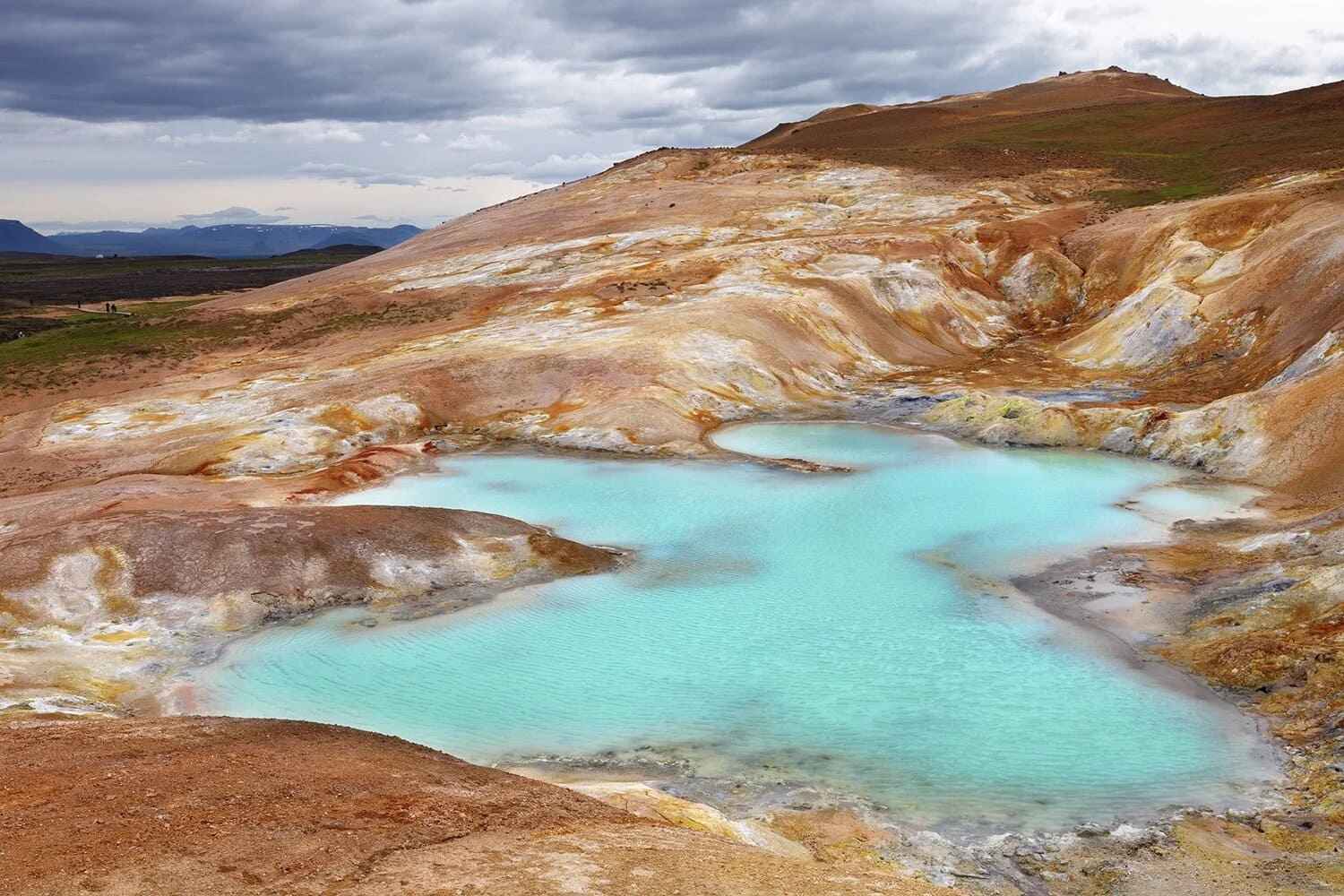
The Blue Lagoon is Iceland’s most famous geothermal spa, and it is worth visiting — particularly the Retreat, the luxury section with a private lagoon and in-water bar. But Iceland has dozens of hot springs that offer a more intimate experience. Sky Lagoon, on the Reykjavik waterfront, pairs a geothermal infinity pool with an ocean horizon. Krauma, near Husafell, uses water from Europe’s most powerful hot spring. Hvammsvik, on a fjord north of Reykjavik, offers eight outdoor pools at different temperatures, accessible only by boat or private road. And Seljavallalaug, a free pool built into a mountainside on the south coast, is the kind of secret that the two of you discover by walking fifteen minutes through a valley.
Hot springs are not an activity in Iceland. They are a ritual — the way the two of you end every day, every drive, every glacier hike. The steam, the warmth, the mineral water, and the silence are as much a part of the honeymoon as the landscape they sit within.
How We Plan an Iceland Honeymoon
Iceland’s logistics are deceptively simple — the Ring Road is a single road around a single island — but the choices within that simplicity are what shape the trip. Which section deserves two nights instead of one? Where to stop for the hot spring that nobody mentions? Whether to add the Westfjords or keep the pace unhurried? We begin with a conversation about what the two of you want: whether you lean toward midnight sun or aurora, Ring Road or south coast, adventure or slow luxury.
We arrange the vehicle, select the boutique hotels and lodges, and build a day-by-day plan that balances driving with experiences. Our Iceland partners handle the details — the glacier guide bookings, the whale watching timing, the restaurant reservations at places the two of you would never find on your own.
See Our Iceland Honeymoon Itineraries — we offer both a focused six-night south coast journey and a seven-night Ring Road circuit.
Frequently Asked Questions
How many days do you need in Iceland for a honeymoon?
Seven nights covers the Ring Road comfortably. Ten nights adds the Westfjords and Snaefellsnes. Five nights is sufficient for a south coast and Golden Circle winter honeymoon focused on aurora and ice caves.
Is Iceland good for a honeymoon?
Exceptionally — for the two of you who want a nature-driven honeymoon with dramatic landscapes, hot springs, and the choice between midnight sun and northern lights. Iceland offers a honeymoon that changes every hour of the drive.
Should we do the Ring Road for a honeymoon?
Yes, if you visit in summer and have seven or more nights. The Ring Road gives the honeymoon narrative arc — south coast drama, east fjord quiet, northern warmth, western wildness. In winter, we recommend concentrating on the south coast where roads remain open and the aurora is visible.
Can you see northern lights in Iceland in summer?
No. The midnight sun means the sky never gets dark enough. Northern lights require dark skies, available from late September through mid-March. If the aurora is essential, plan a winter honeymoon.
Blue Lagoon vs Sky Lagoon — which is better for a honeymoon?
Blue Lagoon is larger, more famous, and offers the Retreat for a luxury upgrade. Sky Lagoon is smaller, closer to Reykjavik, and has an infinity-edge ocean view that many couples prefer. Both are excellent. For the most intimate experience, we recommend Krauma or Hvammsvik — fewer visitors, equally stunning settings.
Iceland is not the honeymoon of least resistance — it asks the two of you to drive, to choose, to stand in wind and mist and cold water. It rewards that effort with a landscape that no other European destination can match: volcanic, glacial, geothermal, and wild in a way that the word barely contains. For the two of you who want a honeymoon that feels earned, this is where we’d begin.
Begin Your Iceland Honeymoon
Tell us whether you want midnight sun or northern lights, Ring Road or south coast. We’ll design the rest.