
A nepal honeymoon is what happens when the two of you choose depth over ease — when the question is not “where do we relax” but “where do we feel something we cannot feel anywhere else.” Nepal answers with the Himalayas rising above terraced valleys, with temples where incense mixes with morning mist, with a capital city that holds seven UNESCO World Heritage sites within a single valley. This is not a trekking honeymoon. It is a honeymoon measured in light, in stone, and in the particular silence that settles over a sacred city at dawn.
Kathmandu is the anchor — a city where Hindu and Buddhist traditions layer over each other in architecture, ritual, and daily life. Pokhara, five hours west by road or twenty-five minutes by air, sits on a lake that reflects the Annapurna massif on still mornings. Bandipur, between the two, is a Newari hilltop village that time forgot. And Chitwan National Park, in the southern lowlands, adds a jungle dimension — rhinoceroses, Bengal tigers, and a landscape that feels closer to India than to the mountains above.
We design Nepal honeymoons as ten-night journeys through these four regions, anchored by heritage hotels that are themselves destinations — properties where the architecture, the craft, and the hospitality are as much a part of the experience as the landscape outside. The result is a Nepal honeymoon that earns its altitude without requiring the two of you to carry a pack.
Why Nepal for Your Honeymoon
The Kathmandu Valley — Seven UNESCO Sites in One City
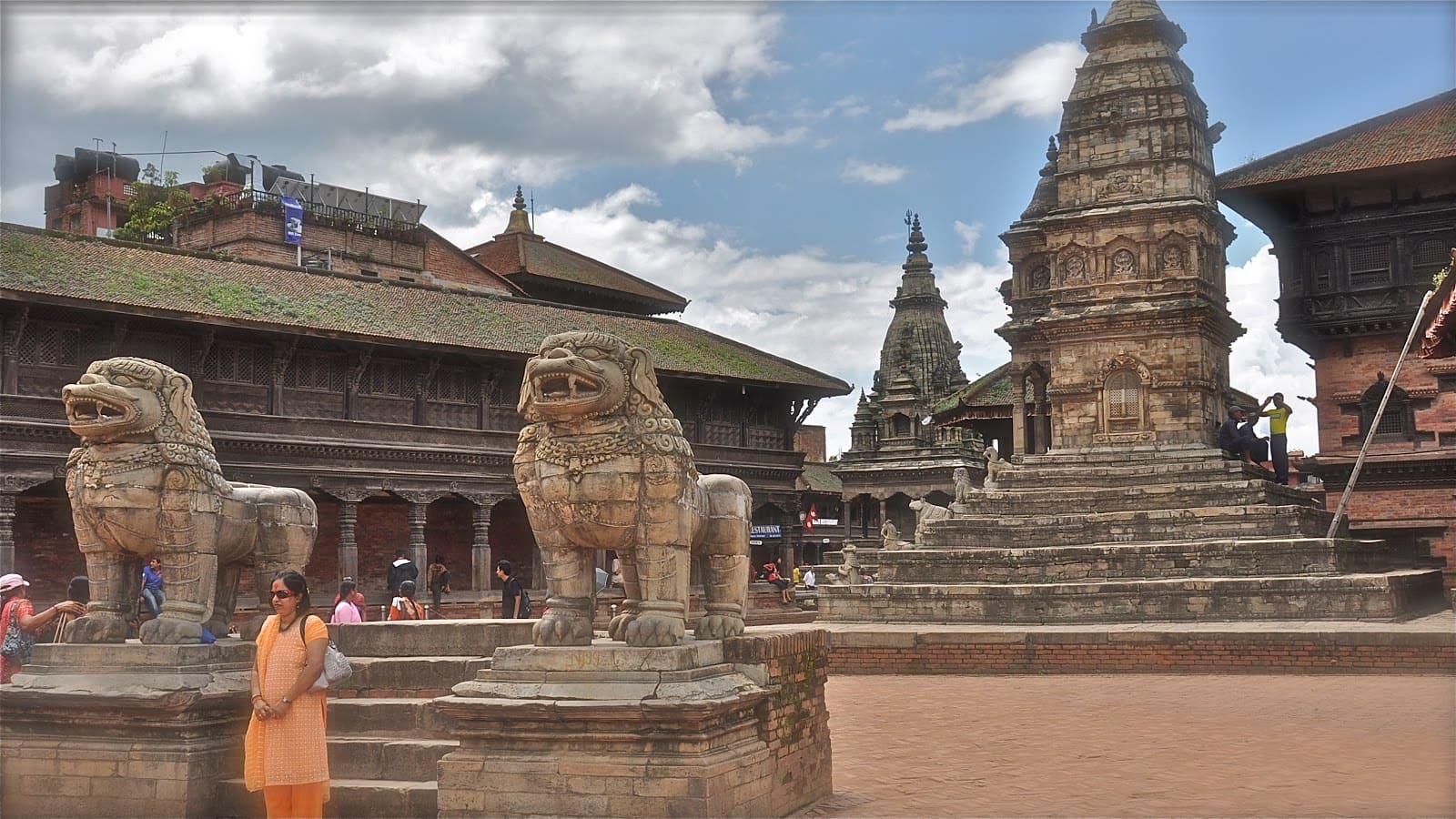
The Kathmandu Valley UNESCO designation covers seven monument zones across three ancient cities — Kathmandu, Patan, and Bhaktapur — each with its own Durbar Square, its own temples, its own character. Bhaktapur is the revelation: a medieval Newari city where the potters still work in the main square, where the Nyatapola temple rises five storeys above a plaza that has barely changed in five centuries, and where the morning light catches the brick and carved wood in a way that makes the two of you reach for the camera before coffee.
Patan, across the river from central Kathmandu, is the city of metalwork and art. The Patan Museum, inside the old royal palace, is the finest collection of religious art in Nepal — bronze Buddhas, stone Vishnus, and painted manuscripts that illuminate the valley’s position at the crossroads of Hindu and Buddhist civilisation. Pashupatinath, the Hindu cremation temple on the banks of the Bagmati, is the most sacred Hindu site in Nepal — an encounter with death and devotion that the two of you will process for days. Boudhanath, the great white stupa surrounded by Tibetan monasteries, is where the Buddhist dimension of Kathmandu becomes tangible: the prayer flags, the turning of the kora, the monks in maroon robes who treat the stupa as their neighbourhood rather than a monument.
Himalayan Light
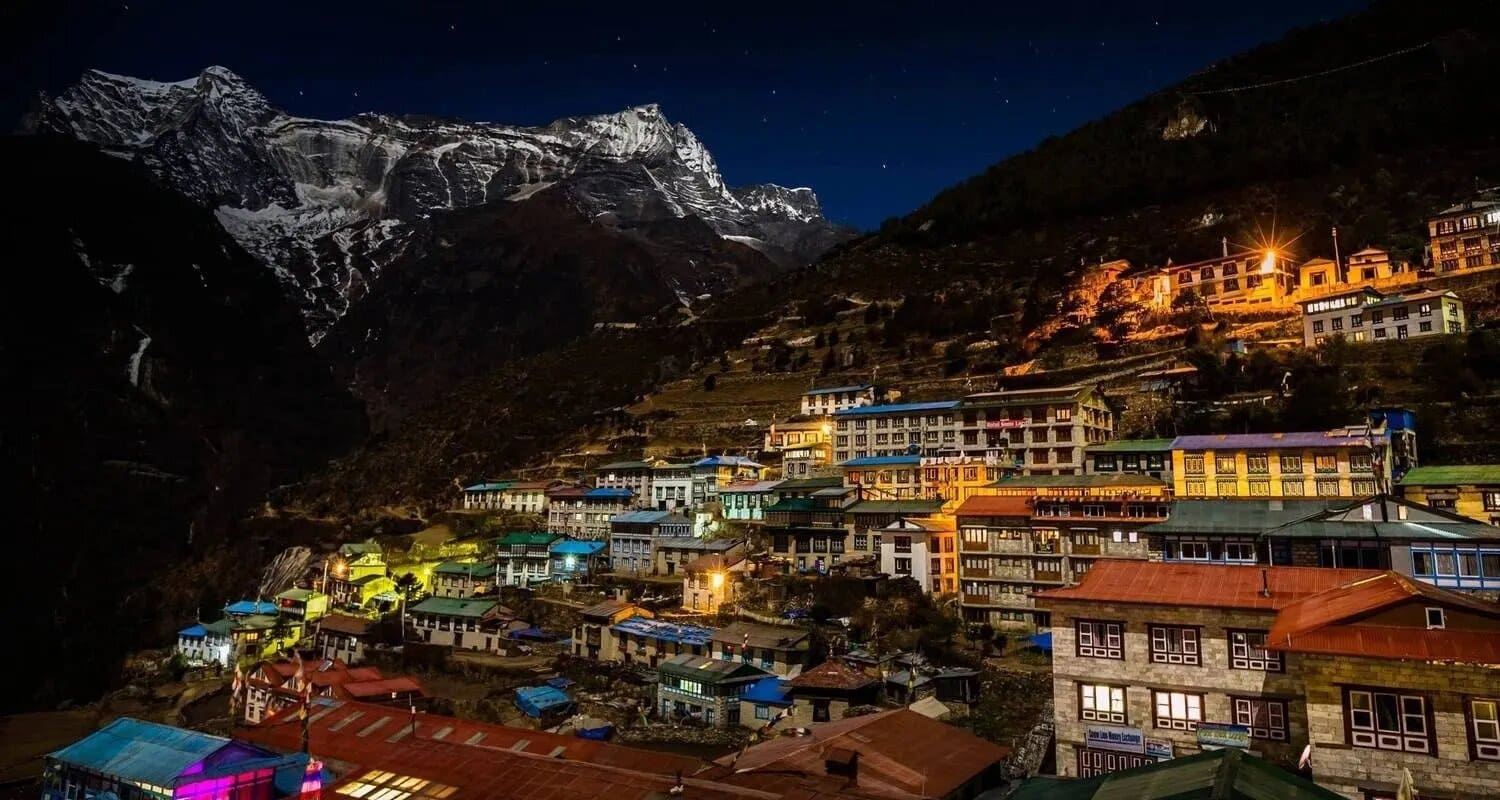
The light in Nepal is not like light elsewhere. At altitude — and Kathmandu sits at thirteen hundred metres, Pokhara at eight hundred — the air is thin enough to make distances deceive. The Annapurna range, seen from Pokhara’s lakeside, appears close enough to walk to in an afternoon. It is not. The peaks are thirty kilometres away and eight thousand metres high. But the clarity of the air, the sharpness of the snow against the blue, and the way the light changes from gold to pink to violet in the minutes around dawn — these are the moments that define a Nepal honeymoon. Sarangkot, the ridge above Pokhara, is where the two of you watch the sunrise hit the Annapurna massif and the Machapuchare fishtail peak. It is the single most photographed view in Nepal, and it earns every photograph.
Heritage Hotels, Not Trekking Camps
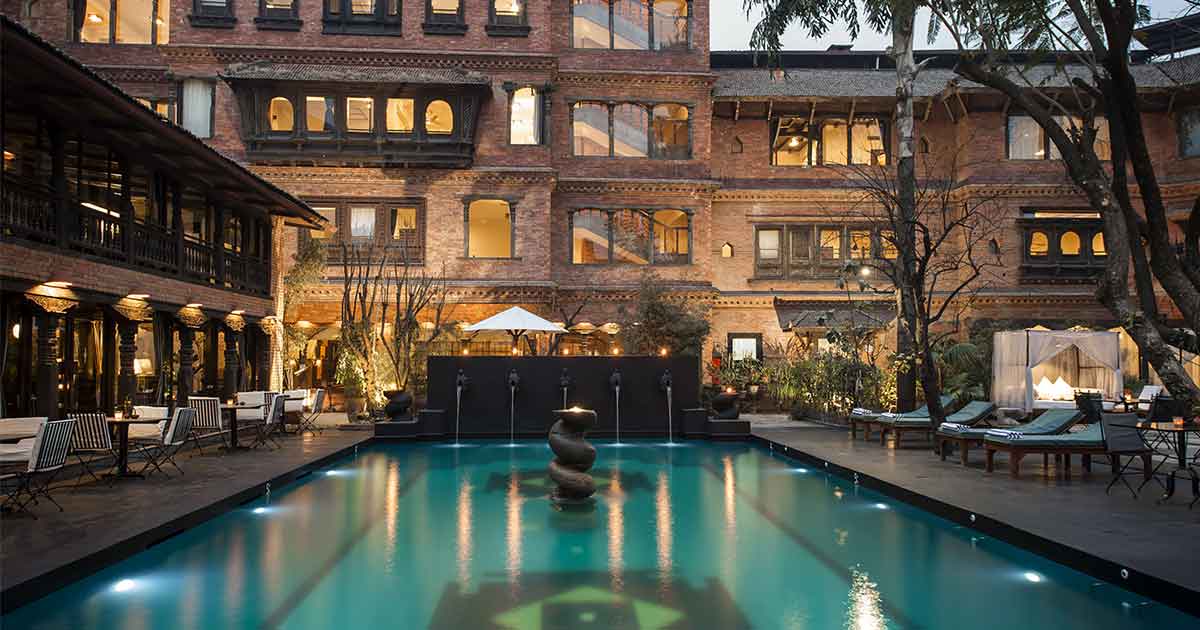
Nepal’s best accommodation is not a lodge at the end of a trail. It is a heritage hotel in the heart of a city — a building that tells the story of the place through its architecture, its materials, and its rituals. Dwarika’s Hotel in Kathmandu is the standard: a property built from salvaged thirteenth-century woodcarvings, arranged around courtyards that echo the old Newari palaces, with a Krishnarpan tasting restaurant that serves a multi-course Newari feast by candlelight. Staying at Dwarika’s is not accommodation. It is an education in the valley’s craft tradition.
Tiger Mountain Pokhara Lodge, on a ridge above the city with the Annapurna range filling the northern horizon, is the mountain counterpart — stone cottages connected by garden paths, a communal dining room where the evening meal is served by firelight, and a silence at night that is broken only by the occasional call of a barking deer in the forest below. Pavilions Himalayas, also in Pokhara, offers a more contemporary version: individual farmhouses with private gardens, a spa built around a natural spring, and a commitment to sustainability that extends to the organic vegetable garden the kitchen draws from each morning. For a deeper comparison with neighbouring Bhutan, see our Bhutan honeymoon guide.
The Journey: 10 Nights Through Nepal
Ten nights covers all four regions at a pace that allows the altitude, the culture, and the landscape to settle. Seven nights is possible by cutting Chitwan, but the jungle section adds a dimension that the mountains alone cannot provide.
Nights 1-3: Kathmandu — Temples, Squares, Dwarika’s
Three nights in Kathmandu is not too many — it is barely enough. Day one: arrive, settle into Dwarika’s, walk the garden courtyards. Day two: Bhaktapur and Patan — the two Durbar Squares that make Kathmandu’s own feel crowded. The drive to Bhaktapur takes forty minutes through traffic that is part of the experience — rickshaws, motorbikes, trucks painted in Bollywood colours, and the occasional sacred cow occupying the centre lane. Day three: Boudhanath at dawn, when the monks begin the morning kora; Pashupatinath in the morning light; the afternoon free to explore Thamel, the traveller district where the bookshops, trekking outfitters, and rooftop restaurants create a density of energy that the two of you will either love or need to escape. Dwarika’s is the escape.
Night 4: Bandipur — The Hidden Village
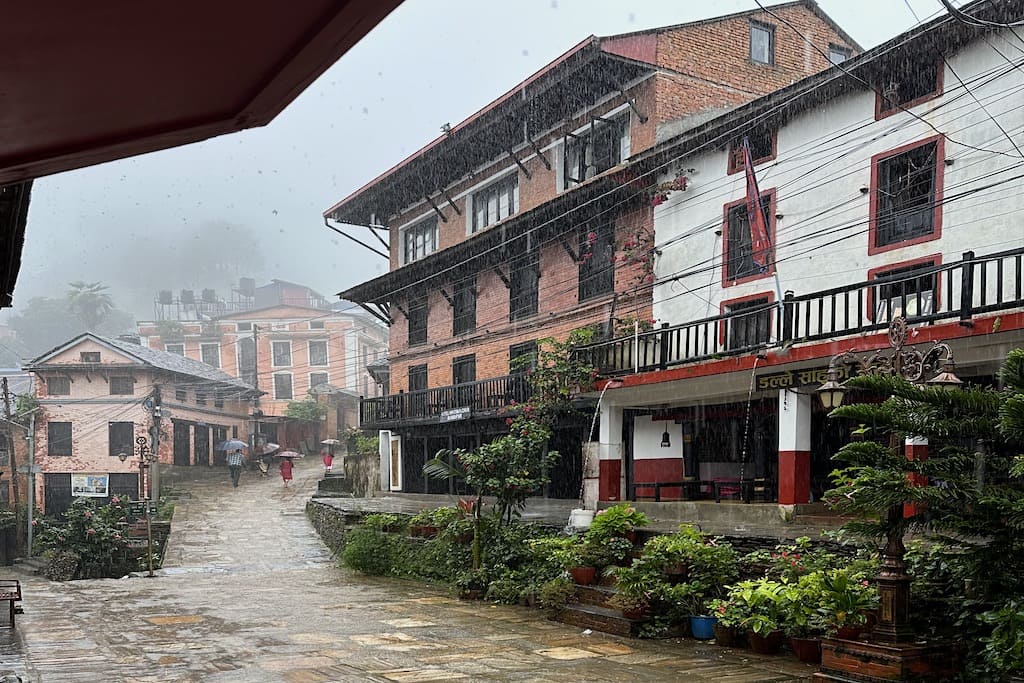
Bandipur is the stop that most itineraries skip, and the one that guests remember longest. A Newari hilltop village halfway between Kathmandu and Pokhara, perched on a ridge with views of the Himalayan range to the north and the Terai plains to the south. The main street is cobblestone, the buildings are traditional Newari brick with carved wooden windows, and the village has no traffic because the road bypasses it entirely. One night is enough: walk the ridge at sunset, eat at a village guesthouse where the host cooked the dal bhat herself, and fall asleep to the kind of silence that cities cannot produce.
Nights 5-7: Pokhara — Lake, Mountains, Sarangkot
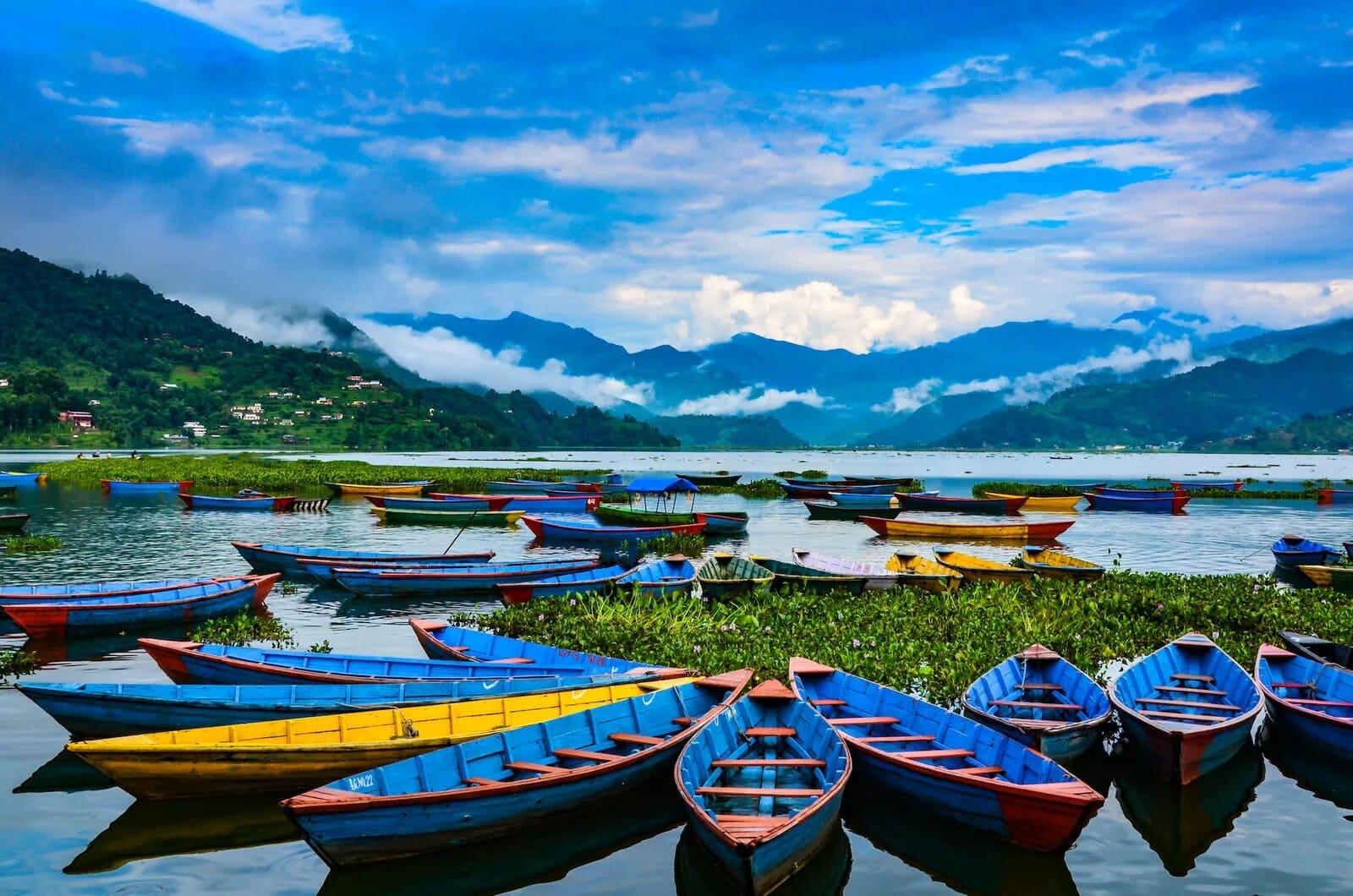
Pokhara is Nepal’s second city and its gentler side — a lakeside town beneath the Annapurna range where the pace drops and the mountains fill the northern sky. Phewa Lake, in the centre of town, reflects the peaks on still mornings. Rent a rowboat, paddle to the island temple at the centre, and watch the fishermen work the edges in wooden canoes that have not changed in design for centuries.
Sarangkot is the sunrise point — a thirty-minute drive from the lakeside to the ridge, arriving in darkness, and watching the light hit Machapuchare first, then spread across the Annapurna massif peak by peak. The World Peace Pagoda, on a hill across the lake, offers a different perspective: the city, the lake, and the mountains in a single frame. And for the two of you who want a touch of adventure without a multi-day trek, the day hike from Dhampus to Australian Camp follows terraced hillsides through Gurung villages with the Annapurna range as a constant backdrop — a four-hour walk that earns its view.
Nights 8-10: Chitwan — Jungle and River
Chitwan National Park, in the southern lowlands, shifts the honeymoon from mountain to jungle. The park is home to the greater one-horned rhinoceros, Bengal tigers, gharial crocodiles, and over five hundred species of bird. The experience is not African safari — the jungle is dense, the animals are seen on foot or by canoe, and the encounters are closer and more personal. A jeep safari through the sal forest at dawn, a canoe drift along the Rapti River watching mugger crocodiles bask on the banks, and a guided walk through the grasslands where the rhinos graze — Chitwan adds a dimension to Nepal that most honeymoon guides overlook.
Stay at a lodge on the park boundary: the morning mist rises from the river, the elephants of the breeding centre appear through the fog, and the jungle sounds — langurs, parakeets, the distant bark of a deer that means a tiger is near — are the last things the two of you hear before sleep.
Best Time to Visit Nepal
October to November is the finest window — clear skies after the monsoon, the best mountain visibility of the year, and comfortable temperatures across all altitudes. March to April is the second season: rhododendrons bloom across the middle hills, and the Himalayan views are nearly as clear as autumn. December to February is colder — below freezing at altitude — but Kathmandu and Chitwan remain comfortable, and the low-season rates make heritage hotels more accessible. June to September is monsoon: green, lush, and dramatic, but the mountains are hidden behind cloud for weeks at a time. We most often recommend late October for Nepal honeymoons: the clearest skies, the mildest temperatures, and a quality of light that justifies the journey.
How We Plan a Nepal Honeymoon
Nepal’s logistics require local knowledge — domestic flights, road conditions, park permits, and the timing of festivals all shape the itinerary. We begin with a conversation about what the two of you prioritise: whether the honeymoon leans more toward heritage (extending Kathmandu, adding Nagarkot for sunrise) or toward nature (extending Chitwan, adding Bardia for a remoter jungle experience). From there, we build a day-by-day route with heritage hotels, guided experiences, and the flexibility to adjust.
We arrange the domestic flights between Kathmandu and Pokhara, the transfers to Bandipur and Chitwan, and the guided experiences at each stop. Our Nepal partners handle the details — the temple guides, the park permits, the restaurant reservations at places the two of you would never find without local knowledge. For the two of you interested in broader cultural honeymoon options across Asia, see our cultural honeymoon destinations guide.
See Our Nepal Honeymoon Itineraries — we offer both a focused eight-night journey and a seven-night heritage circuit.
Frequently Asked Questions
How many days do you need in Nepal for a honeymoon?
Seven nights covers Kathmandu, Pokhara and one additional region comfortably. Ten nights adds Bandipur and Chitwan — the full journey from temples to mountains to jungle.
Is Nepal good for a honeymoon?
Exceptionally — for the two of you who want a culture-led honeymoon with Himalayan landscapes, heritage hotels, and sacred sites. Nepal offers a honeymoon with depth that beach destinations cannot replicate.
Do we need to trek on a Nepal honeymoon?
No. A Nepal honeymoon can be entirely heritage and landscape-focused — Kathmandu’s temples, Pokhara’s lake, Chitwan’s jungle — with day walks rather than multi-day treks. The mountains are visible from the lodges, not only from the trails.
When is the best time to visit Nepal?
October to November for the clearest skies and best mountain visibility. March to April for rhododendron season. Both windows offer comfortable temperatures and dry weather across all regions.
What is the difference between Nepal and Bhutan for a honeymoon?
Nepal is larger, more diverse, and more accessible — a Hindu-Buddhist mix with seven UNESCO sites, jungle safari in Chitwan, and a wider range of accommodation. Bhutan is smaller, more curated, and more expensive — a Buddhist kingdom with a philosophy of happiness and a sustainable development fee. Both are Himalayan; neither is a substitute for the other.
Nepal does not simplify itself for visitors. The temples are not explained, the traffic is not managed, the mountains are not illuminated for photographs. The two of you encounter Nepal as it is — layered, sacred, contradictory, and beautiful in a way that requires effort to see. For the two of you who want a honeymoon that asks something of the traveller, and gives back more than the asking, this is where we would begin.
Begin Your Nepal Honeymoon
Tell us whether you lean toward heritage or nature, and how many nights you have. We’ll design the journey from Kathmandu to the mountains and back.