
A bhutan honeymoon begins with the approach: the plane descends through the Himalayas, banking between mountains so close you can count the prayer flags on the ridgelines, and lands at Paro in a valley where the airport sits between rice paddies and a fortress. Nothing about arrival in Bhutan is ordinary. And nothing about the days that follow will be, either.
Bhutan is the only country in the world that measures its progress by Gross National Happiness rather than GDP. This is not a slogan — it is a governing philosophy that shapes everything from architecture to forestry to how many tourists enter the country each year. A Bhutan honeymoon is not an adventure trip with spiritual styling. It is a journey into a kingdom that has made a deliberate choice about the kind of place it wants to be. For the two of you who want a honeymoon that changes your pace rather than just your location, that distinction is everything.
We design Bhutan honeymoons across three valleys — Paro, Thimphu and Punakha — with multi-lodge properties that move with you through the landscape. The result is a Himalayan honeymoon with the depth of a pilgrimage and the comfort of the world’s finest lodges.
Why Bhutan for Your Honeymoon
Tiger’s Nest and the Walk That Changes the Trip
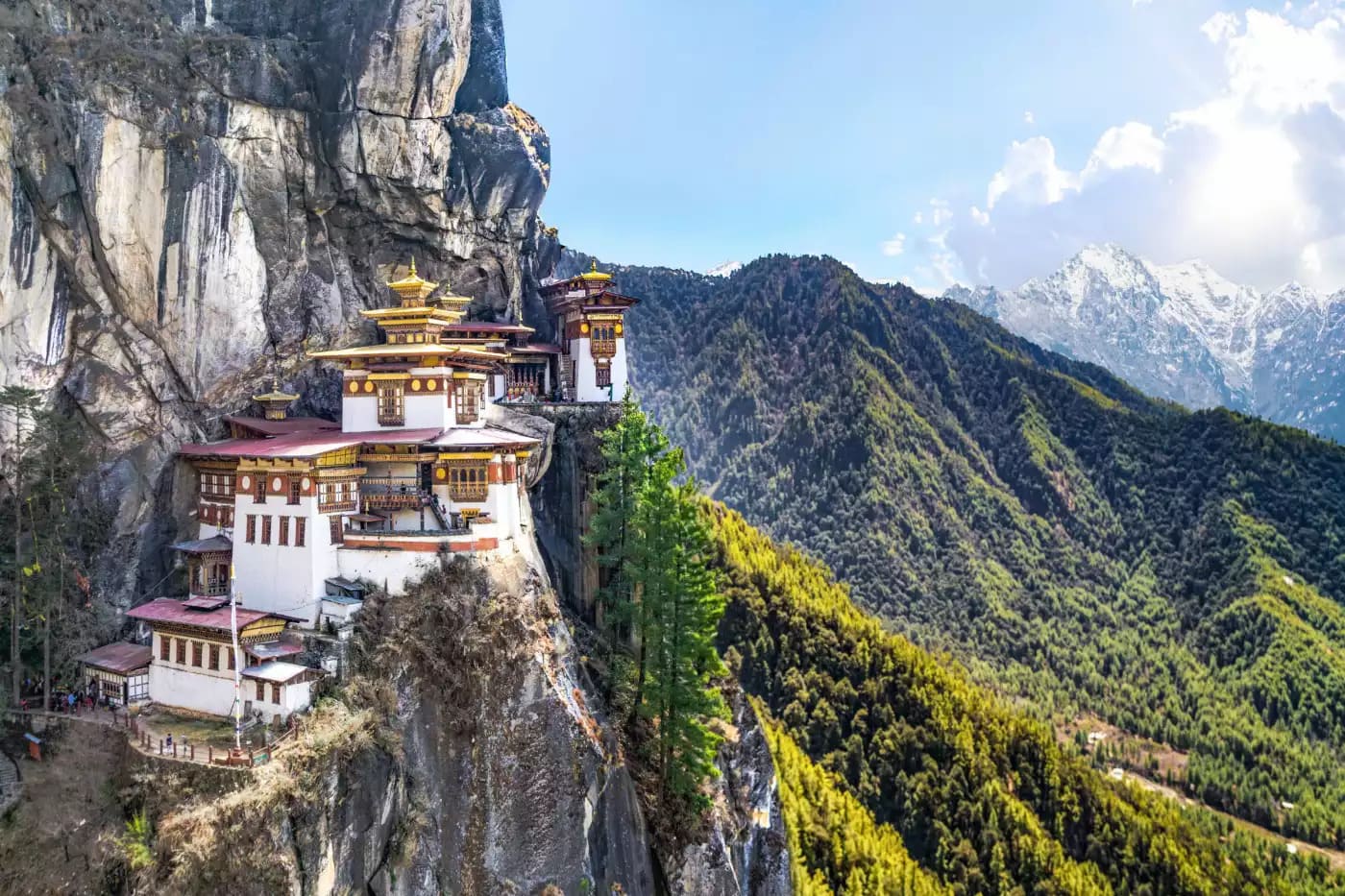
Tiger’s Nest Monastery — Paro Taktsang — is the image that defines Bhutan: a white-walled monastery clinging to a cliff face nine hundred metres above the Paro Valley floor. The hike to reach it takes three to four hours, winding through blue pine forest with prayer flags marking the way. The climb is not extreme, but it is earned — and the moment the monastery comes into view around the final bend, the two of you will understand why this single walk anchors every Bhutan honeymoon we design.
The monastery itself is a series of small temples connected by stone staircases carved into the cliff. Monks chant in candlelit rooms. Incense drifts from doorways. The view down to the valley floor makes the scale of the achievement — a temple built into a vertical rock face in the seventeenth century — feel impossible and real at the same time.
Dzongs — Fortresses That Double as Living Temples
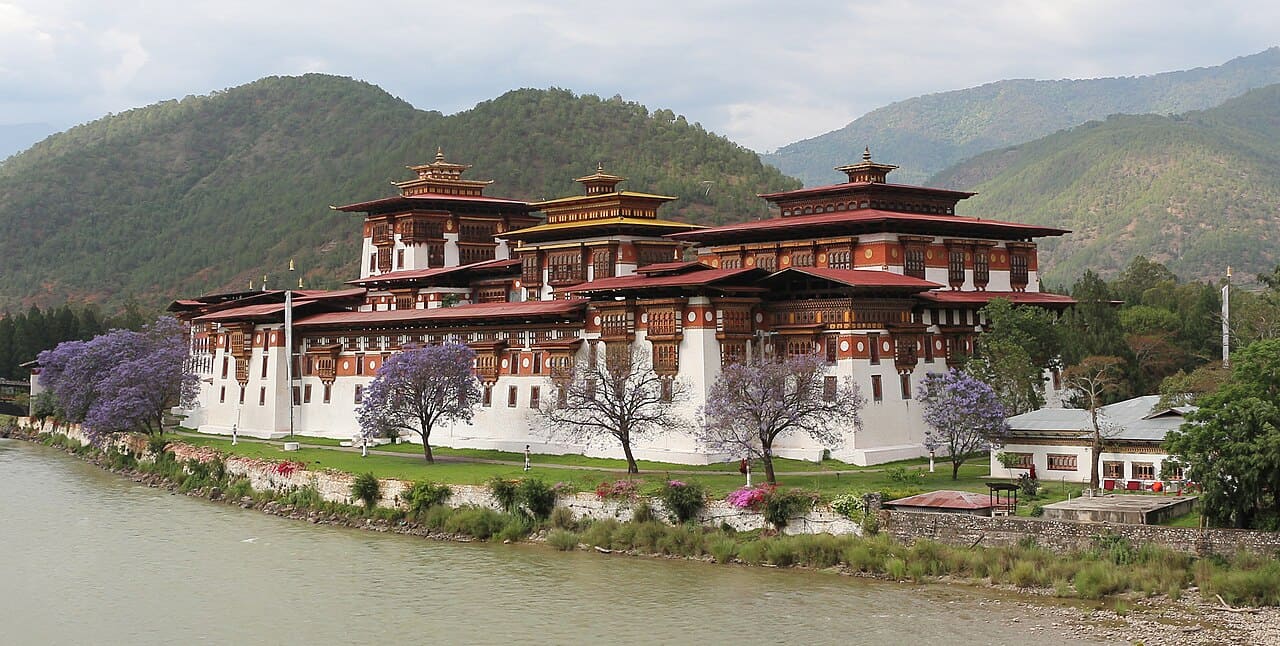
Punakha Dzong, at the confluence of two rivers in the Punakha Valley, is the most beautiful fortress in the Himalayas. Built in the seventeenth century, it serves simultaneously as a monastery and an administrative centre — monks occupy the upper floors while government offices fill the lower ones. The courtyard jacaranda trees bloom purple in spring, and the light through the carved wooden windows changes the building’s mood by the hour.
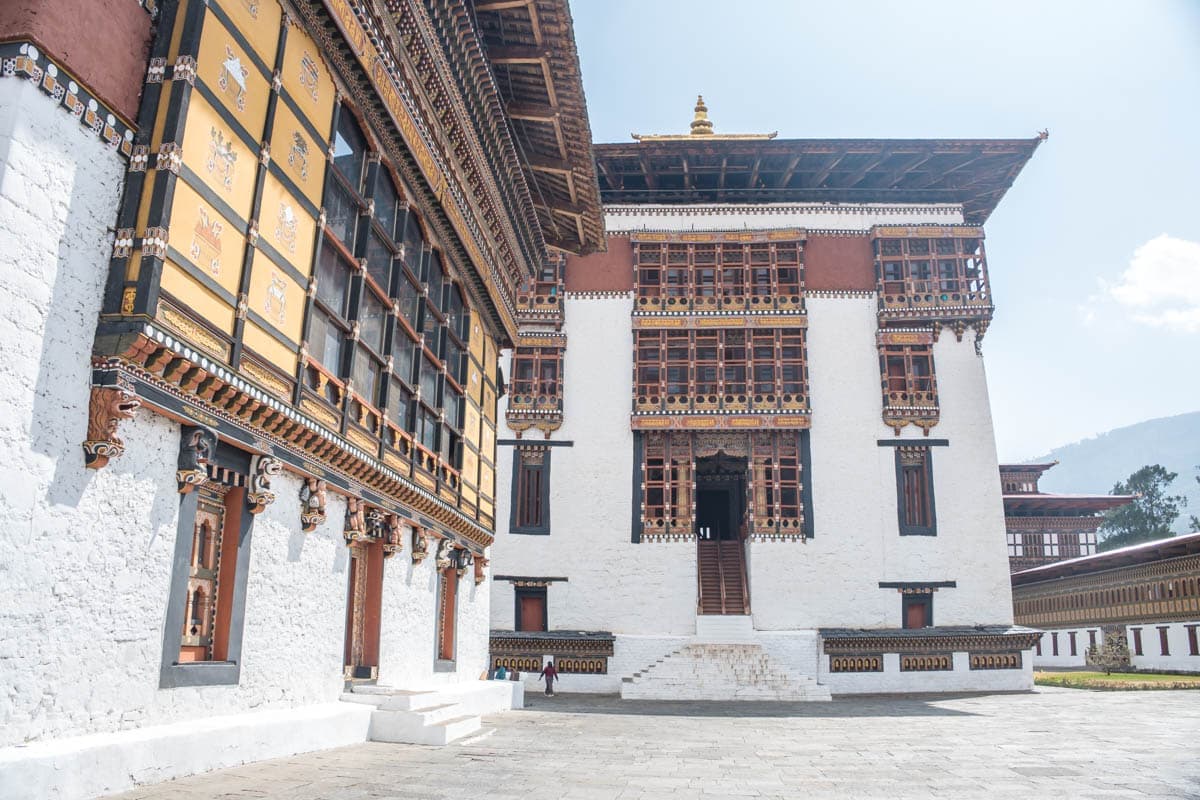
Paro Dzong — Rinpung Dzong — guards the entrance to the Paro Valley with a tower visible from miles away. These are not museums. They are working institutions where the spiritual and the civic overlap in a way that the two of you will not find anywhere else. Walking through a dzong during a morning prayer session, hearing the low chanting echo off stone walls, is one of the experiences that makes Bhutan unlike any other destination.
A Kingdom That Chose Slowness
Bhutan regulates tourism through a sustainable development fee — a daily rate that funds conservation, free healthcare and education. The fee is not a barrier. It is a philosophy: fewer visitors, deeper experiences, and a country that remains itself rather than reshaping around tourism. For the two of you, this means trails without crowds, monasteries without selfie sticks, and valleys where the loudest sound is the river.
The result is a honeymoon at a pace that the modern world has largely forgotten. No rush. No itinerary anxiety. Just monasteries, mountains, and the kind of quiet that arrives when a country decides that some things matter more than growth.
The Journey: 7 Nights Across Three Valleys
Seven nights is the ideal length — enough to absorb Paro, Thimphu and Punakha without the trip rushing or thinning. The multi-lodge format means the two of you move through the landscape, sleeping in a different valley every few nights.
Nights 1-3: Paro — Tiger’s Nest and the Valley Floor
Begin in Paro, the gateway valley. Settle at Como Uma Paro or the Paro lodge of Amankora — both set in the valley with mountain views and the kind of Bhutanese hospitality that makes a hotel feel like a private home. Day one: acclimatise, walk the valley, visit Rinpung Dzong. Day two: the Tiger’s Nest hike — the emotional centrepiece of the honeymoon. Day three: the National Museum, a farmhouse lunch, and an evening hot stone bath — a Bhutanese tradition where river stones are heated and lowered into a wooden tub, infusing the water with minerals.
Nights 4-5: Thimphu — The Capital That Whispers
Drive to Thimphu, the world’s only capital without traffic lights. The city is small, walkable, and culturally rich without being tourist-oriented. Visit the textile museum, where Bhutanese weaving traditions are preserved with extraordinary care. Walk to the Buddha Dordenma, a fifty-metre bronze Buddha overlooking the valley. Explore the weekend market for local cheese, dried chillies and handwoven fabrics. The Six Senses Bhutan Thimphu lodge sits above the city with views across the valley and a spa that combines Bhutanese and Asian wellness traditions.
Two nights in Thimphu gives the honeymoon its contemporary Bhutanese chapter — the country as it lives now, not just as it prays.
Nights 6-7: Punakha — Rivers and Fertile Valley
Cross the Dochula Pass — on a clear day, the entire eastern Himalayan range is visible — and descend to Punakha, the warmest and most fertile of Bhutan’s valleys. Punakha Dzong is the highlight, but the valley itself is the experience: rice terraces, suspension bridges over milky rivers, and Chimi Lhakhang — the temple of the Divine Madman, traditionally visited by couples seeking blessings for fertility and happiness.
Close the honeymoon in Punakha with a riverside dinner, a morning walk through the paddy fields, and the feeling that the trip has slowed to exactly the pace the country intended. The Amankora Punakha lodge or the Six Senses Punakha lodge both sit in the valley with the dzong visible from the terrace.
Best Time to Visit Bhutan
March to May and September to November are the two prime windows. Spring brings rhododendron blooms, clear skies and the Paro Tsechu festival (usually March or April) — one of the most colourful cultural events in the Himalayas. Autumn offers the clearest mountain views, comfortable temperatures and the rice harvest in the Punakha Valley.
June to August is monsoon season — trails can be muddy and clouds obscure the peaks, but the country is lush and green, and visitor numbers drop significantly. December to February is cold, particularly at altitude, but clear and uncrowded. For a honeymoon, we most often recommend late September to early November or mid-March to mid-May — the sweet spot between weather, festivals and quiet.
Experiences to Anchor Your Stay
The Multi-Lodge Journey
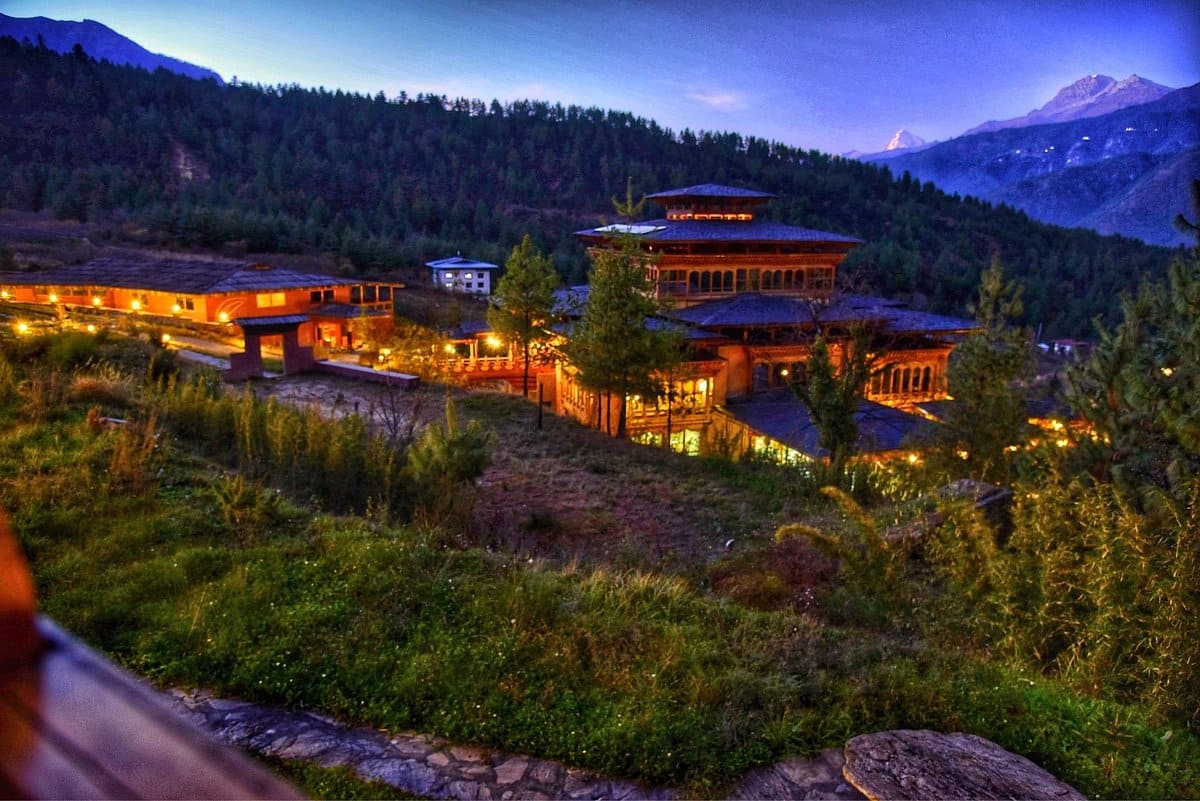
Both Amankora and Six Senses Bhutan operate as multi-lodge circuits — a single booking that moves the two of you through several valleys, each lodge designed around its specific landscape. Amankora has five lodges across Paro, Thimphu, Punakha, Gangtey and Bumthang. Six Senses has five lodges with a spa and dining programme that deepens at each stop. The multi-lodge format is what makes a Bhutan honeymoon feel like a journey rather than a stay — each transfer is a transition between moods, not just a drive.
Festivals and Tsechus
Bhutan’s tsechus — masked dance festivals held at dzongs throughout the year — are among the most visually extraordinary cultural events in Asia. Dancers in elaborate costumes perform religious dances that tell stories from Buddhist scripture, while the community gathers in traditional dress. If the two of you can time your honeymoon to coincide with the Paro or Thimphu Tsechu, the experience is unforgettable.
The Hot Stone Bath Tradition
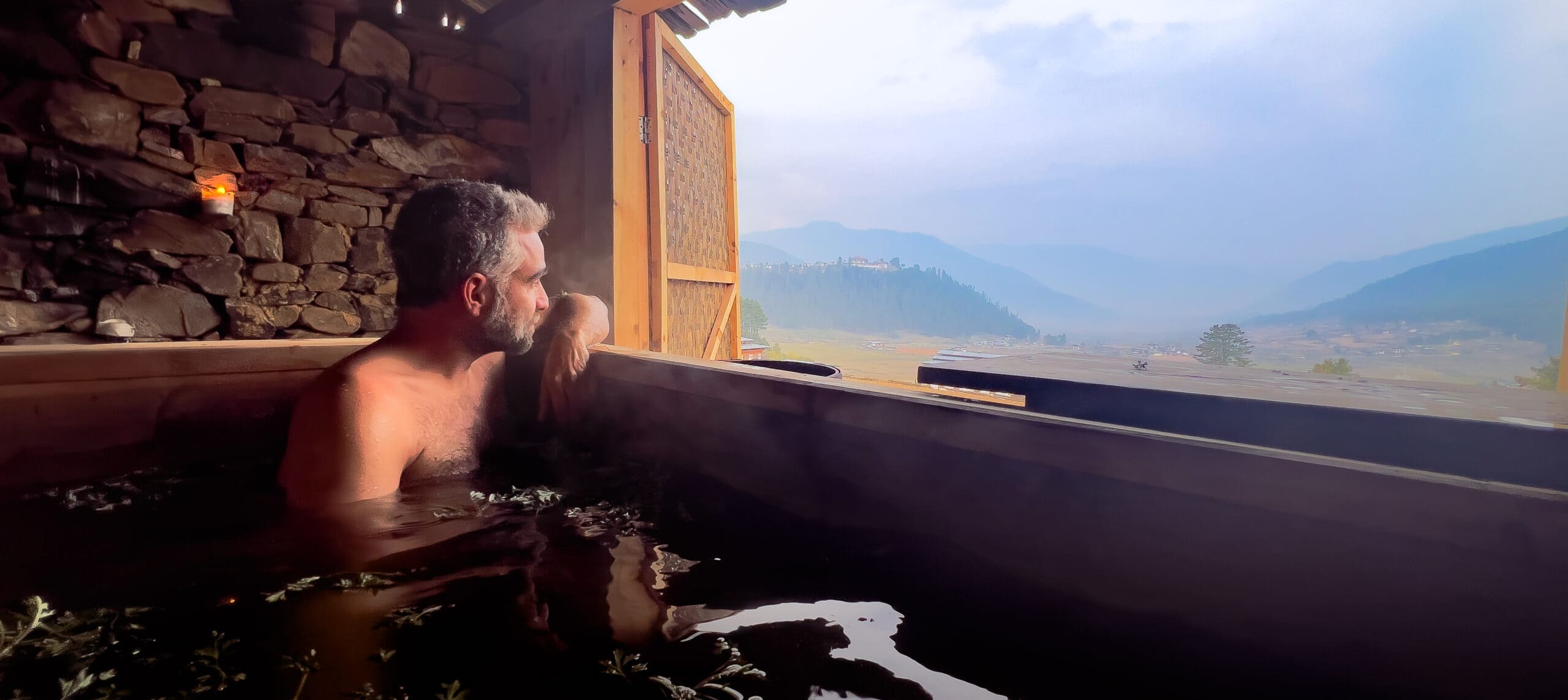
The Bhutanese hot stone bath — dotsho — is a tradition worth experiencing. River stones are heated in a fire and lowered into a wooden tub, releasing minerals into the water while artemisia leaves add a herbal scent. Many lodges offer this as a private evening experience, and after a day of hiking to Tiger’s Nest, it is one of the finest ways to end the day.
How We Plan a Bhutan Honeymoon
Bhutan requires a licensed tour operator and guide for all visitors — which means the logistics are handled for the two of you from the moment you land. We work with Bhutan’s finest ground operators to design the multi-lodge routing, select the valleys, arrange the guide, and build a day-by-day plan that respects both the country’s pace and your priorities.
The sustainable development fee, visa requirements and guided-tour structure mean that Bhutan requires more planning than most destinations — but also that the experience, once on the ground, is remarkably seamless. We handle the complexity. The two of you arrive and walk.
See the Full Itinerary — our Paro Bhutan Spiritual Honeymoon condenses this journey into five focused nights.
Frequently Asked Questions
Is Bhutan good for a honeymoon?
Exceptionally — for the two of you who want a honeymoon defined by spiritual depth, Himalayan landscape and genuine quiet rather than beach or resort luxury. Bhutan’s monasteries, dzongs and multi-lodge journeys offer a honeymoon unlike any other destination.
How many days do you need in Bhutan for a honeymoon?
Seven nights across three valleys — Paro, Thimphu and Punakha — is our recommended framework. Five nights works for a concentrated Paro-focused trip. Longer stays of ten to twelve nights allow extensions to Gangtey Valley or Bumthang.
What is the sustainable development fee in Bhutan?
Bhutan charges a daily sustainable development fee for international visitors. The fee funds conservation, free healthcare and education. It is included in the cost of the trip and is non-negotiable — it is not a barrier but a philosophy, and it keeps Bhutan uncrowded and preserved.
When is the best time to visit Bhutan?
March to May for spring blooms and festivals. September to November for clear mountain views and rice harvest. Both windows offer comfortable temperatures and the best conditions for hiking to Tiger’s Nest.
Is Bhutan better than Nepal for a honeymoon?
They serve different experiences. Bhutan offers a guided, lodge-based journey through a Buddhist kingdom with regulated tourism and spiritual depth. Nepal offers trekking scale, diverse geography and a more independent travel experience. If the two of you want a honeymoon that slows down, Bhutan; if you want one that challenges, Nepal.
Bhutan is not a destination you visit — it is a kingdom you are invited into, briefly and deliberately. A place where the monasteries cling to cliffs, the dzongs guard every valley, and the country itself has decided that happiness matters more than speed. For the two of you who want a honeymoon that changes pace rather than just scenery, this is where we’d begin.
Begin Your Bhutan Honeymoon
Tell us how many valleys feel right and whether Tiger’s Nest is where the trip must begin or where it should end. We’ll design the rest.