
A greenland honeymoon is the furthest the two of you can travel from everything familiar while remaining on earth. Greenland is not a country in the way that word usually functions — it is a continent-sized island where the ice sheet covers eighty per cent of the surface, the population is fifty-six thousand, and the nearest tree is in Iceland. The two of you come here not for comfort or convenience but for icebergs the size of apartment buildings, for Inuit culture that has survived four thousand years in the Arctic, and for a silence so complete that the only sound is the slow crack of ice calving into the fjord.
This is not Iceland. The comparison is inevitable but misleading. Iceland is accessible, well-roaded, and visited by two million people a year. Greenland receives thirty thousand. There are no roads between towns — only boats, helicopters, and small planes that fly when the weather allows. The infrastructure is minimal, the wildness is absolute, and the experience of being here with the person beside you — watching an iceberg rotate in the midnight sun, sharing a meal of musk ox and Arctic char with an Inuit family — is something that no other destination on earth can offer.
We design Greenland honeymoons as seven to ten-night journeys centred on Ilulissat and Disko Bay, with extensions to the capital Nuuk or to the remote east coast around Tasiilaq. The result is a honeymoon at the edge of the habitable world — and one of the most memorable we plan.
Why Greenland for Your Honeymoon
Ilulissat Icefjord — Ice on a Scale Beyond Comprehension
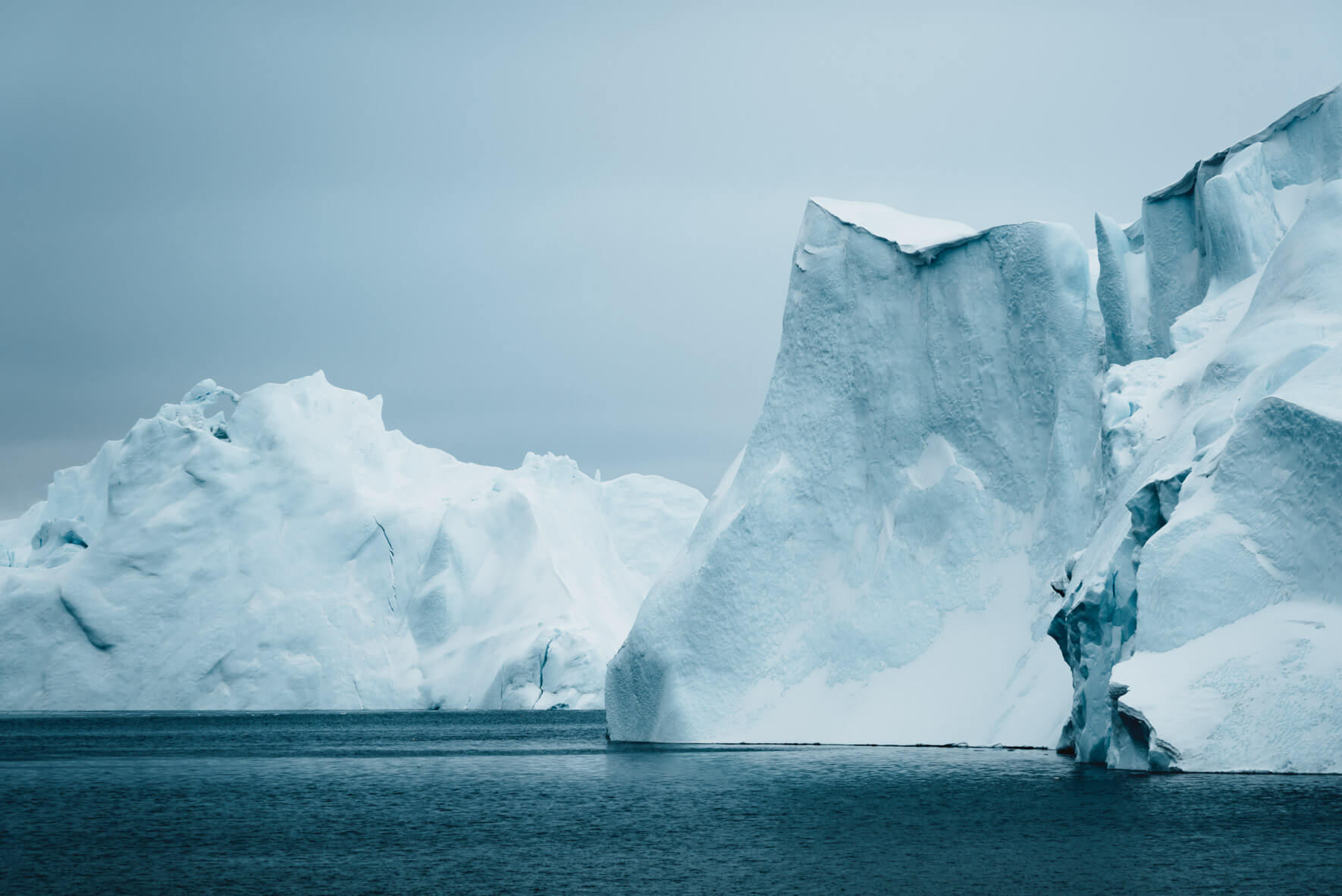
The Ilulissat Icefjord is a UNESCO World Heritage site and the single most dramatic natural spectacle in the Arctic. The Sermeq Kujalleq glacier — one of the fastest-moving and most productive glaciers in the world — calves twenty billion tonnes of ice per year into the fjord. The icebergs that result are enormous: some stand seventy metres above the waterline, which means they extend three hundred metres below. They drift slowly out of the fjord into Disko Bay, where they sit in the open water, rotating, shifting, and occasionally splitting with a sound like thunder.
The two of you watch this from a boat — a zodiac or a traditional wooden vessel — weaving between the bergs at a respectful distance while the guide explains the physics of ice. Or from the boardwalk above the fjord, a hiking trail that follows the moraine ridge and gives a view of the entire icefjord spread below. At midnight in summer, the sun stays above the horizon and the icebergs glow pink and gold against the dark water. The scale is difficult to hold in the mind. The beauty is impossible to exaggerate.
Inuit Culture — The Human Dimension
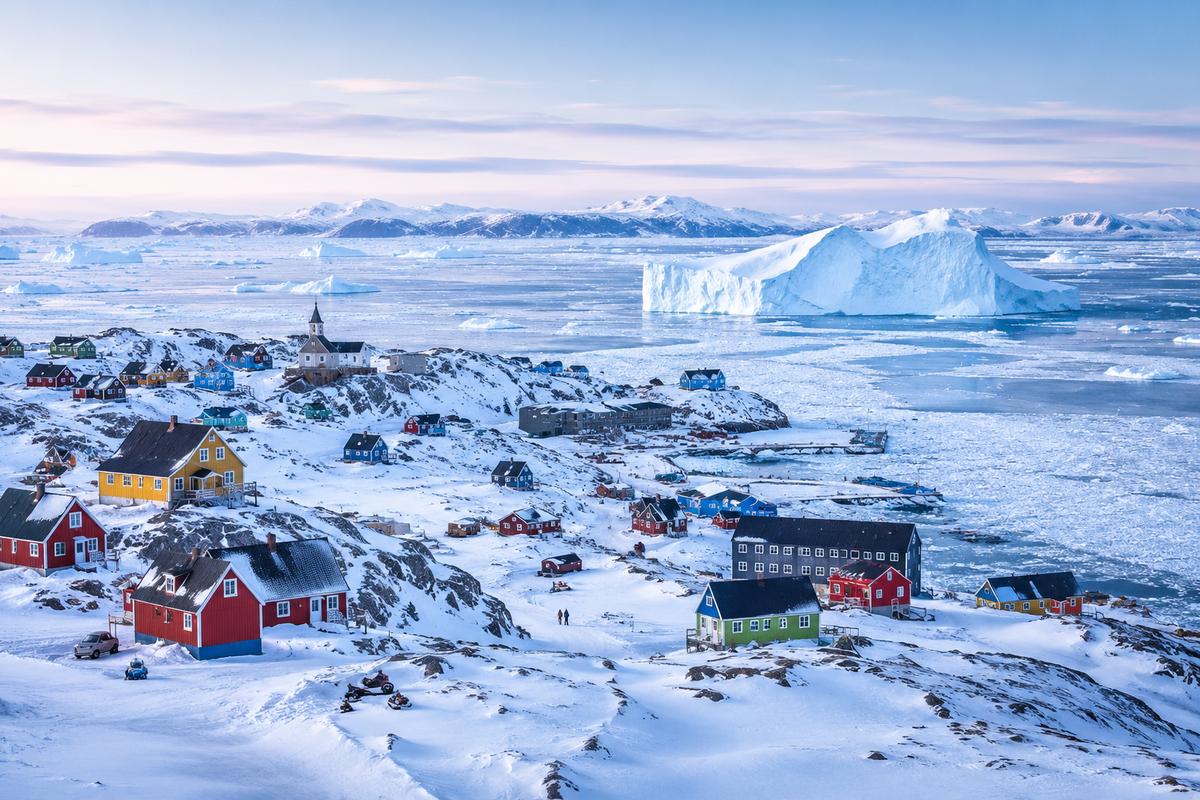
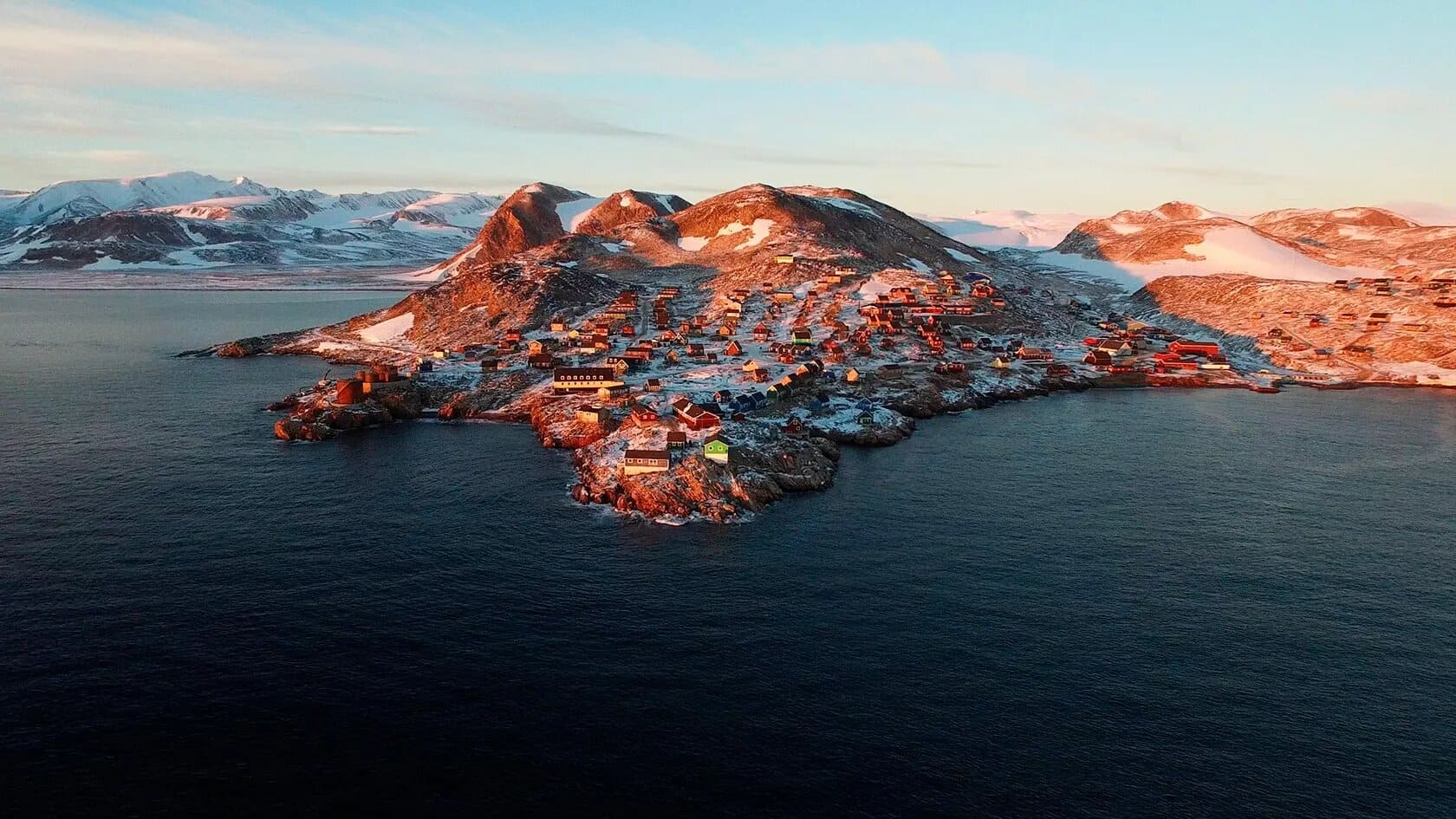
Greenland’s differentiator from Iceland and Antarctica is not the ice — all three have ice. It is the people. The Inuit communities of Greenland are the descendants of the Thule people who migrated from Canada a thousand years ago, and their culture — hunting, storytelling, drum dancing, the relationship with the sea and the ice — is alive in a way that no museum can replicate. In Ilulissat, the fishermen bring in halibut from the icefjord. In the smaller settlements — Ilimanaq, Oqaatsut, Saqqaq — life operates on rhythms set by the season, the weather, and the migration of seals and whales.
For the two of you, this means dinners where the host caught the fish that morning, walks through settlements of colourful wooden houses perched on rock above the sea, and conversations with people who navigate by ice conditions rather than GPS. Inuit culture in Greenland is not a performance. It is the texture of daily life in a place where the environment demands a relationship with nature that most of the world has forgotten.
Summer Light vs Winter Aurora
Summer (June to August): the midnight sun means twenty-four hours of light above the Arctic Circle. The icebergs glow at midnight. Whale watching peaks — humpback whales, fin whales, and occasionally narwhals in the deeper fjords. Dog sledding is not available (the dogs rest in summer), but hiking, kayaking among icebergs, and boat excursions to the settlements operate at full capacity. The temperature in Ilulissat hovers between five and fifteen degrees.
Winter (November to March): the northern lights arc above the ice in colours that the camera struggles to capture. Dog sledding returns — the traditional Greenlandic sled, pulled by a fan-shaped team of dogs across the sea ice, is an experience that exists almost nowhere else. The darkness is real — in December, Ilulissat receives only a few hours of twilight — but the clarity of the Arctic air and the reflection of the aurora on the ice create a light of their own. For a broader comparison of aurora destinations, see our northern lights honeymoon guide.
The Journey: 7-10 Nights in Greenland
Seven nights centred on Ilulissat and Disko Bay is the focused honeymoon. Ten nights adds Nuuk or the east coast, extending the range but not the intensity — Greenland is already intense enough.
Nights 1-3: Ilulissat and Disko Bay
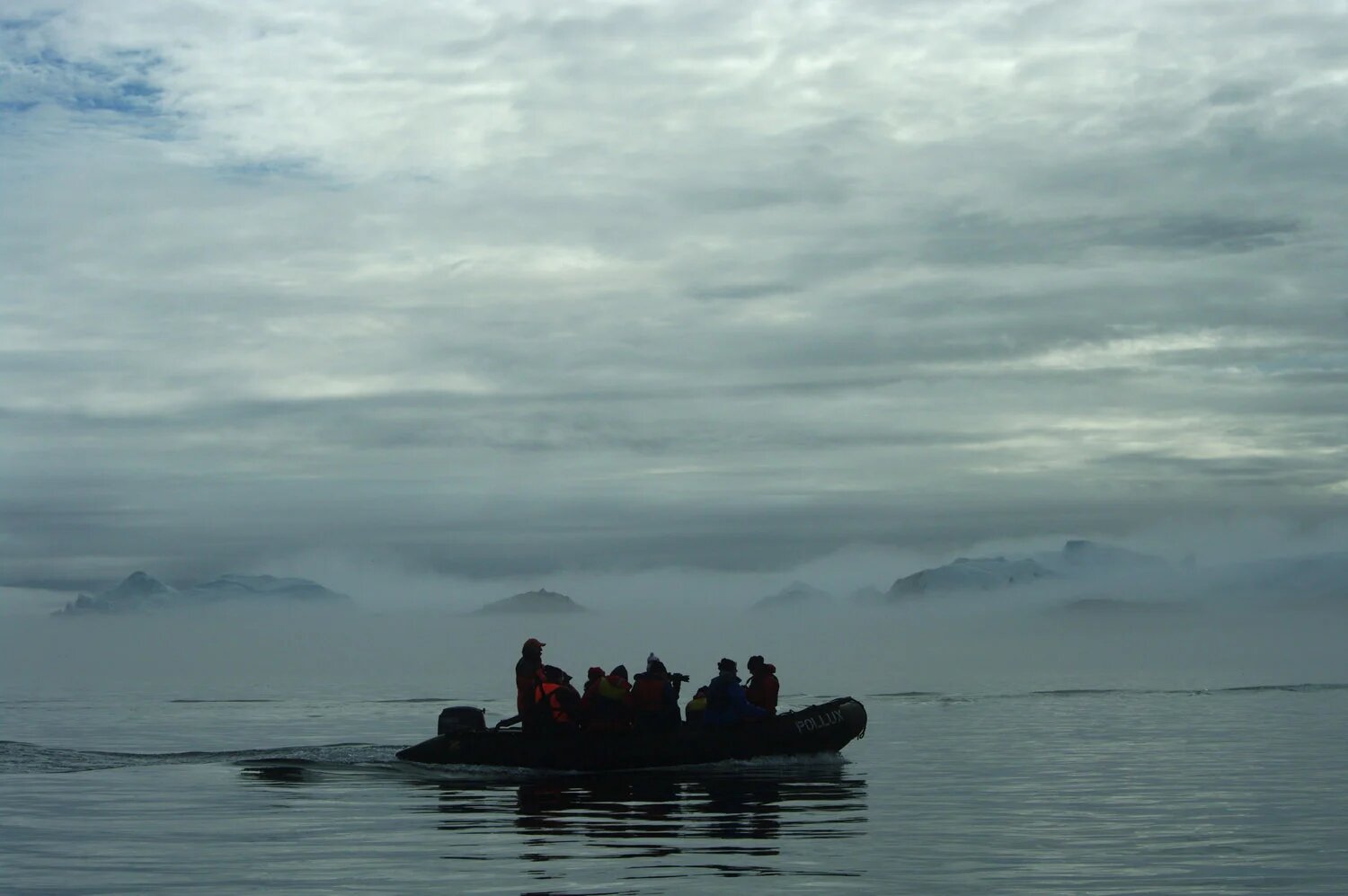
Ilulissat is Greenland’s third-largest town — population five thousand — and the base for the icefjord. Hotel Arctic, on a ridge above the town, offers igloos with glass fronts that face the icefjord — the two of you fall asleep watching icebergs drift past the window. The main hotel has a restaurant serving Greenlandic cuisine: musk ox, Arctic char, crowberry desserts, and a wine list that feels incongruous at sixty-nine degrees north.
Day one: the icefjord boardwalk — a two-hour hike along the moraine ridge above the ice. Day two: a boat excursion into Disko Bay, weaving between icebergs, with lunch served on a beach where the Inuit hunters once camped. Day three: a settlement visit to Ilimanaq — eight kilometres south of Ilulissat, population fifty-three — where the Ilimanaq Lodge offers eight rooms designed by a Greenlandic-Danish architecture firm, each with a floor-to-ceiling window facing the bay. The settlement is where the two of you begin to understand what life in Greenland means: small, seasonal, dependent on the ice and the sea.
Nights 4-5: Glacier Lodge Eqi
Glacier Lodge Eqi is eighty kilometres north of Ilulissat, accessible only by boat, and it sits on a hillside directly facing the Eqi Glacier — a calving glacier that drops ice into the fjord with a frequency and volume that makes the experience of watching it almost hypnotic. The lodge is simple — wooden cabins, shared dining room, no internet — and that simplicity is the point. The two of you eat dinner while the glacier calves across the water. You sleep while it calves. You wake while it calves. The glacier does not stop, and after two nights the rhythm of it becomes the rhythm of the stay. Sirius Greenland, one of the leading wilderness operators, runs the boat transfers and guided hikes around the glacier.
Nights 6-7: Nuuk — Capital of the Arctic
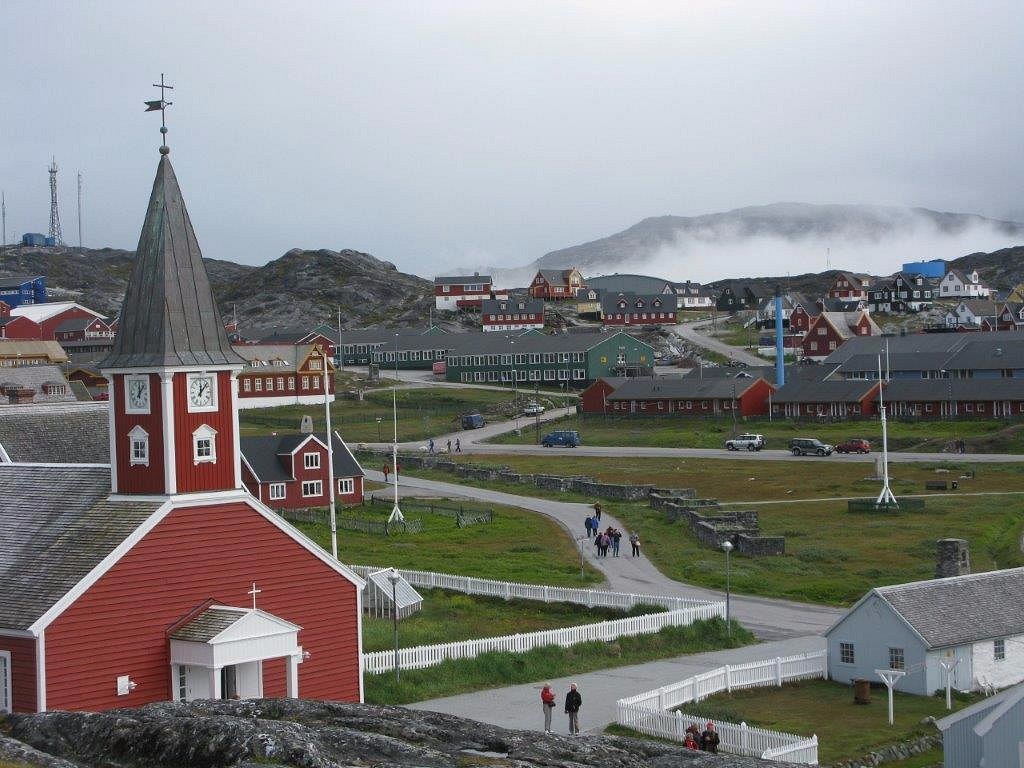
Nuuk, Greenland’s capital, is a town of nineteen thousand people on a fjord system as dramatic as anything in the west. The Greenland National Museum holds the Qilakitsoq mummies — five-hundred-year-old naturally mummified Inuit remains that are among the most important archaeological finds in the Arctic. The Katuaq Cultural Centre, designed to echo the northern lights, hosts concerts, film screenings, and exhibitions of Greenlandic art. And the fjord around Nuuk is a playground: whale watching from June through September, kayaking between the islands, and — in winter — snowshoeing on the hills above the capital with the aurora overhead.
Nuuk adds a dimension the west coast cannot: a sense that Greenland is not only ice and wilderness but also a society, a government, and a culture that is navigating its own path between Arctic tradition and modern autonomy.
Nights 8-10: East Greenland — Tasiilaq and Sermilik Fjord
The east coast is Greenland’s frontier. Tasiilaq, population two thousand, is the largest settlement in East Greenland — reachable only by helicopter from Nuuk or by small plane from Iceland. The Sermilik Fjord, south of Tasiilaq, is filled with icebergs from the Helheim Glacier — a fjord so choked with ice that the boat must navigate slowly, pushing small bergs aside. The east coast extension adds three nights and a level of remoteness that the west coast — already remote by any standard — cannot match. For the two of you who want Greenland at its most extreme, this is it.
Best Time to Visit Greenland
June to August for the midnight sun, whale watching, iceberg cruises, and hiking. This is the window we recommend for most honeymoons — the warmest months, the longest days, and the fullest activity calendar. Late June to mid-July offers the most dramatic midnight sun. March to May for dog sledding on the last of the sea ice, combined with lengthening days and the final aurora sightings. September for autumn colours on the tundra and the return of the northern lights. November to February for the full winter experience: aurora, dog sledding, and darkness that reveals a Greenland the summer visitors never see. For broader polar honeymoon context, see our Iceland honeymoon and Antarctica honeymoon guides.
How We Plan a Greenland Honeymoon
Greenland’s logistics are the most complex of any destination we plan — domestic flights depend on weather, boat transfers operate on tidal schedules, and accommodation is limited in capacity. We begin with a conversation about when the two of you want to travel and what matters most: icebergs and midnight sun (summer), or aurora and dog sledding (winter). From there, we build a route with confirmed flights, lodge bookings, and guided experiences arranged through our Greenland partners.
We recommend booking six to twelve months in advance — Glacier Lodge Eqi and the Ilimanaq Lodge both have limited capacity, and the domestic flights fill early in peak season. The logistics are not simple. But the reward — a honeymoon in a landscape that feels like the beginning of the world — is worth every complication.
Frequently Asked Questions
Can you honeymoon in Greenland?
Yes — and it is one of the most extraordinary honeymoon experiences we design. Greenland offers icebergs, Inuit culture, midnight sun, and a level of wilderness that no other Arctic destination can match.
How many days do you need in Greenland for a honeymoon?
Seven nights centred on Ilulissat and Disko Bay for a focused icefjord experience. Ten nights adds Nuuk or east Greenland for a more complete journey across the island.
Is Greenland the same as Iceland?
Not at all. Iceland has roads, hotels, and two million visitors a year. Greenland has no roads between towns, thirty thousand annual visitors, and a living Inuit culture that predates European contact by a millennium. They share a latitude but nothing else.
When is the best time to visit Greenland?
June to August for midnight sun, whale watching and icebergs. November to February for northern lights and dog sledding. March to May for the transition season — lengthening days with the last of the sea ice.
How do you get to Greenland?
Flights from Copenhagen or Reykjavik to Ilulissat, Nuuk, or Kangerlussuaq. Internal travel between towns is by small plane, helicopter, or boat — there are no roads connecting Greenland’s settlements.
Greenland is not a destination the two of you choose because it is easy. You choose it because something in the two of you responds to the idea of standing at the edge — the edge of the ice sheet, the edge of habitable land, the edge of silence. For the two of you who want a honeymoon that exists at a latitude where most of the world stops, this is where we would begin.
Begin Your Greenland Honeymoon
Tell us whether you want midnight sun or northern lights, and how many nights you have. We’ll design the journey from Ilulissat to the ice.