
A Beijing honeymoon does not need to be a stop on the way to somewhere else. Five nights in this city — moving between the Forbidden City at dawn, the hutong lanes at dusk, and the Summer Palace gardens in between — gives the two of you a honeymoon with more depth, more quiet, and more surprise than most couples expect from a capital of twenty-two million people.
Beijing is a city of courtyards. Behind the ring roads and the modern skyline, the old city still breathes: grey-brick walls, red-lacquered doorways, the sound of bicycle bells in the narrow lanes. A Beijing honeymoon built around these quieter rhythms — imperial gardens in the morning, courtyard restaurants at night, contemporary art in the afternoon — is one of the most rewarding city honeymoons in Asia.
We design Beijing honeymoons as five-night immersions, not layovers. The city earns the time, and the accommodation — particularly Aman Summer Palace — makes staying feel like arriving somewhere, not just passing through.
Why Beijing for Your Honeymoon
Imperial Gardens and Courtyard Culture
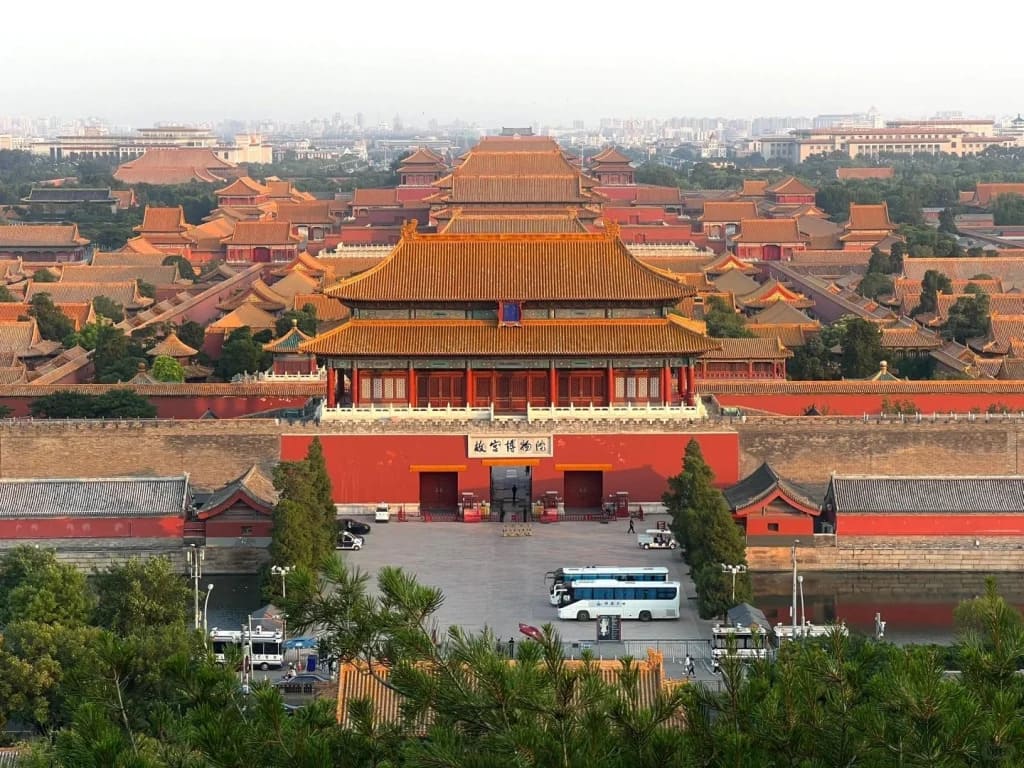
The Forbidden City is not a museum you visit — it is a city within a city that you walk through, slowly, as the scale reveals itself. Nine thousand rooms, five centuries of imperial history, and a silence that deepens the further in you go. Visit at opening time, before the crowds arrive, and walk the central axis from the Meridian Gate to the Imperial Garden at the northern end. The light at that hour makes the golden rooftops glow.
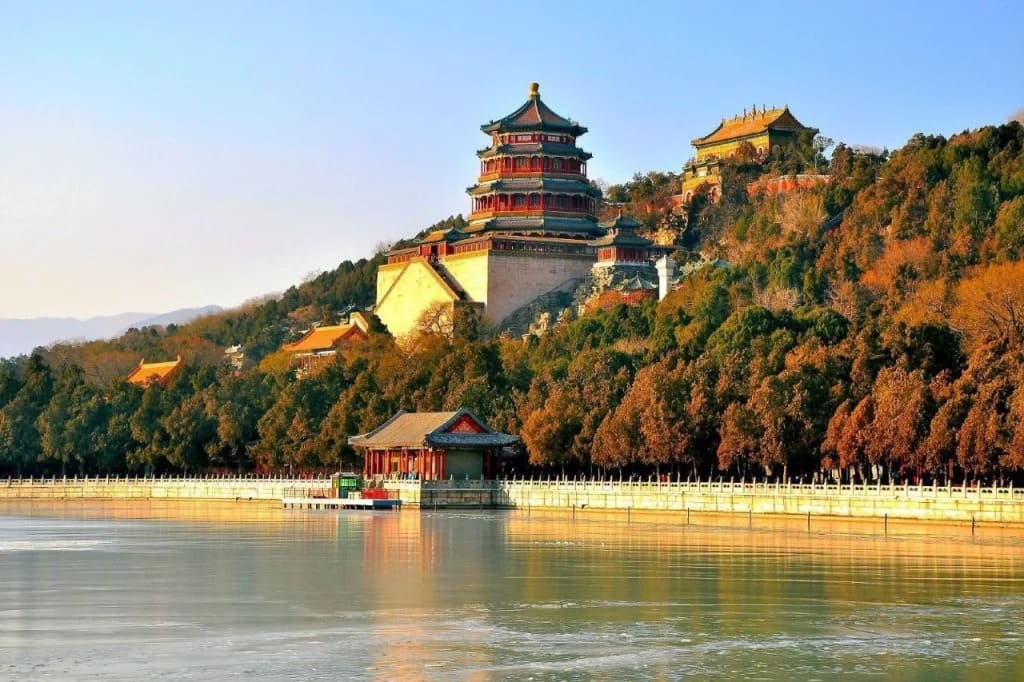
The Summer Palace is the counterpoint: a lakeside garden complex built for the imperial family to escape the city heat. Kunming Lake covers three-quarters of the grounds, and the Long Corridor — a covered walkway painted with fourteen thousand individual scenes — stretches along the northern shore. Aman Summer Palace sits within the grounds, which means the two of you can walk from breakfast to the pavilion on the lake without passing through a single gate.
Hutongs — The Intimate City
The hutongs are Beijing’s old neighbourhood lanes — narrow alleys between courtyard houses where families have lived for generations. The Dongcheng and Shichahai districts hold the finest concentrations: lanes lined with small restaurants, tea houses, independent bookshops, and the occasional temple tucked behind a grey wall. The best way to experience them is on foot, without a guide, drifting from lane to lane until you find the courtyard café where the coffee is good and the afternoon passes without effort.
For the two of you, the hutongs are where Beijing becomes intimate. The monuments are vast and silent; the hutongs are warm, human-scaled, and full of the kind of detail that only walking reveals — a carved stone lion at a doorway, a grandmother playing cards under a persimmon tree, the smell of sesame flatbread from a street-side griddle.
Contemporary Beijing
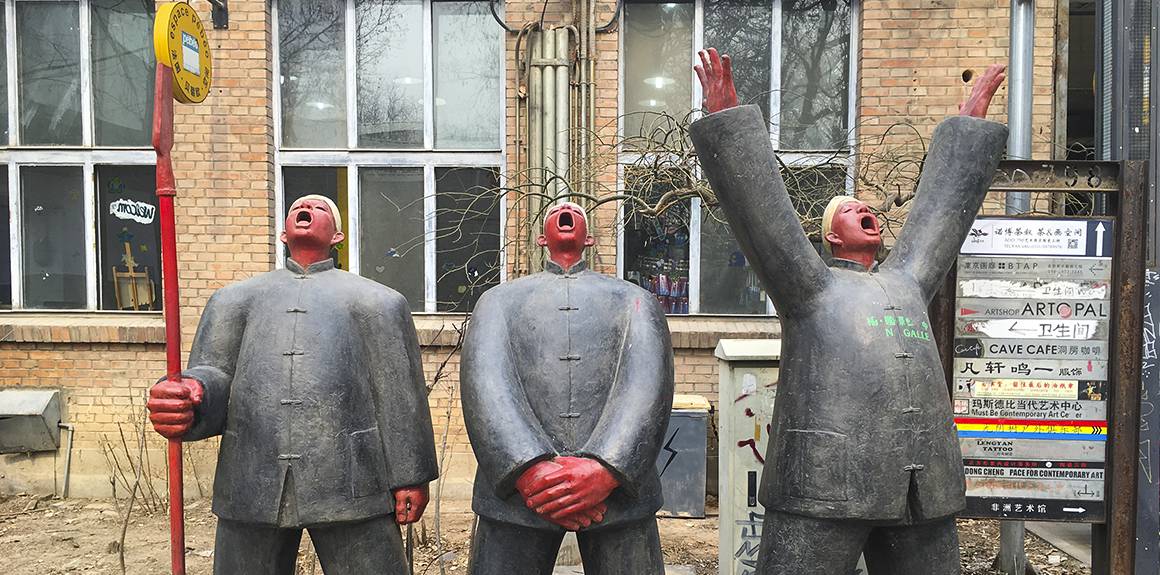
Beijing is not frozen in the imperial past. 798 Art District, a complex of converted electronics factories in the north-east of the city, is one of Asia’s most important contemporary art spaces — galleries, studios and installations in vast industrial halls with exposed ducting and Maoist-era slogans still visible on the walls. The contrast with the Forbidden City is deliberate and electric. Spend an afternoon here, then walk to one of the neighbourhood restaurants where the chef’s tasting menu uses Sichuan and Cantonese techniques in ways that the traditional restaurants do not attempt.
Dadong, Beijing’s most celebrated Peking duck restaurant, serves the dish with a precision that borders on theatre — the skin lacquered, the carving tableside, the accompaniments as refined as anything in fine dining. Book an evening here. The meal is part of the honeymoon.
The Journey: 5 Nights in Beijing
Five nights, one city, three moods: imperial, intimate, contemporary. The itinerary moves between them like a conversation.
Days 1-2: The Imperial City
Arrive and settle at Aman Summer Palace or Rosewood Beijing in the Chaoyang district. The first morning belongs to the Forbidden City — early, slow, without rushing to see everything. Follow it with the Temple of Heaven, where the circular prayer hall sits in a park that locals fill with morning tai chi, kite flying and impromptu ballroom dancing. The park is the experience as much as the temple. Close the first day with dinner in the Dongcheng hutongs — candlelight, courtyard walls, and the buzz of a city that saves its warmth for after dark.
Day two: the Summer Palace. If staying at Aman, the gardens are yours before the public gates open. Walk the Long Corridor, take a boat across Kunming Lake, and spend the afternoon in the imperial garden without the pace that day-trippers bring. Return to the hutongs for an evening of restaurant-hopping through the Shichahai lanes — dumplings at one address, craft cocktails at another, rooftop views of the Drum Tower at a third.
Day 3: The Great Wall
A full day for the Great Wall Mutianyu section — forested ridgelines, fewer visitors than Badaling, and watchtowers that stretch in both directions as far as the eye can follow. The drive from central Beijing takes roughly ninety minutes. Arrive early, walk the wall for two to three hours, and return to the city for a late lunch. Mutianyu is the section we recommend for honeymoons: dramatic enough to impress, quiet enough to feel like discovery rather than tourism.
Days 4-5: Contemporary and Farewell
Day four: 798 Art District in the morning, lunch in the neighbourhood, and an afternoon free for the detail the two of you want to add — a tea ceremony in a hutong tea house, a calligraphy lesson, or simply another walk through the old lanes with no agenda. Evening at Dadong for the Peking duck ritual.
Day five: the morning belongs to whatever the trip has not yet given you. Return to the Forbidden City for a section you missed, or visit Peninsula Beijing for a spa morning and a farewell lunch overlooking Wangfujing. Beijing rewards the return visit — every day reveals something the previous day concealed. Five nights is enough to fall for the city, not enough to exhaust it.
Best Time to Visit Beijing
April to mid-June and September to late October are the ideal windows. Spring brings cherry and magnolia blossoms to the palace gardens. Autumn — particularly late September and October — offers clear blue skies, comfortable temperatures, and the best light on the Great Wall. Avoid Chinese New Year (late January to mid-February) and the first week of October, when domestic tourism peaks and the Forbidden City reaches capacity.
Winter — December to February — is cold but dramatically uncrowded. The Great Wall under snow, the Forbidden City dusted with white, and the Summer Palace lake frozen for walking are winter experiences that few tourists witness. If the two of you do not mind the chill, winter Beijing has a stark beauty that the other seasons cannot match.
Where to Stay
The Three Properties That Define a Beijing Honeymoon
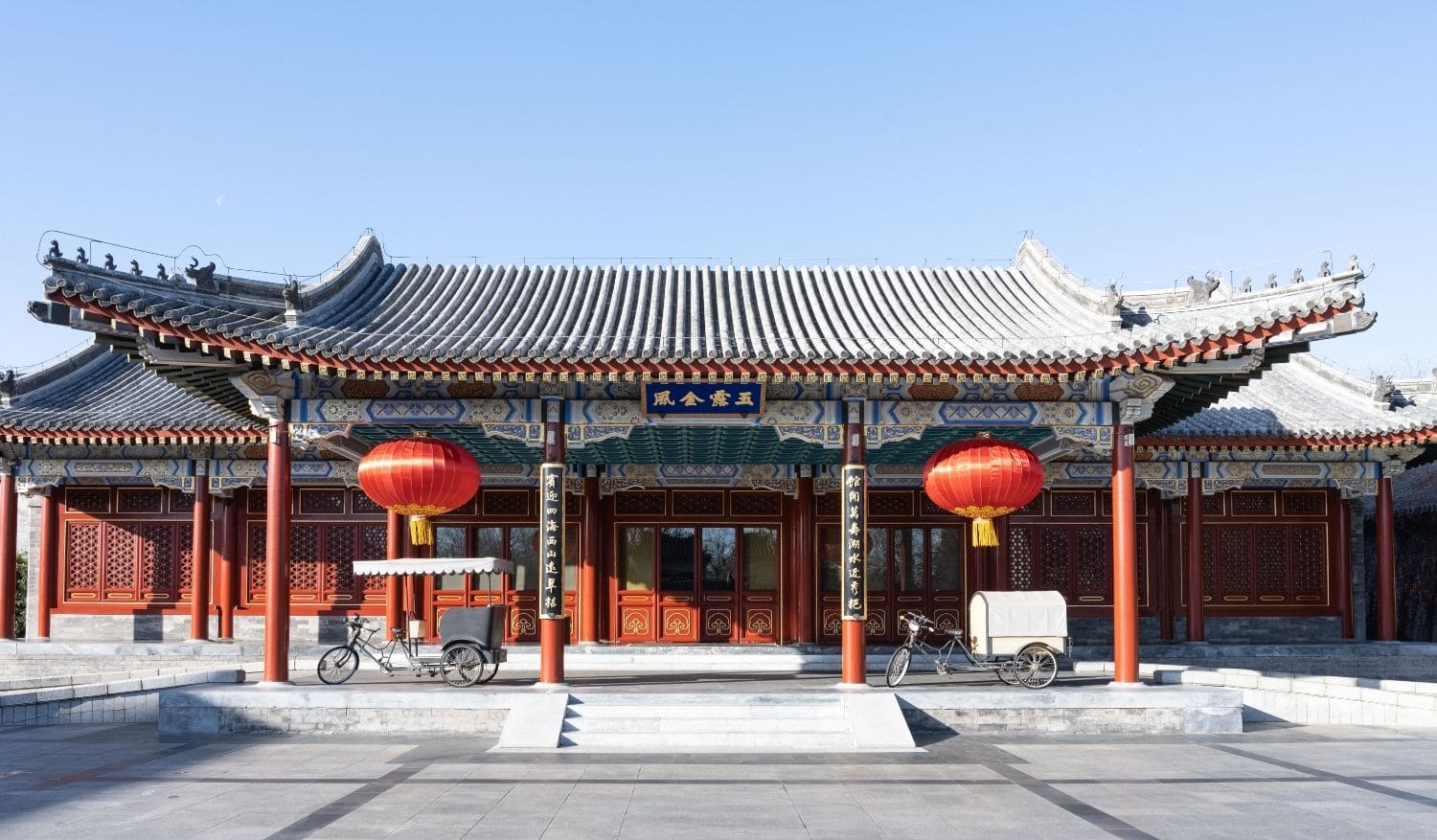
Aman Summer Palace is the signature. The property sits within the eastern gate of the Summer Palace grounds — a collection of traditional pavilions and courtyard suites that feel more like a private residence than a hotel. The gardens are the grounds, the lake is the view, and the silence is genuine. This is the accommodation that makes a Beijing honeymoon feel fundamentally different from any other city stay.
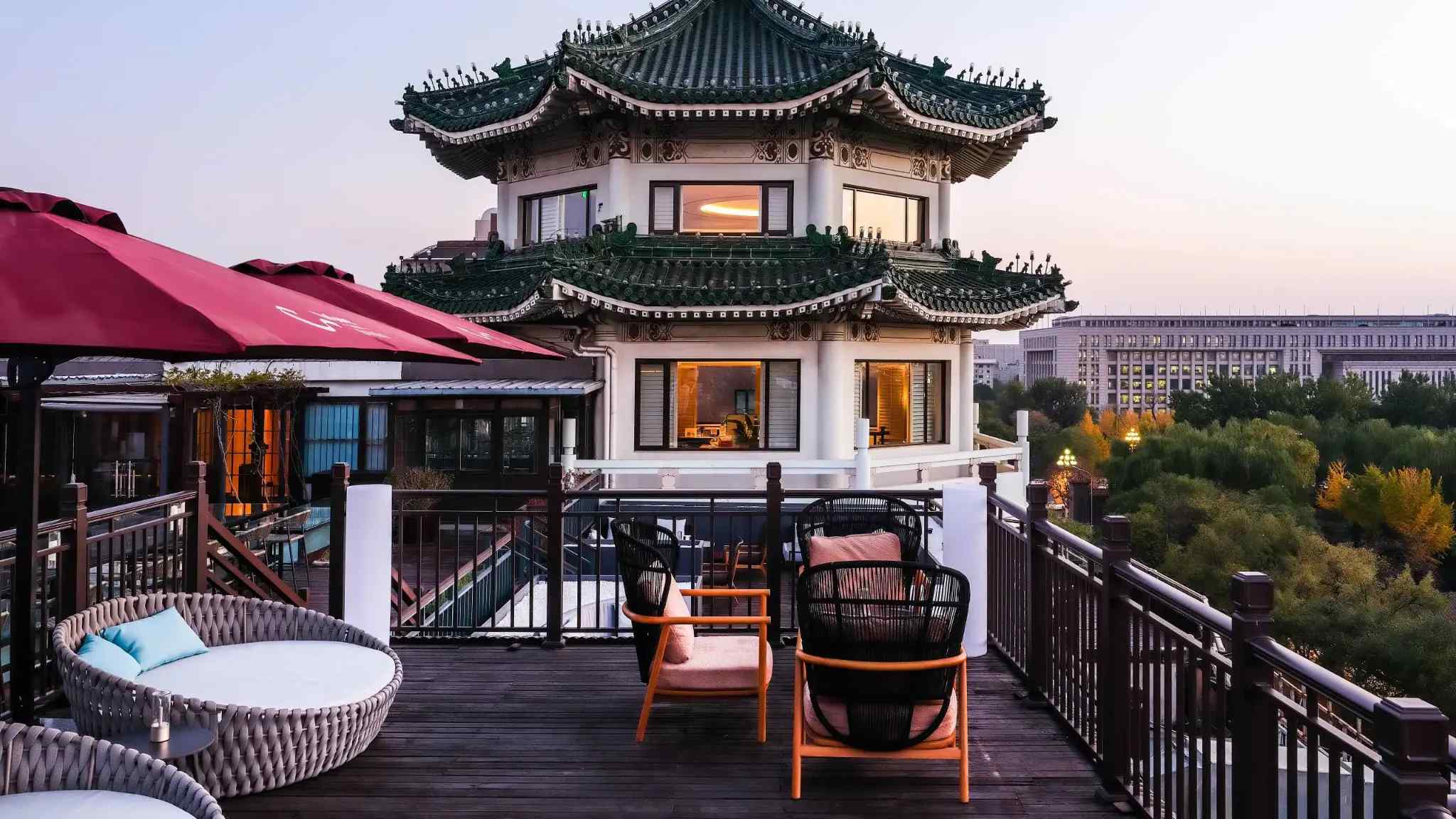
Rosewood Beijing, in the Chaoyang business district, is the contemporary alternative — polished, design-led, with a rooftop bar and views across the modern skyline. Peninsula Beijing, near Wangfujing, combines heritage architecture with central location and the Peninsula’s characteristic precision. We match the property to how the two of you want to experience the city: immersed in the imperial grounds, or based in the contemporary centre with the hutongs walking distance away.
How We Plan a Beijing Honeymoon
Beijing is a city that rewards sequence — which morning for the Forbidden City, which day for the Wall, how much hutong time to protect. We begin with a conversation about what draws the two of you: whether you lead with history, with food, with contemporary art, or with all three. Then we build the day-by-day plan, select the property, arrange the private Great Wall transfer, and book the restaurants that visitors do not find on their own.
For the two of you considering a broader China journey, our China honeymoon itinerary extends this Beijing chapter into a fourteen-night journey across Xi’an, Guilin and Shanghai. Beijing works as both: a standalone honeymoon and the opening chapter of something larger.
Frequently Asked Questions
Is Beijing a good honeymoon destination?
Yes — for the two of you who want a city honeymoon built around history, culture and gastronomy rather than a beach. Beijing’s imperial gardens, hutong neighbourhoods and contemporary art scene offer more intimacy and surprise than its size suggests. Five nights is enough to feel the city’s depth.
How many nights do you need in Beijing for a honeymoon?
Five nights is our recommendation. Three nights covers the essentials — Forbidden City, Summer Palace, Great Wall — but five allows the hutong wandering, the art district, and the slow restaurant evenings that make the honeymoon memorable rather than merely impressive.
What is the best hotel in Beijing for a honeymoon?
Aman Summer Palace for immersion in imperial gardens. Rosewood Beijing for contemporary design and skyline views. Peninsula Beijing for heritage architecture and central location. Each serves a different mood — we match the property to the kind of honeymoon the two of you want.
When is the best time to visit Beijing?
April to June and September to October offer the best weather, with clear skies and comfortable temperatures. Late September and October are particularly fine — autumn light on the Great Wall and the Forbidden City is at its most photogenic.
Can you combine Beijing with other Chinese cities on a honeymoon?
Yes. Beijing works as a standalone five-night honeymoon or as the opening chapter of a wider China itinerary. We often pair it with Xi’an, Guilin and Shanghai for a fourteen-night journey that moves from imperial history to karst landscape to contemporary energy.
Beijing is not the city most couples picture when they imagine a honeymoon — which is precisely why it works. A capital where the imperial gardens are still the quietest places in the city, where the hutongs keep their warmth behind grey walls, and where the Forbidden City at dawn belongs, for a few minutes, entirely to the two of you.
Begin Your Beijing Honeymoon
Tell us what draws you to Beijing — the imperial gardens, the hutongs, the contemporary art, or all three. We’ll design the rest.