
A honeymoon in Qatar begins where architecture meets the desert — in a capital built on sand and ambition, where the world’s most striking museums face the Arabian Gulf and the dunes of the Inland Sea wait less than an hour from the hotel lobby. Doha is not trying to be Dubai. It is building something quieter, more deliberate, and more culturally anchored — and for the two of you who want a Gulf honeymoon that feels like discovery rather than spectacle, that distinction matters.
Qatar is compact. The entire country fits inside a single afternoon’s drive. But what it contains — a coastline of design hotels, a desert interior that reaches the sea at Khor Al Adaid, and a cultural infrastructure that rivals cities ten times its size — makes it one of the most concentrated luxury destinations in the Middle East. This is a honeymoon measured in intensity, not distance.
We design Qatar honeymoons around three moods: the architectural energy of Doha, the silence of the desert, and the waterfront calm of the pearl coast. The result is a Gulf honeymoon with substance behind the polish.
Why Qatar for Your Honeymoon
Architecture as Experience
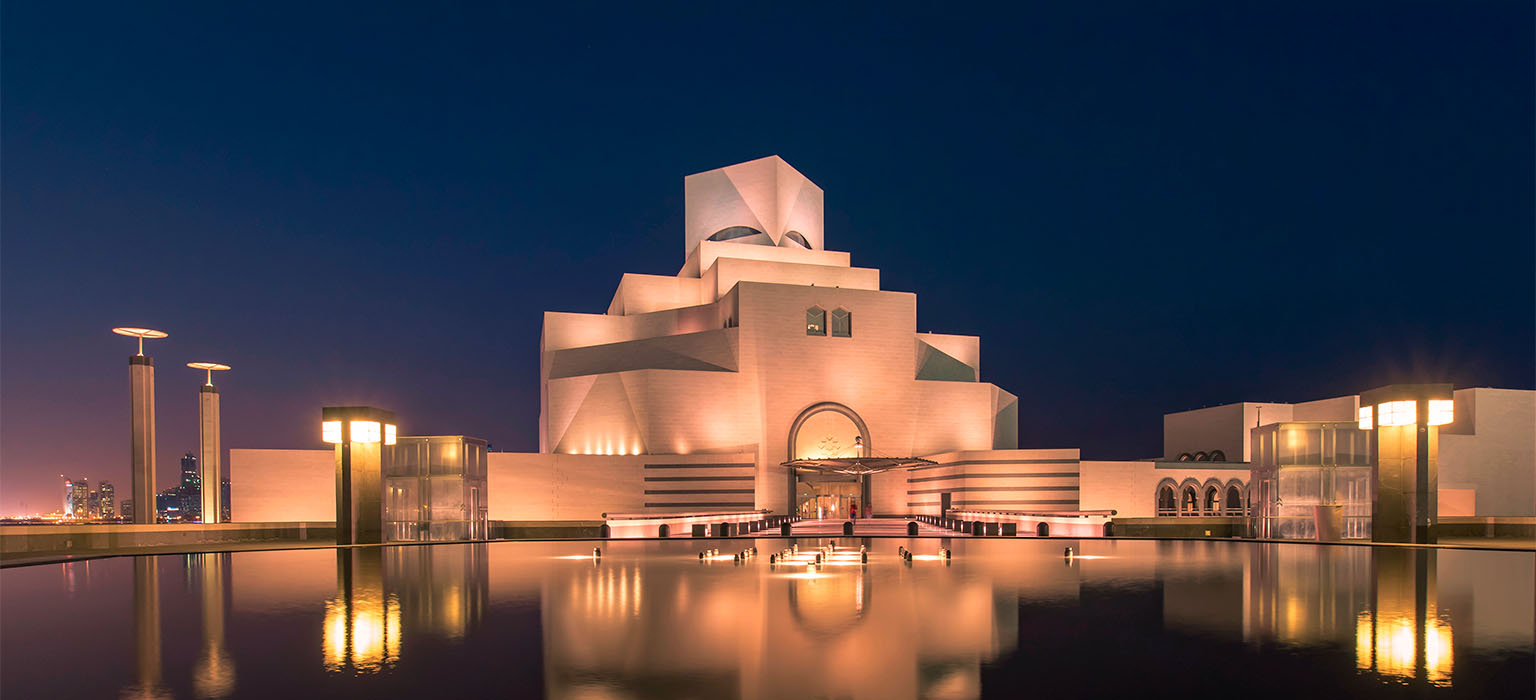
The Museum of Islamic Art, designed by I.M. Pei, sits on its own island at the end of a corniche walkway — a building that earns its silence the moment you step inside. The collection spans fourteen centuries of Islamic art, but the architecture itself is the first exhibit: clean geometry, filtered light, and views across the Gulf that change with the hour. The National Museum of Qatar, Jean Nouvel’s desert rose in concrete and glass, is equally ambitious — a building shaped around the idea of a country rather than a chronological timeline.
These are not museums to tick off a list. They are experiences to sit inside, to return to at different times of day, and to talk about over dinner. For the two of you who travel for culture, Doha’s architectural ambition is the reason to choose Qatar over any other Gulf destination.
Desert and the Inland Sea
South of Doha, the city falls away fast. Within forty minutes, the road gives way to sand, and the dunes begin — rolling, golden, and increasingly dramatic as you approach Inland Sea Khor Al Adaid, a UNESCO-recognised natural reserve where the desert meets the sea. The sight of turquoise water framed by towering dunes is one of the most arresting landscapes in the Arabian Peninsula.
A private overnight camp at the Inland Sea strips the honeymoon back to its essentials: firelight, stars, silence, and the warm mineral smell of the desert at night. The contrast with Doha is total — and deliberate. A Qatar honeymoon that stays in the city misses the point. The desert is the other half of the story.
The New Gulf Luxury
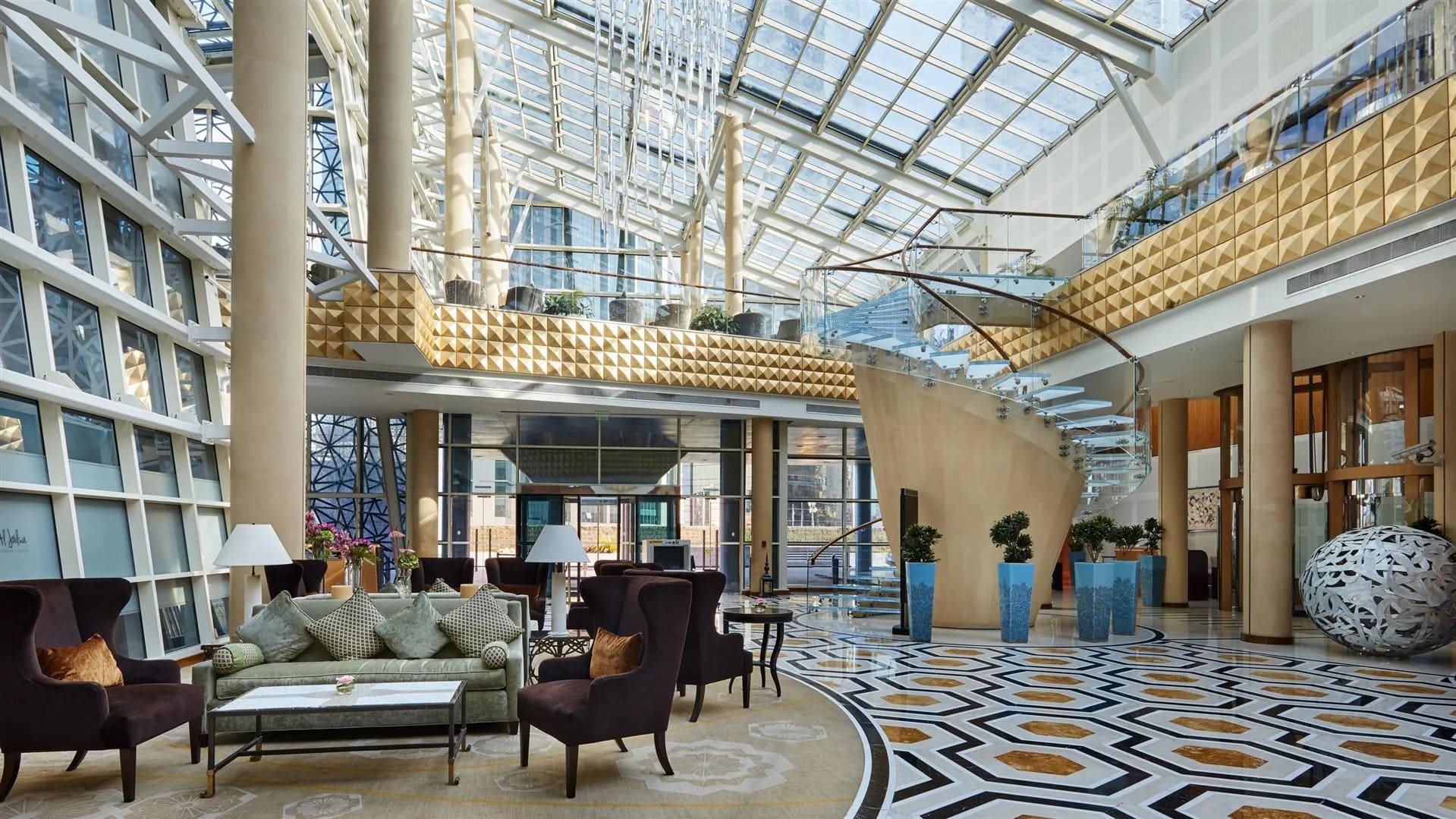
Qatar’s hotel scene has matured rapidly. The Mandarin Oriental Doha sits on Msheireb Downtown, the city’s most ambitious urban regeneration project — a property that balances Gulf opulence with restraint, where the rooms face the old souq rather than the skyline. Chedi Katara, on the Katara Cultural Village beachfront, is quieter and more residential, with low-rise architecture, a private beach, and a spa that draws on both Arabian and Asian traditions.
Banana Island resort, a twenty-minute boat ride from the mainland, offers overwater villas on a crescent-shaped private island — the Gulf’s answer to the Maldives, but with Doha’s skyline visible across the water. The point is not to replicate another destination. It is to offer something that only Qatar’s particular geography and ambition can produce.
The Journey: 6 Nights of Qatar
A six-night honeymoon is the ideal length — long enough to absorb Doha’s culture, spend a night in the desert, and slow down on the coast without the trip thinning.
Three Nights in Doha
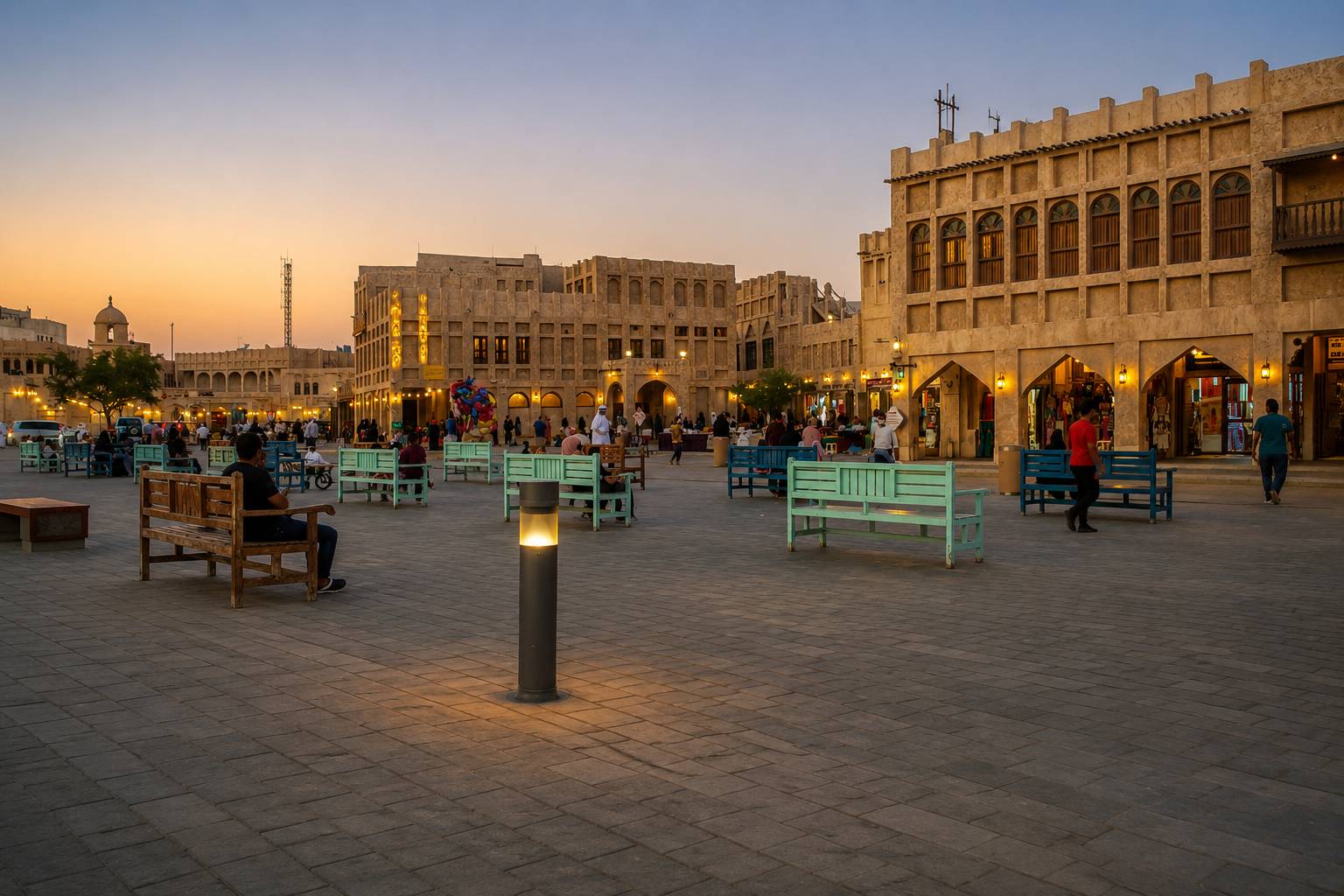
Begin in the city. Souq Waqif is where Doha keeps its older texture — a restored traditional market of spice stalls, falcon sellers, textile merchants and restaurants where the grilled lamb and Arabic coffee are meant to be lingered over. Walk the souq at dusk, when the lanterns come on and the narrow lanes fill with scent and conversation.
Spend a morning at the Museum of Islamic Art, an afternoon at the National Museum, and an evening on the Corniche watching the dhows cross the harbour. The Pearl Qatar, a man-made island of marinas and waterfront dining, offers a polished counterpoint — Mediterranean-style piazzas and yacht-lined canals in the middle of the Gulf. Doha is a city of contrasts, and three nights lets the two of you feel them without rushing.
One Night in the Desert
Drive south to the Inland Sea for a private desert experience. The journey itself is part of it — watching the city dissolve into sand, the road narrowing, the dunes growing. A luxury tented camp set on the edge of Khor Al Adaid gives the evening a scale that hotel rooms cannot. Dune driving at sunset, dinner under the stars, and a morning walk along the shore where the sea meets the sand — this single night anchors the honeymoon’s emotional centre.
Two Nights on the Coast
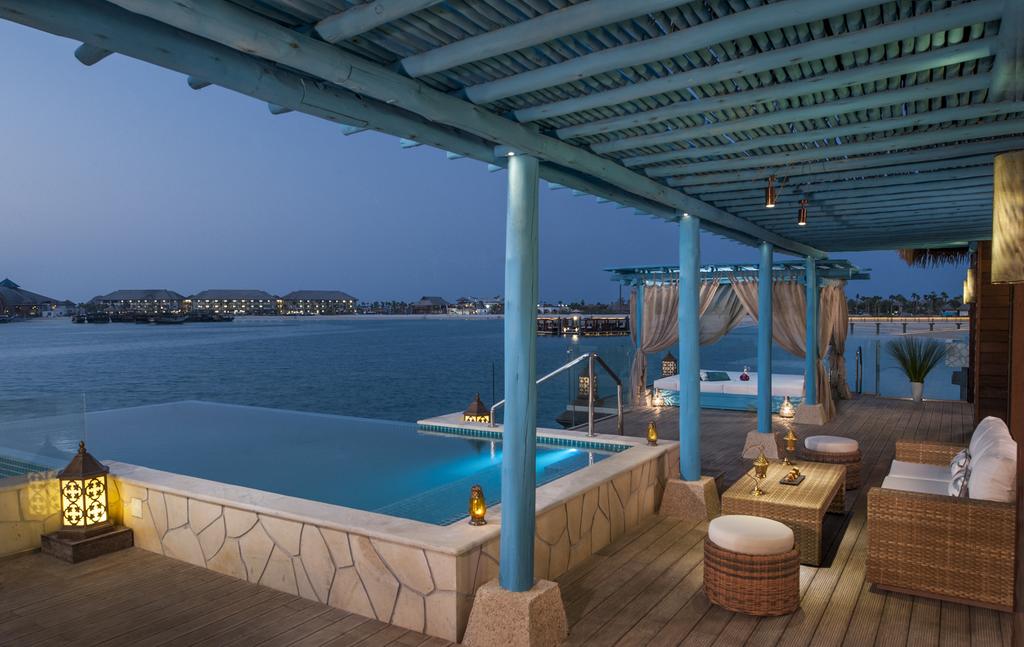
Close the honeymoon at Banana Island or on the Katara beachfront. Two nights of sea breeze, spa treatments, and slow waterfront dinners let the trip exhale after the intensity of Doha and the desert. If the two of you want to add a half-day excursion, Zubarah Fort — a UNESCO World Heritage Site on Qatar’s north-western coast — is a striking desert fortification with pearl-trading history and views across empty coastline. Otherwise, do nothing. The coast earns its quiet.
Best Time to Visit Qatar
November through March is the window we recommend. Temperatures sit between 20 and 28 degrees, evenings are cool enough for outdoor dining, and the desert is comfortable for overnight camps. December and January are peak season — the city is at its most energetic, hotel rates are highest, and the cultural calendar fills with exhibitions and events.
April and October are shoulder months: still warm but less crowded, with lower rates and good availability at the best properties. May through September brings summer heat that can exceed 45 degrees — the hotels offer deep discounts, but outdoor experiences are limited to early mornings and late evenings. For a honeymoon built around architecture, desert and coast, the cooler months are essential.
Regions and Experiences to Anchor Your Stay
Doha — Culture and Design
Doha’s cultural district runs along the waterfront from the Museum of Islamic Art to the National Museum, with the Corniche connecting them. Souq Waqif sits just inland — the old city’s heart, restored and alive. Msheireb Downtown, the world’s first LEED-certified neighbourhood, sits between the souq and the waterfront with boutique hotels and gallery spaces. The Pearl Qatar extends the city north into the Gulf with marina dining and evening walks. Doha rewards depth, not speed — three nights is minimum, and the two of you could fill four.
The Southern Desert and Inland Sea
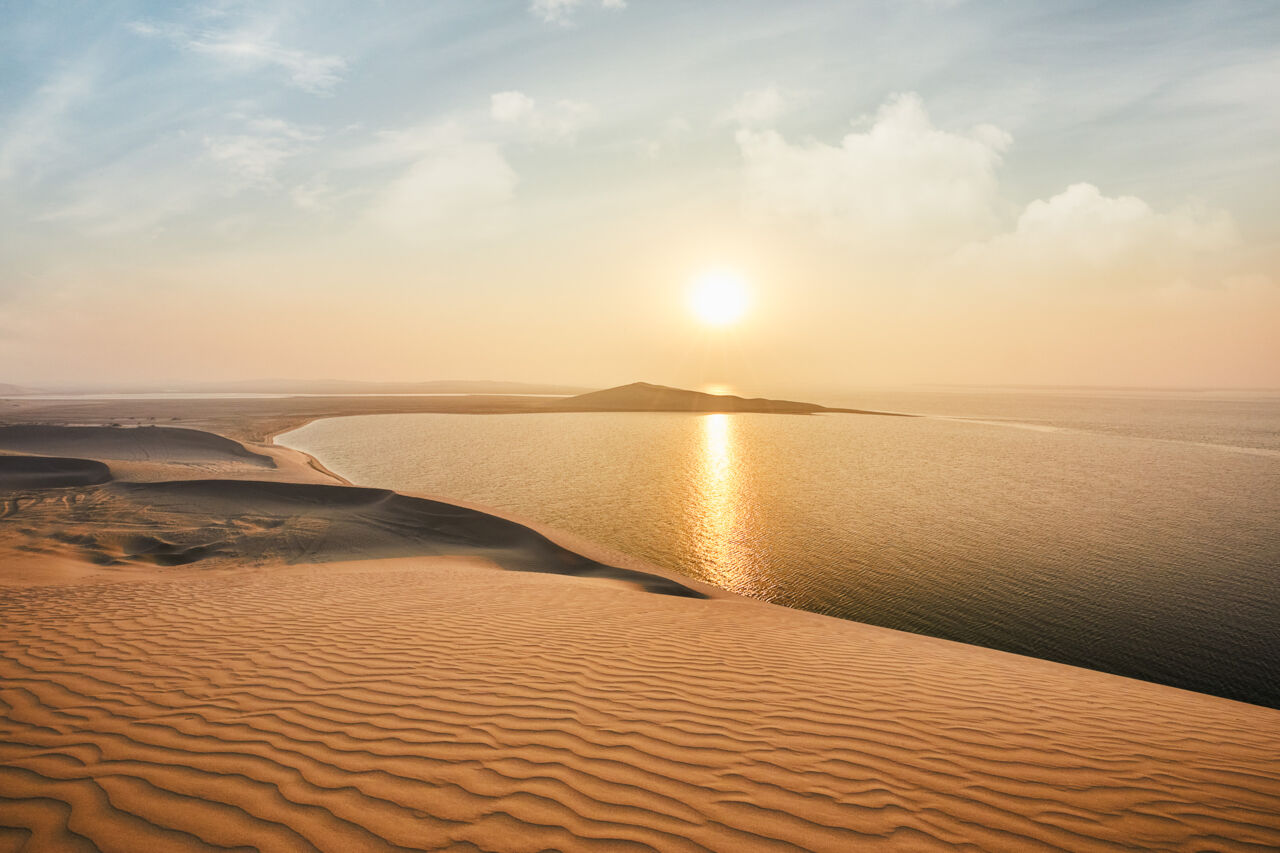
The southern desert is Qatar’s other landscape — flat gravel plains giving way to dune fields that roll unbroken to the coast. Khor Al Adaid, where the desert meets the Gulf, is a protected natural reserve and one of the few places on earth where sand dunes reach the sea. The silence is immense. A private 4×4 excursion from Doha takes roughly ninety minutes, and the return drive at sunrise — with the dunes casting long shadows across the sand — is worth waking early for.
The Northern Coast and Zubarah
Qatar’s north-western coast is quieter, flatter, and historically rich. Zubarah Fort, a restored eighteenth-century fortification, sits within the Al Zubarah Archaeological Site, a UNESCO World Heritage Site that preserves the remains of a pearl-trading and merchant town. The drive from Doha takes about an hour and passes through a landscape that feels genuinely empty — a half-day excursion that adds historical depth to a honeymoon otherwise anchored in the contemporary.
How We Plan a Qatar Honeymoon
Qatar is compact enough that logistics are simple — but the sequence matters. We begin with a conversation about what draws the two of you: whether you lead with architecture and museums, whether the desert night is essential, whether you want Banana Island’s overwater villas or Chedi Katara’s quieter beachfront. The right combination of city, desert and coast is what makes a Qatar honeymoon feel layered rather than listed.
We select the properties, arrange private transfers and desert camp logistics, and build a day-by-day plan that balances intensity with rest. Our Gulf partners handle the details — the museum timings, the desert camp setup, the restaurant reservations at venues that visitors rarely find on their own. Qatar rewards planning. We make sure the plan disappears behind the experience.
Frequently Asked Questions
Is Qatar good for a honeymoon?
Yes — particularly for the two of you who want a Gulf destination built around culture, architecture and desert landscape rather than theme parks and shopping. Qatar’s Museum of Islamic Art, Inland Sea desert and design hotels offer a honeymoon with intellectual and sensory depth that most Middle Eastern destinations do not match.
How many days do you need in Qatar for a honeymoon?
Six nights is the ideal length. Three nights in Doha to absorb the museums, souq and waterfront, one night in the desert at the Inland Sea, and two nights on the coast to close the trip with quiet. Shorter stays risk rushing the cultural experiences; longer ones can thin, given the country’s compact size.
What is the best time to visit Qatar for a honeymoon?
November through March offers the most comfortable temperatures for outdoor experiences — desert camps, Corniche walks, and coastal evenings. December and January are peak season with the highest energy and rates. April and October are excellent shoulder months with lower crowds and warm but manageable weather.
Is Qatar better than Dubai for a honeymoon?
They serve different moods. Dubai is larger, more established for tourism, and built around entertainment and scale. Qatar is quieter, more architecturally ambitious in its cultural institutions, and offers a Gulf experience rooted in museums, desert and heritage rather than spectacle. Neither is better — the choice depends on what the two of you want to feel.
What are the best hotels in Qatar for a honeymoon?
Mandarin Oriental Doha for urban design and downtown energy. Chedi Katara for beachfront calm and cultural village access. Banana Island for overwater villas and island seclusion within sight of the city. We match the property to how the two of you want the honeymoon to move between city, desert and coast.
Qatar is not the Gulf that most travellers imagine — it is more considered, more architectural, and more deeply rooted in culture than its skyline suggests. For the two of you who want a honeymoon that balances the silence of the desert with the ambition of a capital building itself from the sand up, this is the Gulf destination we would choose.
Begin Your Qatar Honeymoon
Tell us what draws you to the Gulf — architecture, desert, coast, or all three. We’ll design the rest.